
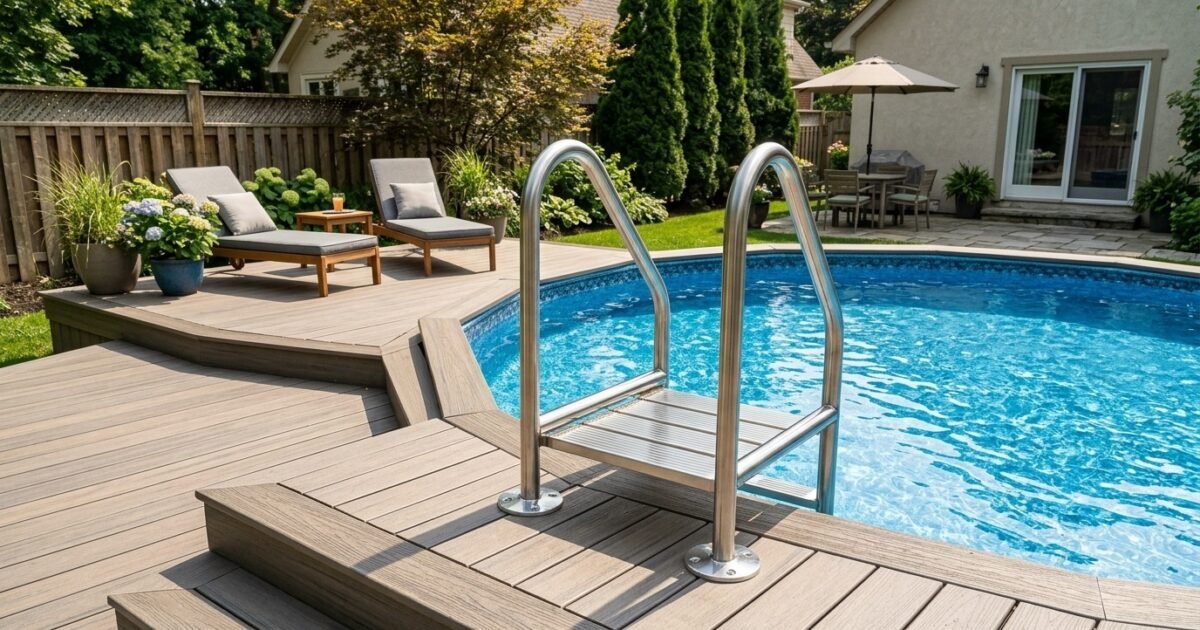
setting a sturdy pooldeck ladder ensures safe, effortless water access for swimmers of all ages. In fact, deck-mounted ladders bolt directly to your pool platform, eliminating wobbly A-frame ladders fully. Most families spend between $180 and $850 for a quality ladder system. However, exact prices depend on metal grade, flange hardware, and weight capacity.
in fact, swimming pool ladders must withstand steady water splash and heavy swimmer loads. Wet bare feet slip easily on cheap plastic rungs. Also, municipal safety codes mandate strict step spacing, handrail heights, and solid load ratings. This contractor guide covers tested pooldeck ladder styles, ISPSC codes, deck flange bolting, and costs.
part Comparison for Pooldeck Ladder Systems
Durability, Weight Limits, and Price Specs
Selecting the best pooldeck ladder requires comparing metal and resin options across key job-site metrics. Different ladder parts handle pool chemicals, direct sunlight, and salt mist in different ways. For example, 316 stainless steel resists saltwater rust while molded resin eliminates rust worries entirely.
Therefore, review the detailed performance data in the comparison table below. We evaluate four top ladder styles across price, weight limits, wet slip grip, and expected lifespan. This data helps you pick the right ladder for your backyard pool deck.
| Ladder System Style | Retail gear Cost | Installed Pro Cost | Weight Limit Capacity | Saltwater Compatibility | Expected Lifespan |
|---|---|---|---|---|---|
| 304 Marine Stainless Steel | $180 to $340 | $350 to $650 | 300 to 400 lbs | Good (Needs freshwater rinse) | 15 to 20 years |
| 316 Saltwater Stainless Steel | $320 to $580 | $550 to $950 | 400 to 500 lbs | Excellent (Zero pitting rust) | 25+ years |
| Heavy-Duty Molded Resin | $160 to $290 | $320 to $550 | 350 to 450 lbs | Excellent (Zero metal rust) | 10 to 14 years |
| Hybrid Aluminum & Resin | $240 to $420 | $450 to $750 | 400 to 500 lbs | Very Good (Powder coated) | 12 to 18 years |
as a result, your water treatment system and user needs shape your choice. Standard chlorine pools pair great with polished 304 stainless steel. In contrast, saltwater swimming pools require 316 marine-grade stainless or non-metallic resin. For complementary deck stair ideas, check our guide on above ground pool stairs with deck steps.
Related: Pool Covers for Above Ground Pools with Decks: Types & Cost
Building Codes and Safety Standards for Pooldeck Ladders
ISPSC Section 306 Rung Spacing and Dimensions
Safety regulations govern every home pooldeck ladder setup. Most city building inspectors enforce standards from the International Swimming Pool and Spa Code (ISPSC Section 306). You must follow these exact step measurements to ensure safe climbing.
First, vertical rung spacing must measure between 7 and 12 inches uniformly. Rungs spaced further apart cause swimmers to strain, leading to slips. Next, the variation between individual rung spacings must stay under 1/4 inch across the ladder flight.
In addition, ladder rungs must provide a minimum clear tread width of 12 inches between side rails. If you mount wide-step drop-in ladders, tread width must measure at least 16 inches. Wide steps give wet bare feet ample surface area for solid balance.
Handrail Clearance and 200-Pound Load Rules
A dependable pooldeck ladder requires rigid handrails that support swimmers pulling themselves out of deep water. Building codes mandate steady handrails extending at least 24 inches above the finished deck coping. Handrails must feature a graspable round diameter between 1.25 and 2 inches.
in fact, ladder rails must withstand solid physical force without bending. Under ASTM International standards, ladder handrails must support a concentrated load of at least 200 pounds in any direction. Flimsy rails that flex under load cause swimmers to lose balance on wet rungs.
Leave a 3-inch to 6-inch hand clearance gap between the ladder rails and the pool wall. This gap prevents swimmers from catching fingers between metal tubes and pool vinyl liners. Smooth, rounded rail bends eliminate sharp snag points that could tear bathing suits.
Clearance from Pool Vinyl Liners and Bottom Pads
Protecting your vinyl pool liner is critical when mounting any pooldeck ladder. Ladder feet rest inside the pool basin against the floor or curved cove. The weight of heavy swimmers pushes ladder rails down and inward against the vinyl.
Therefore, always mount soft white rubber or silicone bumper caps on bottom rail tips. Rubber bumpers cushion metal ends and prevent sharp tube edges from puncturing the vinyl liner. Inspect rubber bumpers every spring, replacing any hard, cracked caps immediately.
In addition, place a 1/8-inch thick embossed vinyl ladder protective mat beneath the ladder feet. The textured mat distributes swimmer weight over a wide area and stops ladder feet from shifting. Never place bare metal ladder tubes directly against naked vinyl liners.
Deck Flange Mounting and solid Anchoring Methods
Cast Aluminum and Stainless Deck Flanges
The base of a solid pooldeck ladder setup is high-grade deck mounting flanges. Flanges are surface-mounted metal sockets that receive the upper ends of the ladder handrails. Quality flanges are cast from heavy aluminum alloy or stamped from 304/316 stainless steel.
Avoid cheap plastic resin flanges that crack under repeated seasonal sun exposure. Heavy metal flanges feature two or four mounting bolt holes around their base rim. Inside the socket, an adjustable stainless steel wedge bolt clamps the ladder tube firmly.
Tightening the wedge bolt pulls the ladder rail tight against the flange wall, eliminating wobble. In fact, loose flanges cause over 70 percent of home pool ladder accidents. Sturdy flanges keep your ladder rock solid even when large adults climb out of the water.
Blocking and frame Reinforcement Under the Coping
Never screw pooldeck ladder flanges into thin 1-inch deck surface boards alone. Swimmers climbing out of the pool exert tremendous pulling leverage against mounting hardware. Surface screws driven into single deck boards pull loose within a few weeks of heavy use.
Instead, mount doubled 2×8 pressure-treated solid timber blocking beneath the deck boards. Position the blocking directly beneath both flange mounting locations between existing floor joists. Fasten the blocking to adjoining joists using heavy solid timber screws.
This solid blocking transfers climbing loads directly into the main deck framework. The reinforced frame absorbs hundreds of pounds of pulling torque effortlessly. For complete deck framing blueprints, review our guide on above ground pool deck plans.
Fastener Specs: Stainless Carriage Bolts vs Lag Screws
Fastener selection determines whether your pooldeck ladder stays rigid over time. Never use standard zinc-plated wood screws or short lag bolts to anchor ladder flanges. Short lag screws strip out of wet wood threads under repeated dynamic shock loads.
Instead, drill fully through deck boards and solid blocking using a 3/8-inch wood drill bit. Secure flanges using 3/8-inch by 4-inch 304 or 316 stainless steel carriage bolts. Insert bolts from the top and secure them from beneath with lock washers and nylon lock nuts.
Add heavy 1.5-inch stainless steel fender washers beneath the wooden blocking. Fender washers distribute pulling forces across a wide wood surface, preventing nut heads from crushing soft lumber fibers. Stainless steel screws never rust or weaken around chlorinated pool splash.
Top Pooldeck Ladder Designs for Above Ground Pools
Narrow-Profile Stainless Steel Deck Ladders
Narrow-profile stainless steel models remain the classic choice for a sleek pooldeck ladder setup. These elegant ladders feature two polished stainless rails bending smoothly down into the water. A compact 24-inch wide footprint preserves valuable deck space on small platforms.
in fact, narrow stainless ladders work wonderfully in lap swimming lanes. The slender profile intrudes minimally into pool water, leaving swim paths open. High-luster polished steel reflects sunlight beautifully, giving decks a clean public resort aesthetic.
Look for models equipped with textured stainless steel or heavy ABS plastic step rungs. Textured step pads provide positive grip even when coated with slick suntan oils. For complementary deck ideas, explore our guide on above ground pool deck ideas.
Wide-Step Resin Walk-In Entry Ladders
Wide-step molded resin models offer supreme climbing comfort for families with young children. Instead of narrow round rungs, these ladders feature wide steps measuring 18 to 22 inches across. Deep treads feel like climbing home interior stairs rather than a steep vertical ladder.
In addition, resin ladders feature closed vertical risers between steps. Closed risers prevent children from slipping legs through step openings, eliminating dangerous entrapment risks. Dual molded handrails offer steady grip support all the way down to the pool floor.
Resin ladders are fully immune to chemical pool water rust and rust. However, resin ladder bodies are hollow and buoyant in water. You must fill internal ballast chambers with clean pea gravel to keep the ladder grounded on the pool floor.
Flip-Up and Slide-Lock Security Ladders
Controlling pool access is an key safety rule for every owner. A flip-up pooldeck ladder features heavy-duty pivoting hinge brackets at the deck coping. When swimming ends, you simply pivot the entire ladder upward out of the water.
A slide-lock bracket secures the ladder in the upright vertical position. You can padlock the bracket in place to stop unsupervised neighborhood children from entering the pool. Keeping ladder steps out of the water also stops slippery green algae from growing on step rungs.
In addition, flip-up ladders make setting winter safety covers faster and easier. You pivot the ladder out of the way without unbolting deck flanges. Flip-up models provide the ultimate combination of everyday convenience and child safety.
Removable Quick-Release Pin Ladder Systems
If you prefer an uncluttered deck floor during winter, mount a quick-release pooldeck ladder. Quick-release systems use deck flanges fitted with stainless steel hitch pins. Pulling the safety hitch pins lets you lift the ladder out of the flanges in seconds.
You can store the ladder inside a dry garage during freezing winter months. Removing the ladder protects metal tubes from expanding surface ice sheets. In spring, simply slide the ladder rails back into the deck sockets and slide the hitch pins home.
Quick-release ladders also simplify pool vinyl liner replacement projects. Workers can remove the ladder without crawling under deck framing to unbolt hardware. For solid layout tips, check our guide on how to build a pool deck.
Step-by-Step setup guide for Deck Ladders
Positioning the Ladder Along Deck Coping
setting a pooldeck ladder starts with choosing the safest location along your deck rim. Place the ladder away from pool return water jets and skimmer intake boxes. Water currents near return jets can push swimmers off balance as they step onto bottom rungs.
In addition, locate the ladder where pool water depth is at least 3.5 to 4 feet deep. Swimmers jumping into deep water need quick access to climb out safely. Ensure the deck area behind the ladder provides at least 3 feet of clear walking space.
Assemble the ladder frame loosely on your deck boards following factory instructions. Set the ladder temporarily in position against the pool wall to check vertical plumb. The ladder side rails should stand perpendicular to the deck surface.
setting Under-Deck Solid Timber Blocking
Once you verify ladder positioning, mark the flange footprint onto your deck boards. Move the ladder aside and crawl beneath the deck to mount your reinforcement blocking. Measure the distance between the two floor joists directly under your flange marks.
Cut two pieces of 2×8 pressure-treated lumber to fit tightly between the floor joists. Face-screw the two 2×8 blocks together using 3-inch exterior solid screws. Then, mount the doubled block assembly flush against the underside of the deck boards.
Fasten the block ends to the adjoining floor joists using heavy Simpson Strong-Tie framing angles. Drive solid screws through the metal angles into joist lumber. Solid blocking creates an immovable anchor zone for your heavy ladder bolts.
Drilling Deck Holes and Bolting Flanges
With blocking secured, set your metal flanges over your layout marks on the deck surface. Check that the flange openings align perfectly with the spacing of your ladder side rails. Mark all bolt hole centers onto the deck boards using a center punch or pencil.
Drill straight downward through the deck boards and timber blocking using a 3/8-inch wood drill bit. Keep your drill level to ensure bolts pass smoothly through both lumber layers. Clean away wood shavings with a brush before setting flanges in place.
Drop 3/8-inch stainless carriage bolts through the flange holes from above. Beneath the deck, slide large stainless fender washers and nylon lock nuts onto each bolt end. Tighten nuts firmly with a socket wrench, compressing the washer tight against the timber blocking.
Attaching Protective Rubber Bumpers and Liner Pads
Finish your pooldeck ladder build by setting key vinyl liner protection. Push heavy-duty white rubber bumper caps firmly onto the bottom ends of the ladder tubes. If bumper caps fit loosely, wrap tube ends with Teflon tape before pressing caps on.
Next, place an embossed vinyl ladder mat on the pool floor where the ladder feet will rest. The mat cushions heavy foot pressure and stops ladder feet from wearing through the liner. Lower the ladder into the water, resting bumper feet squarely on the protective mat.
Slide the upper rail ends into the deck mounting flanges. Tighten the internal wedge bolts using a hex wrench until the rails lock firmly in the sockets. Shake the ladder handrails vigorously to confirm zero wobble before allowing swimmers into the water.
Cost Breakdown and Replacement Hardware Guide
Ladder Purchase and setup Expense Table
Budgeting for a pooldeck ladder project requires looking at both gear prices and hardware supplies. Basic ladder kits include standard rails and plastic flanges. However, upgrading to heavy-duty cast aluminum flanges and stainless through-bolts ensures decades of safety.
The detailed cost breakdown table below shows realistic price ranges for common ladder installations. We compare standard stainless, premium saltwater models, and resin walk-in steps. Review these figures to set a realistic budget for your project.
| Project Expense Item | Standard 304 Stainless | Saltwater 316 Stainless | Molded Resin Steps | Hybrid Aluminum/Resin |
|---|---|---|---|---|
| Ladder Unit & Steps | $180 to $280 | $320 to $520 | $160 to $260 | $240 to $380 |
| Cast Metal Flanges (Pair) | $45 to $75 | $65 to $110 | $35 to $60 | $50 to $85 |
| Stainless Carriage Bolts | $20 to $35 | $30 to $45 | $20 to $35 | $25 to $40 |
| Under-Deck Timber Blocking | $15 to $25 | $15 to $25 | $15 to $25 | $15 to $25 |
| Protective Vinyl Liner Mat | $25 to $40 | $25 to $40 | $30 to $50 | $30 to $50 |
| Pro setup Labor | $150 to $280 | $150 to $280 | $180 to $320 | $180 to $320 |
| Total Estimated Cost | $435 to $735 | $605 to $1,020 | $440 to $750 | $540 to $900 |
In addition, replacement rubber bumpers cost $12 to $22 per pair if old caps wear thin. Investing in premium cast metal flanges and stainless bolts prevents premature hardware failure. Quality parts keep your ladder stable and safe for every family swim.
Hidden Hardware and Flange Upgrade Costs
Small hardware upgrades make a huge difference in pooldeck ladder longevity. Standard ladder kits often include cheap plastic deck flanges. Upgrading to cast aluminum or stainless steel surface flanges adds $45 to $90 to your budget.
in fact, budget for stainless steel ladder wedge assemblies at $18 to $30 each. Internal wedges wear down after several seasons of tightening and loosening. Keeping spare wedge bolts on hand allows quick adjustments whenever rails loosen.
Finally, plan for protective vinyl ladder mats every three to five seasons. Mats break down under steady chlorine and UV exposure. Replacing worn mats prevents expensive vinyl liner tears that cost thousands of dollars to repair.
upkeep, Saltwater Protection, and Winter Care
Cleaning Mineral Splash and Preventing Tea-Stain Rust
Proper upkeep keeps your pooldeck ladder looking brand new for decades. Stainless steel is rust-resistant, but chlorinated splash water can cause brown tea-staining over time. Tea-staining occurs when mineral salts evaporate on metal surfaces under hot summer sun.
First, rinse ladder handrails weekly with fresh water from a garden hose. Rinsing removes dried chlorine salts before they bond to metal finishes. For stubborn brown mineral haze, clean tubes with a specialized stainless steel electropolish paste.
Wipe surfaces with a soft microfiber cloth along the grain of the polished metal. Never use abrasive carbon steel wool pads on stainless steel ladders. Steel wool leaves microscopic iron particles behind that cause severe rust blooms. For saltwater pools, attach a sacrificial zinc anode collar to your ladder tubes to absorb electrolytic currents.
Winter Removal and Off-Season Storage Practices
Winter weather can cause serious solid damage to a submerged pooldeck ladder. Expanding surface ice exerts crushing pressure against submerged metal tubes. Ice forces can bend ladder rails, pop rungs, and crack wooden deck mounting boards.
Before freezing winter heat levels arrive, loosen the internal wedge bolts on both deck flanges. Lift the ladder straight upward out of the deck sockets. Empty any water trapped inside the hollow rails before storing.
Store the clean ladder inside a dry garage or garden shed during winter months. Spray flange mounting bolts with silicone lubricant to prevent winter rust seizure. Reinstalling the ladder in spring takes less than ten minutes with zero rust headaches.
often Asked Questions About Pooldeck Ladder setup
Common Questions and Contractor Answers
families have practical questions when selecting and mounting a pooldeck ladder. Here are straightforward answers directly from our pro pool deck construction crew.
How do you secure a ladder to an above ground pool deck?
Contractors bolt heavy cast metal flanges through deck boards into doubled 2×8 timber blocking. Use 3/8-inch stainless carriage bolts with fender washers beneath the blocking for maximum strength.
Can a pooldeck ladder rest directly on a vinyl liner?
No, resting metal ladder tubes directly on vinyl will puncture the pool liner over time. Always mount soft rubber bumper caps on tube ends and place a textured vinyl ladder mat on the pool floor.
What is the difference between 304 and 316 stainless steel pool ladders?
Grade 304 stainless steel works great for standard chlorine pools but can pit in saltwater. Grade 316 stainless contains molybdenum, making it fully immune to saltwater rust and harsh chemicals.
How do you stop a resin pooldeck ladder from floating?
Fill the internal ballast chambers of your resin ladder with clean pea gravel or sealed sandbags. Most resin ladders require 30 to 50 pounds of ballast weight to stay firmly grounded on the pool floor.
Editorial Note: This article has been researched, written, and fact-checked by our experienced pool deck and hardscape construction team. Every guide is manually reviewed by our lead author to ensure accurate and reliable advice.