
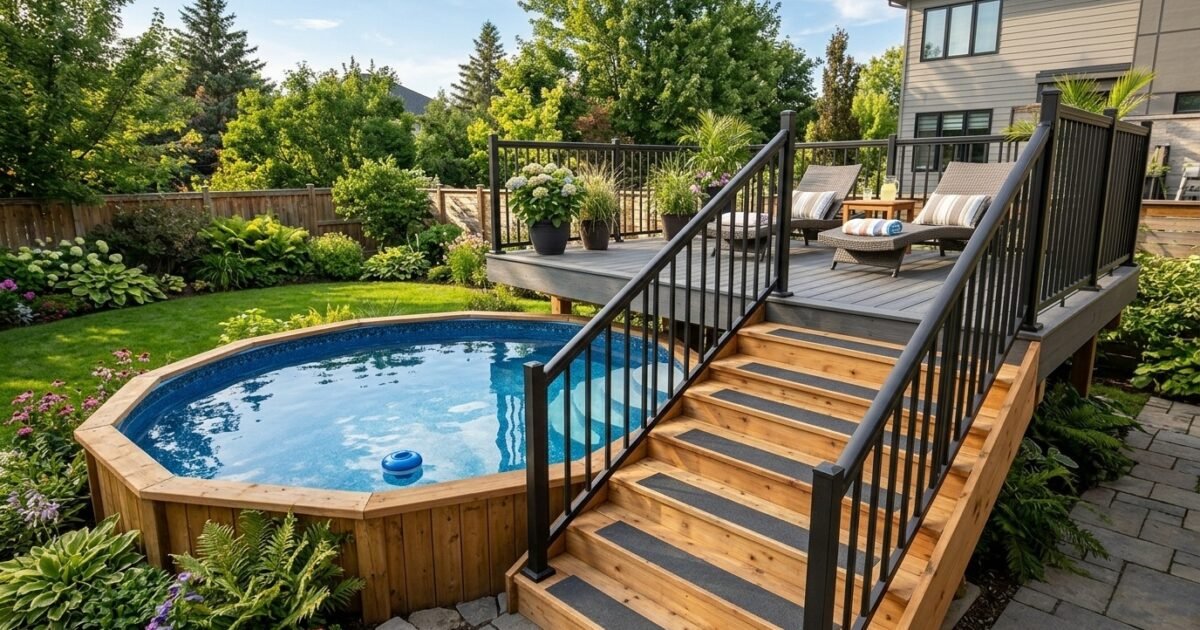
Building sturdy above ground pool stairs with deck access creates safe entry for swimmers of all ages. In fact, custom stairs eliminate shaky pool ladders and make entering the pool effortless. Most homeowners spend between $1,200 and $4,500 for a complete stair build. However, exact prices depend on total stair height, step width, and chosen lumber.
Furthermore, pool stairs must handle constant water splash and heavy foot traffic. Wet barefoot swimmers slip easily on slick surfaces. Also, municipal safety codes mandate strict riser heights and handrail rules. This contractor guide covers tested above ground pool stairs with deck plans, ISPSC codes, stringer math, and price facts.
Stair System Comparison for Above Ground Pools
Durability and Price Breakdown
Choosing the right style of above ground pool stairs with deck steps requires balancing price against durability. Different stair materials handle sun, pool chemicals, and moisture in different ways. For example, vinyl steps resist pool chlorine while cedar steps require regular oiling.
Therefore, review the detailed performance data in the table below. We compare four top stair options across price, wet grip, weight limits, and upkeep. This data helps you pick the right stair system for your backyard deck.
| Stair System Style | DIY Material Cost | Pro Installed Cost | Wet Slip Rating (DCOF) | Weight Capacity | Annual Upkeep Demands |
|---|---|---|---|---|---|
| Pressure-Treated Wood | $450 to $850 | $1,200 to $2,200 | 0.52 to 0.58 | 400 lbs | Moderate (stain every 2 yrs) |
| Capped Composite Steps | $800 to $1,500 | $1,800 to $3,200 | 0.55 to 0.62 | 500 lbs | Low (soap and water rinse) |
| Extruded Aluminum Stairs | $1,200 to $2,400 | $2,400 to $4,500 | 0.58 to 0.65 | 600 lbs | Very Low (hose rinse) |
| Resin In-Pool Drop-In Steps | $600 to $1,200 | $900 to $1,600 | 0.50 to 0.56 | 400 lbs | Low (scrub pool algae) |
Consequently, your budget and pool height guide your choice. Treated pine provides the most affordable lumber for exterior framing. In contrast, composite boards deliver splinter-free comfort for bare feet. For complementary patio ideas, read our guide on above ground pool deck ideas.
Related: Pool Coping Ideas: Modern Styles, Pavers & Costs
Building Codes and Safety Standards for Pool Stairs
ISPSC Rise and Run Geometry
Safety codes govern every residential above ground pool stairs with deck installation. Most local building inspectors enforce standards from the International Swimming Pool and Spa Code (ISPSC Section 306). Therefore, you must follow exact stair measurements before cutting stringer lumber.
First, the maximum step riser height is 7.75 inches. Risers taller than 8 inches cause swimmers to trip when climbing wet steps. Next, the minimum stair tread depth is 10 inches from front nose to back riser. This depth gives wet bare feet plenty of room to land securely.
In addition, step risers must maintain uniform height across the entire flight. The difference between the tallest and shortest riser must not exceed 3/8 of an inch. Uneven steps cause falls because muscle memory expects identical step heights.
Handrail Grip and Guardrail Load Rules
Every set of above ground pool stairs with deck steps requires sturdy safety handrails. Building codes mandate handrails on all stair flights with four or more risers. Handrails must sit between 34 and 38 inches above the stair tread nose.
Furthermore, handrails must offer a comfortable, graspable shape for wet hands. Round rails should measure between 1.25 and 2 inches in outer diameter. If you install rectangular wood rails, carve finger grooves along both sides for a secure grip.
Guardrails along open stair sides must withstand at least 200 pounds of side push. Space vertical balusters so that a 4-inch solid sphere cannot pass between them. This tight spacing prevents small children from slipping through rail openings.
Self-Closing Safety Gates and Latch Heights
Preventing unsupervised pool access is a legal duty for every pool owner. Therefore, your above ground pool stairs with deck system must feature a locking gate. Mount the safety gate at the bottom stair landing or at the top deck entrance.
The gate must swing outward, away from the swimming pool water. Furthermore, equip the gate with self-closing spring hinges and a magnetic latch. The gate must close and lock securely from any open angle.
Install the latch release button at least 54 inches above the ground landing. Placing the release high keeps small children from reaching the latch mechanism. For more code details, check our guide on pool deck railing ideas.
Stringer Framing and Foundation Footing Math
Calculating Total Stair Rise and Run
Accurate stair math guarantees safe above ground pool stairs with deck steps. Start by measuring the total vertical rise from the ground pad to the finished deck surface. Use a long straight board and a level to find the exact height difference.
Next, divide the total rise by 7.5 inches to find the required number of steps. For example, a 52-inch pool deck rise divided by 7.5 equals 6.93 steps. Round up to 7 equal risers. Then, divide 52 inches by 7 to get an exact riser height of 7.43 inches.
Then, calculate the total horizontal run by multiplying the number of treads by 11 inches. A flight with 6 treads requires 66 inches of horizontal run. Knowing your total run lets you pour your concrete ground pad in the exact location.
Frost Depth Concrete Pads and Standoff Brackets
Stair stringers must never rest directly on dirt or grass lawn. Wet soil rots wood stringer feet and causes uneven settling. Instead, pour a 4-inch thick concrete landing pad over 4 inches of packed gravel.
In cold northern states, dig concrete footing piers below the winter frost line. Frost heaves can tilt stair bases and twist deck framing out of square. Secure post bases using Simpson Strong-Tie galvanized standoff brackets.
These metal brackets hold wood stringer ends one inch above wet concrete. As a result, rainwater drains away freely without soaking into cut end grain. Sealing cut stringer ends with copper naphthenate wood preservative adds extra rot defense.
Stringer Spacing for Composite and Wood Treads
Stringer spacing controls tread stiffness on above ground pool stairs with deck builds. When using standard 2×6 pressure-treated lumber treads, place stringers on 16-inch centers. A 36-inch wide stair flight requires three structural stringers.
However, composite decking boards are more flexible than solid wood. If you install composite treads, space stringers on 12-inch centers. A 36-inch wide composite stair flight demands four structural stringers.
Narrow stringer spacing eliminates bouncy treads and stops composite boards from sagging in summer heat. In fact, sagging wet treads create dangerous tripping hazards for swimmers carrying pool toys. Always reinforce wide stairs with extra center stringers.
Top Above Ground Pool Stairs with Deck Design Styles
Wide Cascade Timber Steps with Integrated Planters
Wide cascade stairs add an open, welcoming look to above ground pool stairs with deck projects. Instead of narrow 36-inch steps, build treads 48 to 72 inches wide. Broad stairs give swimmers ample room to pass each other comfortably.
In addition, wide steps double as casual lounge seating for parents watching kids swim. You can build tiered wooden planter boxes along outer stair stringers. Planting colorful flowers and sweet ornamental grasses softens raw wood framing.
Use 2×6 Southern Yellow Pine or Western Red Cedar for wide step treads. Cedar stays noticeably cooler under bare feet during hot summer afternoons. Apply a slip-resistant penetrating wood stain every two years to protect lumber from sun bleach.
Cantilevered Modern Composite Steps with Ambient Riser Lights
Modern composite treads create a sleek aesthetic for above ground pool stairs with deck builds. Cut tread boards so they overhang front risers by 1 inch with a bullnose edge. This subtle shadow line gives steps an upscale, custom appearance.
Furthermore, embed low-voltage LED strip lights under the tread lip. Recessed deck lights illuminate each step tread softly without glaring in swimmers’ eyes. Lighting stair steps prevents painful missteps during midnight swimming parties.
Connect lights to a smart timer or dusk-to-dawn photocell sensor. Quality composite boards never splinter, warp, or require regular staining chores. For step-by-step deck layout tips, check our guide on how to build a pool deck.
Hybrid Resin In-Pool Walk-In Steps Paired with Timber Decking
Combining exterior wood stairs with interior drop-in steps creates the ultimate walk-in pool entry. The exterior above ground pool stairs with deck steps lead directly to the pool coping. Swimmers then step onto submerged resin steps inside the pool water.
Molded resin pool steps feature wide non-skid treads and smooth side handrails. Inside the pool, fill step ballast containers with clean pea gravel or sand. Weighting the base prevents steps from floating when swimmers enter the water.
Fasten the top mounting arms of the resin steps directly to the wooden deck rim joist. Bolting steps firmly eliminates wobble and stops steps from rubbing against pool vinyl liners. Always place a protective rubber pad under resin step feet to prevent liner wear.
L-Shaped Corner Stairs with Mid-Level Rest Platforms
High 52-inch and 54-inch pool decks often require steep stair runs. An L-shaped stair with a flat rest platform breaks up a long climb. Homeowners find L-shaped stairs much easier to climb than a single long, steep flight.
Furthermore, landing platforms change stair direction by 90 degrees to fit tight yards. Build the rest landing at least 36 inches by 36 inches square. Support the platform with independent 4×4 posts set on concrete footings.
Framing a rest landing also adds tremendous lateral stiffness to the whole deck. Children can pause safely on the platform while carrying heavy pool noodles and towels. Enclose platform sides with code-compliant railings to prevent falls.
Step-by-Step Construction Guide for Deck Stairs
Cutting Structural 2×12 Stringers with Framing Squares
Cutting accurate stringers is the foundation of solid above ground pool stairs with deck framing. Select straight, knot-free 2×12 pressure-treated lumber rated for ground contact. Never use warped or cracked lumber for stair stringers.
Attach brass stair gauges to a steel framing square at your rise and run dimensions. For example, set the gauge at 7.5 inches on the tongue and 11 inches on the body. Lay the square along the 2×12 board edge and trace step notches with a sharp pencil.
Cut notches carefully using a circular saw, stopping cuts just short of the inside corner line. Finish inside notch corners cleanly with a sharp handsaw or jigsaw. Overcutting into stringer corners with a circular saw weakens the wood board by 30 percent.
Finally, trim the bottom stringer foot by the thickness of one tread board. Trimming ensures that the bottom step riser ends up identical in height to all other steps. Use your first cut stringer as a template to trace all remaining stringers.
Mounting Stringers to Deck Joists with Heavy Hangers
Fastening stringers securely prevents your above ground pool stairs with deck steps from pulling loose. Never use simple nails on above ground pool stairs with deck stringers. Face nails easily pull loose under wet foot traffic. Heavy foot loads cause face nails to loosen and pull out over time.
Instead, mount stringers using Simpson Strong-Tie LSCZ adjustable stringer hangers. Fasten hangers with hot-dipped galvanized structural connector screws. In addition, install a solid 2×8 timber backing block behind the deck rim joist for extra support.
At the bottom landing, anchor stringer feet to the concrete pad with galvanized angle clips. Tapcon concrete anchors secure metal clips firmly into cured concrete. Anchoring both top and bottom ends prevents stair bounce and side sway.
Fastening Non-Slip Treads and Riser Enclosures
Once you secure your stringers, install treads on your above ground pool stairs with deck system. In fact, closed risers add vital structural stiffness. Install closed vertical risers cut from 1×8 cedar or composite fascia boards. Closed risers stop children from catching feet or toys between step levels.
Next, install two 2×6 tread boards per step, leaving a 1/4-inch drainage gap between boards. This gap allows splashed pool water and rainwater to drain away quickly. Water drainage keeps treads dry and reduces wet slipping hazards.
Fasten treads using 2.5-inch 305 or 316 stainless steel exterior deck screws. Drive screws flush with the board face or use hidden fastener plugs for a clean look. Stainless steel fasteners never rust or leave dark black bleed marks around pool splash zones.
Installing Graspable Handrails and Post Anchors
Finish your above ground pool stairs with deck build by mounting safe handrails. Bolt 4×4 wood posts to stringer sides using two 1/2-inch by 6-inch galvanized carriage bolts per post. Tighten bolts with heavy washers to lock posts rigidly in place.
Run a continuous 2×4 top rail along the post angle, topped with a graspable round cap rail. Cut balusters to fit vertically between the top rail and the bottom stair stringer. Secure each baluster with two exterior wood screws at the top and bottom.
Sand all handrail surfaces smooth to eliminate wood splinters that could poke wet hands. Apply two coats of exterior marine spar varnish or penetrating wood oil. For complete deck framing plans, review our above ground pool deck plans.
Cost Breakdown and Budgeting for Pool Deck Stairs
DIY Material vs Professional Build Table
Budgeting for above ground pool stairs with deck steps requires comparing DIY kits against pro labor. Building above ground pool stairs with deck steps yourself saves money on carpentry labor. However, careful measurements remain essential. However, hiring a licensed builder guarantees full compliance with local safety codes.
The detailed cost table below breaks down material and labor expenses for a standard 48-inch pool stair build. We compare treated wood, composite, and pre-built modular stairs. Review these numbers to set a realistic budget for your project.
| Project Expense Item | DIY Treated Wood | DIY Composite Steps | Pro Built Wood Stairs | Pro Built Composite |
|---|---|---|---|---|
| Concrete Pad & Footings | $120 to $180 | $120 to $180 | $350 to $600 | $350 to $600 |
| 2×12 Stringer Lumber | $90 to $150 | $140 to $220 | $150 to $250 | $200 to $320 |
| Step Treads & Risers | $110 to $180 | $280 to $450 | $200 to $300 | $450 to $700 |
| Safety Rails & Balusters | $140 to $220 | $250 to $420 | $300 to $500 | $500 to $850 |
| Hangers & Stainless Screws | $75 to $120 | $110 to $180 | $120 to $200 | $160 to $260 |
| Carpenter Labor Hours | $0 (DIY 14 hrs) | $0 (DIY 16 hrs) | $600 to $1,100 | $800 to $1,400 |
| Total Estimated Cost | $535 to $850 | $900 to $1,450 | $1,720 to $2,950 | $2,460 to $4,130 |
In addition, self-closing safety gates add $180 to $450 depending on whether you pick wood or aluminum. Always budget 10 percent extra for lumber waste and cutoffs. Careful planning keeps your stair project on time and within budget.
Hidden Fastener and Hardware Expenses
Small hardware items quickly add up on an above ground pool stairs with deck project. Standard steel screws rust quickly around chlorinated pool water splash. Therefore, spend the extra money on 305 or 316 stainless steel screws.
Structural framing angles and stringer brackets cost $8 to $15 each. A four-stringer flight uses eight heavy metal brackets for top and bottom connections. In addition, high-strength structural screws cost $30 to $50 per box.
Finally, budget for safety gate hardware. Self-closing hinges and magnetic latch kits cost between $65 and $140. Investing in premium hardware prevents premature rust and keeps your stair system rock solid for decades.
Slip Prevention, Traction Coatings, and Seasonal Upkeep
Anti-Slip Tread Strips and Textured Coatings
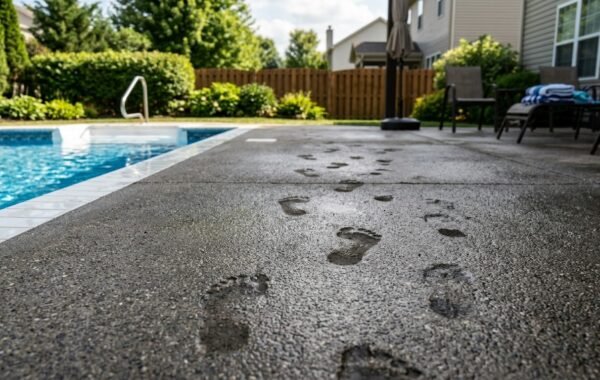
Wet treads on above ground pool stairs with deck builds pose a major slip hazard. Therefore, providing non-skid traction is critical. Swimmers running up steps with wet bare feet need dependable surface traction. Fortunately, you can boost stair grip using simple contractor methods.
First, specify treads tested under ASTM International standards for wet slip resistance. For wood stairs, mix textured polypropylene slip grip powder into your exterior stain. The microscopic polymer beads create a gritty, non-skid surface without scratching bare feet.
Alternatively, install self-adhesive rubberized traction strips on each tread nose. Heavy-duty waterproof grip tape provides immediate traction on wet composite boards. Replace worn traction strips every two seasons to maintain high safety levels.
Winter Prep and In-Pool Step Storage
Winter weather can damage your above ground pool stairs with deck system if left unprepared. Before winter freezes set in, disconnect interior steps from your above ground pool stairs with deck setup. Drain all gravel weights carefully. Drain ballast gravel or sand from weights and store steps inside a garage or shed.
Leaving steps submerged risks ice damage to your above ground pool stairs with deck mounting brackets. Store steps inside a shed. Ice sheets can crush hollow plastic steps and rip deck mounting brackets. Inspect liner areas under step pads for dirt and clean the vinyl thoroughly.
For exterior above ground pool stairs with deck steps, sweep away wet autumn leaves. Decaying leaves speed up wood rot. Wet decaying leaves trap moisture against wood treads, speeding up rot and mildew growth. Wash treads with a mild oxygen bleach solution before winter snow arrives.
Heavy Load Reinforcement and Accessibility Features
Bariatric Support and Stringer Doubling
Standard stair framing supports regular foot traffic easily. However, heavy-duty above ground pool stairs with deck systems require reinforced framing for safety. If family members need extra stability, design stairs to support 600 pounds or more.
First, double up your center stringers by face-screwing two 2×12 boards together. Fasten the two boards using two rows of 3-inch exterior structural screws. Doubled stringers eliminate all center tread flex under heavy loads.
In addition, reduce post spans beneath the bottom stair landing. Set heavy 6×6 support posts under each corner rather than 4×4 posts. Solid 6×6 posts resist ground movement and provide an immovable anchor for stair railings.
Wide Treads and Dual Continuous Handrails
Adding accessibility features to above ground pool stairs with deck projects helps swimmers with mobility challenges. Increase tread depth from the standard 10 inches to a generous 12 or 14 inches. Deep treads allow full-foot placement on every step.
Furthermore, install dual handrails on both sides of the stair flight. Many swimmers need to grip rails with both hands when climbing out of the water. Ensure both handrails extend 12 inches past the top and bottom risers.
Smooth cap rails with rounded edges provide comfortable grip support. In contrast, rough lumber edges can cause painful splinters on wet palms. Always coat handrails with exterior marine spar varnish for lasting durability.
Frequently Asked Questions
Hover or tap any question below to reveal the answer.
Common Questions and Contractor Answers
Here are straight answers from our experienced pool deck construction team.