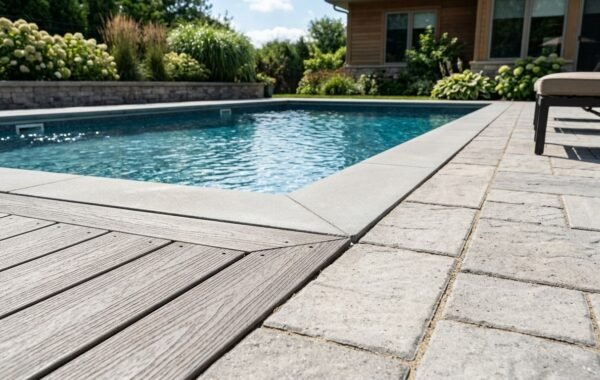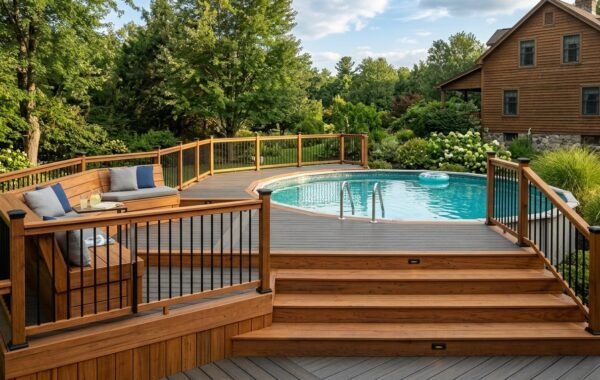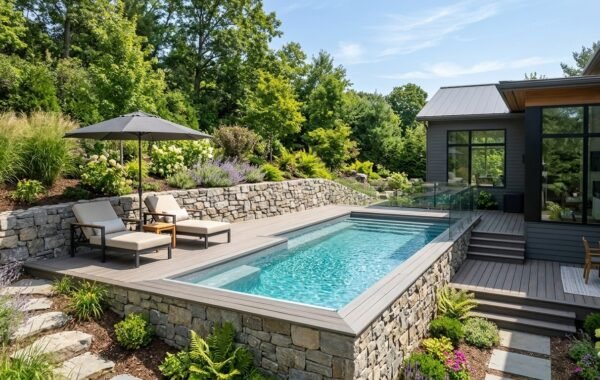

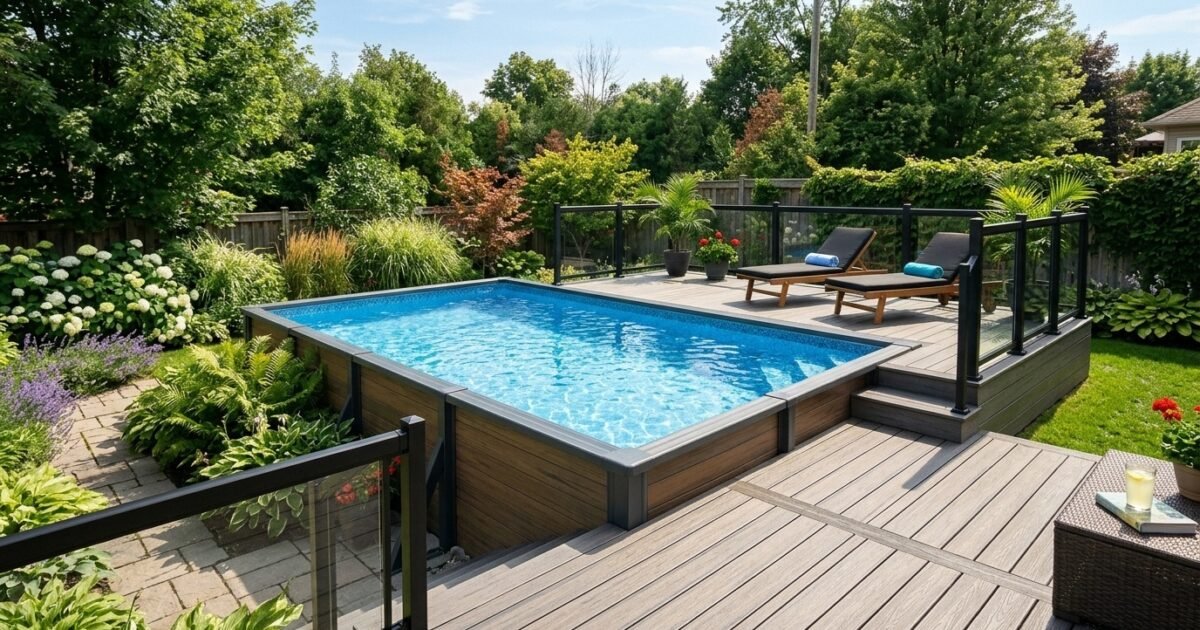
Installing aluminum swimming pool decks provides a lasting, zero-rot outdoor living space around your pool. In fact, molded aluminum planks never splinter, warp, or crack under harsh summer sun. Most families spend between $45 and $95 per square foot for a complete build. However, long-term upkeep savings make aluminum an great lifetime upgrade.
In fact, building around swimming pools requires materials that resist pool splash water and heavy humidity. Wood decking rots quickly. Also, composite boards get hot under bare feet. In contrast, powder-coated aluminum stays cool. In addition, it offers great wet grip. This guide covers aluminum swimming pool decks. We examine bare feet heat, slip ratings, and prices.
Material Comparison: Aluminum vs Wood vs Composite Pool Decks
Lifespan, Upkeep, and Heat Performance
Selecting the best decking for aluminum swimming pool decks requires comparing metal against standard wood and composite. Different deck surfaces react very differently to pool splash water, sun exposure, and heavy foot traffic. For example, wood boards absorb moisture while aluminum sheds water immediately.
Therefore, review the detailed performance data in the comparison table below. We evaluate four top swimming pool deck options across installed pricing, bare feet heat ratings, slip grip, and fire safety. This data helps you choose the best surface for your backyard pool.
| Decking Material Choice | Installed Cost / Sq Ft | Barefoot Heat Rating (SRI) | Wet Slip Rating (DCOF) | Expected Lifespan | Fire Safety Rating |
|---|---|---|---|---|---|
| Extruded Powder-Coated Aluminum | $45.00 to $95.00 | Cool (SRI 68 to 82) | 0.58 to 0.68 (High grip) | 40+ years | Class A (Non-flammable) |
| Capped Poly Composite Boards | $35.00 to $65.00 | Very Hot (SRI 25 to 42) | 0.48 to 0.55 (Moderate) | 25 to 30 years | Class B or C |
| Western Red Cedar Timber | $28.00 to $48.00 | Moderate (SRI 50 to 60) | 0.52 to 0.58 (Smooth) | 15 to 22 years | Class C (Combustible) |
| Treated Southern Yellow Pine | $18.00 to $32.00 | Warm (SRI 45 to 55) | 0.50 to 0.55 (Medium) | 12 to 18 years | Class C (Combustible) |
As a result, your climate and upkeep goals dictate your final choice. Wood requires yearly sealing. Also, composite traps intense solar heat. In contrast, aluminum swimming pool decks offer lifetime durability without splintering or fading. For complementary layout plans, explore our guide on above ground pool deck ideas.
Related: Multi Level Deck with Pool: Design Plans & Cost Guide
Thermal Performance and Barefoot Comfort on Aluminum Decks
Heat Dissipation and Solar Reflectance Index
Many families worry that metal decks scorch bare feet in summer heat. However, aluminum swimming pool decks stay noticeably cooler than dense dark composite boards. Metal features high heat flow, meaning it sheds heat rapidly into passing air breezes.
In addition, molded aluminum boards are hollow rather than solid plastic blocks. Air channels inside the planks allow cooling breezes to circulate steadyly through the deck floor. In fact, whenever swimmers splash pool water onto the deck, the water cools the metal planks instantly.
Engineers measure bare feet heat comfort using the Solar Reflectance Index (SRI). Light gray and beige aluminum planks score high. In fact, their SRI ratings reach 70 to 82. In contrast, dark composite scores near SRI 25. Surfaces reach scalding heat levels over 145 degrees.
Powder-Coated Heat-Reflective Finishes
Modern powder coatings protect aluminum swimming pool decks from sun degradation. Factory crews apply powder coats under 400 degrees of heat. This baked finish bonds tight to metal. This baked finish never peels, blisters, or chalks under intense outdoor sunlight.
Specify custom powder coatings tested to AAMA 2604 or 2605 industry standards. Powder finishes contain reflective ceramic pigments. These pigments bounce infrared heat away from the deck. As a result, deck surfaces stay cool. Barefoot swimmers walk comfortably all summer long.
In fact, powder coatings feature subtle textured finishes that soften sunlight glare. Glossy metal reflects bright sunlight into swimmers’ eyes, creating harsh patio glare. Matte textured coatings soften bright sunlight. As a result, you enjoy a pleasant patio tone.
Slip Resistance and Wet Traction Standards
Fluted Extrusions and Non-Skid Powder Textures
Safety around swimming pools depends on reliable bare feet grip. Aluminum swimming pool decks excel in wet environments thanks to specialized plank planks. Metal extruders mold micro-grooved ridges directly into the top surface of each plank.
These raised grooved ribs channel standing pool water away from underfoot. Bare feet grip textured metal ridges. Water channels away so swimmers do not slip on slick films. In addition, factory powder coatings incorporate fine ceramic beads into the finish.
This textured powder finish feels like fine grip sandpaper beneath wet toes. However, the rounded ceramic beads provide grip without feeling abrasive on delicate skin. Children can safely run and jump on wet aluminum swimming pool decks without dangerous slips.
ANSI A326.3 Wet Dynamic Friction Benchmarks
The flooring industry enforces strict slip standards under the ANSI A326.3 standard. This test measures the Dynamic Friction (DCOF) of wet walking surfaces. Standard indoor flooring requires a basic wet DCOF rating of 0.42.
However, exterior pool surrounds require much higher traction to prevent falls. Quality aluminum swimming pool decks deliver high grip. In fact, wet DCOF ratings reach 0.58 to 0.68. These strong scores beat commercial safety codes. They give families peace of mind.
Textured aluminum holds grip well. Even with sunscreen lotion, surfaces do not get slick. Sunscreen oils create slick films on composite. In contrast, grooved metal channels oil away. On grooved aluminum, water and oils drain away into micro-channels between boards.
Structural Framing and Corrosion Protection Systems
Marine-Grade 6005-T5 Aluminum Extrusions
The solid strength of aluminum swimming pool decks starts with proper alloy selection. Manufacturers use marine-grade 6005-T5 or 6063-T6 aluminum alloys for planks, joists, and posts. These custom alloys offer twice the tensile strength of standard solid pine lumber.
In fact, aluminum will never rot, warp, twist, or suffer termite damage. Wood framing near swimming pools deteriorates within 10 to 15 years from constant splash moisture. In contrast, aluminum frames last for decades. Metal maintains full factory strength for over 50 years.
Aluminum framing parts also weigh roughly one-third as much as treated lumber beams. Lighter framing reduces strain on base piers and makes build faster for construction crews. For base tips, check our guide on how to build a pool deck.
Electrolytic Isolation and Galvanic Rust Prevention
Preventing galvanic rust is essential when connecting aluminum decks to above-ground pools. Dissimilar metals react when wet. If aluminum touches steel pool walls, galvanic rust develops. Electrolytic currents cause thin steel pool walls to corrode rapidly.
Therefore, smart builders install thick neoprene isolation gaskets between aluminum framing and steel pool walls. Neoprene pads break metal contact. As a result, they stop galvanic rust between steel and aluminum. In addition, always fasten aluminum parts with 304 or 316 stainless steel screws.
Never use zinc-plated or carbon steel screws on aluminum swimming pool decks. Cheap screws react with aluminum, causing screws to seize or snap under load. Stainless steel screws prevent rust. They provide lasting connections around saltwater pools.
Substructure Spans and Joist Spacing Guidelines
High metal stiffness allows aluminum swimming pool decks to span longer distances than wood. Composite decking needs close joist spacing. In contrast, aluminum spans up to 24 inches. Greater spans reduce joist counts. You buy fewer framing beams for the build.
In fact, aluminum beams span up to 16 feet between support posts without center sagging. Long spans require fewer pier footings. You dig fewer holes into your yard lawn. Digging fewer holes saves significant excavation time and lowers base concrete costs.
Check deck span tables certified under ASTM rules. Specifically, review ASTM International standards before building. Proper span engineering ensures your deck supports heavy gatherings, patio furniture, and pool equipment effortlessly.
Top Aluminum Swimming Pool Deck Design Styles
Full Perimeter Walk-Around Decks
A walk-around deck surrounds your pool completely. It gives you a steady 360-degree platform. Walking fully around the pool edge makes vacuuming, skimming, and winter cover build effortless. You never have to drag hoses across damp lawn grass.
In addition, walk-around aluminum swimming pool decks integrate flush with the pool coping. Children can jump into the pool from any side safely. Build the rim path at least 36 to 48 inches wide for easy passing room.
Install deck railings with self-closing gates. Sturdy gates satisfy city pool barrier codes. Black aluminum railings look sleek with gray planks. The combined design creates an upscale yard. The complete system creates a clean, custom backyard focal point.
Side Platform Sun Decks with Integrated Lounges
If you prefer an expansive outdoor lounging zone, build a wide side platform sun deck. A side platform expands out on one side of the pool. It adds 200 to 400 square feet of lounge space. This spacious deck fits wide lounge chairs. In addition, you have plenty of room for dining tables.
In fact, multi-level aluminum swimming pool decks create distinct zones for sunbathing and dining. Build a raised platform near the pool rim. This area works great for sun loungers. Then, step down to a lower patio space. Place your outdoor dining table and grill here.
Extruded aluminum planks interlock tightly, creating a dry space underneath elevated decks. You can use the dry, shaded area below for storing pool pumps, filters, and winter covers. For styling inspiration, read our guide on pool deck decorating.
Prefabricated Modular Kit Decks
Prefabricated modular kits offer an efficient, DIY-friendly option for aluminum swimming pool decks. Manufacturers engineer pre-cut aluminum panels that bolt together easily on site. Modular kits arrive with pre-drilled holes, support joists, and complete hardware packs.
Homeowners can build modular kits easily. With basic tools, work finishes in a weekend. Modular parts connect with stainless bolts. Locking brackets keep all panels solid. You can expand modular decks later. Simply add new sections as your budget grows.
If you ever move to a new home, modular aluminum decks can be disassembled and transported easily. Traditional wood or concrete pool decks remain fixed yard decks. Modular aluminum systems preserve your project funds wherever you live.
Seamless Glass and Aluminum Railing Combinations
Pairing aluminum swimming pool decks with modern glass railings creates a stunning contemporary look. Tempered glass panels mount in aluminum posts. The clean glass provides clear pool views. Glass panels provide an clear view of sparkling pool water from your patio chairs.
In fact, solid glass panels act as effective wind blocks on breezy afternoons. Swimmers stay sheltered from wind gusts. Solid glass panels keep lounging areas warm. Tempered glass meets ISPSC safety rules. Smooth vertical glass prevents climbing footholds.
Clean glass panels twice each season with a rubber squeegee and mild mild soap. Heavy-duty aluminum railing posts keep glass panels rock solid during thunderstorms. For more barrier designs, check our resource on pool deck railing ideas.
Step-by-Step Installation Process for Aluminum Decks
Setting Concrete Piers and Aluminum Posts
Building long-lasting aluminum swimming pool decks starts with precise base prep. First, lay out your deck edge using batter boards and tight mason string lines. Mark post hole locations based on your solid engineering plan.
Next, excavate post holes using a power auger, digging deep below your regional winter frost line. Pour a 4-inch crushed gravel drainage base into each hole. Then, insert cardboard Sonotube forms and fill them with 3,500 PSI concrete mix.
Embed galvanized post base brackets into the wet concrete before it cures. Once concrete hardens, bolt solid aluminum posts into the brackets. Use a 4-foot spirit level to ensure all posts stand perfectly plumb on both faces.
Assembling the Extruded Aluminum Framing Grid
Once your base posts cure, start assembling the aluminum support framework. Mount heavy aluminum beams across support posts. Secure them with stainless carriage bolts. Verify that beams sit level. Check alignment across the entire pool perimeter.
Next, install aluminum joists perpendicular to the main ledger beams. Use factory snap-in joist brackets. Fasten them with self-tapping stainless screws. Space joists on 16-inch or 24-inch centers based on plank load ratings.
Check frame squareness with diagonal check lines. Measure corner to corner across the deck. Both diagonal numbers must match closely. Keep variance within 1/8 inch before laying planks. Rigid aluminum framing never twists or crowns like wet wood lumber.
Locking Tongue-and-Groove Deck Planks
Installing surface planks on aluminum swimming pool decks is fast and satisfying. Most modern aluminum systems feature locking tongue-and-groove plank edges. Start at the pool rim and work outward toward the yard edge.
Fasten the first plank along the pool edge using hidden starter clips. Slide the second plank into the first groove. The locking joint hides all screw heads. The locking joint hides all screw screws fully beneath the surface.
Drive stainless screws through the hidden flange. Fasten screws firmly into each support joist. Tap planks gently with a rubber mallet. This ensures tight joints across the deck surface. Complete the edge by snapping matching aluminum edge trim channels into place.
Installing Integrated Water Drainage Gutters
Many aluminum swimming pool decks feature built-in watertight drainage channels. The tongue-and-groove joint contains an internal gutter that catches splash water and rain. Trapped water flows along the plank length toward the deck edge.
Mount collection gutters along the deck edge. Gutters catch runoff from plank channels. Route gutter runoff into PVC downspouts. Direct drain water away from pool bases. Proper drainage stops soil erosion. It protects deck posts and nearby stone walkways.
Watertight decking creates dry patio space underneath. You can use the shaded area for quiet lounging. You can install outdoor ceiling fans and lighting below for shaded afternoon lounging. Dry space below deck protects lawn gear. In addition, it keeps pool pumps sheltered from rain.
Cost Breakdown and Long-Term Value Analysis
Upfront Installed Costs vs 30-Year Ownership Savings
Evaluating aluminum swimming pool decks requires looking beyond initial purchase price tags. Aluminum costs more upfront than pine. However, it delivers massive long-term savings. Wood decks need pressure washing each spring. In addition, you must stain wood every two years.
The detailed 30-year ownership cost table below highlights the true financial value of aluminum. We compare initial building costs against ongoing upkeep costs over three decades. Review these numbers to see why aluminum is the smartest long-term choice.
| 30-Year Expense Category | Pressure-Treated Wood Deck | Capped Composite Deck | Extruded Aluminum Deck |
|---|---|---|---|
| Initial 300 Sq Ft Build Cost | $7,500 to $10,500 | $13,500 to $19,500 | $18,000 to $28,500 |
| 30-Year Staining & Sealing Supplies | $4,500 to $6,500 | $0 (No stain needed) | $0 (No stain needed) |
| 30-Year Professional Labor Upkeep | $6,000 to $9,000 | $1,200 to $2,400 (Washes) | $0 (Simple hose rinses) |
| Plank Replacement & Rot Repairs | $3,500 to $5,500 | $800 to $1,500 | $0 (Zero rot warranty) |
| Total 30-Year Cost of Ownership | $21,500 to $31,500 | $15,500 to $23,400 | $18,000 to $28,500 |
As a result, aluminum swimming pool decks cost less over 30 years than high-upkeep wood decks. You eliminate tiring sanding chores. You never spend weekends applying smelly wood stains. Aluminum maintains strong resale value. Home buyers appreciate lasting, zero-rot decks.
Labor Costs and Prefabricated Kit Pricing
Professional labor rates for aluminum swimming pool decks range between $20 and $40 per square foot. Because aluminum parts are lightweight and pre-engineered, building proceedss faster than heavy timber framing. A two-man pro crew can finish a 300-square-foot deck in three days. DIY builds take four days.
If you choose a pre-built DIY kit, complete packages cost between $35 and $55 per square foot. Kits include pre-cut planks, joists, brackets, screws, and step-by-step layout guides. DIY build saves between $4,000 and $8,000 in carpentry labor fees.
In fact, leading aluminum deck makers back their decking systems with 30-year to lifetime limited warranties. These comprehensive warranties cover finish peeling, solid cracking, and rust failure. Warranties provide total peace of mind for your home upgrade.
Maintenance, Cleaning, and Winter Care
Seasonal Wash and Chlorine Splash Removal
Maintaining aluminum swimming pool decks requires minimal effort compared to other decks. Pool splash and sunscreen oils rinse off easily. Plain hose water keeps planks spotless. You never need to rent floor sanders or buy toxic chemical wood strippers.
Rinse the deck with a garden hose every few weeks. This simple wash removes loose dust. For stubborn pollen or barbecue grease spots, mix warm water with mild mild dish soap. Wipe the area with a soft-bristled car wash brush and rinse clean.
Never use harsh wire brushes on aluminum decks. Wire bristles can scratch protective paint. Wire bristles can scratch protective paint finishes, dulling the satin sheen. Simple soapy water restores factory shine fast. It cleans dirt without scratching the tough finish.
Winter Snow Removal and Salt Safe Practices
Winter weather presents zero solid threat to durable aluminum swimming pool decks. Unlike porous wood that absorbs water and cracks when freezing, metal remains fully safe from ice. Snow melts off metal planks quickly. Winter sun warms the deck and clears ice fast.
Always clear snow with a plastic shovel. Metal shovel blades can scratch powder finishes. Metal shovel blades can gouge the powder coating if pushed aggressively against planks. In addition, avoid rock salt or harsh chemical deicers containing rock salt.
Instead, use pet-safe pet-safe salt pellets or spread clean builder sand for winter traction. Sand gives immediate winter grip. In fact, it never corrodes protective powder coatings. In spring, simply wash the sand into garden beds with your garden hose.
Frequently Asked Questions
Hover or tap any question below to reveal the answer.
Common Questions and Contractor Answers
Here are straightforward answers from our experienced pool deck building crew.