
Installing a pool privacy fence turns an open swimming area into a private outdoor haven. A sturdy boundary shields your family from neighborhood eyes and blocks harsh wind gusts. Most homeowners spend between $3,500 and $12,000 for a full build. However, exact prices depend on post depth, local codes, and chosen materials.
In addition, building near pool water brings unique building challenges. Heavy winds push hard against wide solid panels. Also, splashing pool chemicals can rust cheap metal hardware over time. Local city building boards also enforce strict safety latch rules. This builder guide covers tested pool privacy fence designs, wind load math, building codes, and price facts.
Material Comparison for Pool Privacy Fence Projects
Core Durability and Upkeep Specs
Picking the best material for a pool privacy fence means balancing privacy against future upkeep. Different fence types react differently to summer heat and pool water splash. For example, vinyl handles pool chemicals easily while wood needs regular sealing.
Therefore, check the detailed performance specs in the table below. We compare five top perimeter choices across cost, wind strength, and lifespan. This data helps you pick the right fence for your home.
| Fence Material Option | DIY Material Cost / Ft | Pro Installed Cost / Ft | Wind Load Rating | Privacy Level | Expected Lifespan | Annual Upkeep Demands |
|---|---|---|---|---|---|---|
| Tongue-and-Groove Vinyl | $24.00 to $38.00 | $42.00 to $65.00 | Up to 85 mph | 100 percent solid | 25 to 35 years | Low (mild soap wash) |
| Horizontal Cedar Slats | $28.00 to $42.00 | $48.00 to $78.00 | Up to 95 mph | 95 to 100 percent | 20 to 30 years | Moderate (stain every 3 yrs) |
| Louvered Modern Aluminum | $45.00 to $75.00 | $75.00 to $115.00 | Up to 115 mph | 85 to 95 percent | 40+ years | Very Low (rinse with hose) |
| Composite Board Panels | $35.00 to $55.00 | $60.00 to $85.00 | Up to 90 mph | 100 percent solid | 30 to 40 years | Low (annual rinse) |
| Frosted Tempered Glass | $75.00 to $130.00 | $120.00 to $220.00 | Up to 120 mph | 90 percent blur | 40+ years | Moderate (squeegee wash) |
Consequently, your budget and climate shape your final material choice. Vinyl gives you an affordable, smooth surface that sheds water. In contrast, powder-coated aluminum offers top strength during severe coastal storms. For more yard design tips, explore our guide on inground pool with deck surfaces.
Related: Pool Coping Ideas: Modern Styles, Pavers & Costs
Building Codes and Safety Standards for Pool Privacy Fence Enclosures
ISPSC Barrier Height Requirements
Safety codes govern every home pool privacy fence build. Most city building inspectors enforce rules from the International Swimming Pool and Spa Code (ISPSC Section 305). Therefore, you must follow these rules before you dig holes.
First, the top of the fence must stand at least 48 inches above ground level. However, many pool privacy fence panels reach 72 inches to block direct views. Next, the gap between the ground and the bottom edge must stay under 2 inches. This small gap stops young kids and pets from crawling underneath.
In addition, solid privacy walls must not have ladder footholds on the outside. If horizontal frame rails sit closer than 45 inches apart, place them on the inside facing the pool water. As a result, outside visitors cannot climb horizontal rails like a ladder.
Gate Hardware and Self-Closing Latches
Every gate in a pool privacy fence requires special safety hardware. Specifically, gates must swing outward away from the swimming pool water. Furthermore, the gate must close and latch firmly from any open spot.
Install heavy-duty adjustable spring hinges to ensure positive closing. In addition, mount the latch release button at least 54 inches above the ground surface. If the latch sits lower than 54 inches, place it on the pool side of the gate. This placement keeps the release pin out of reach for toddlers.
Consequently, magnetic safety latches like MagnaLatch remain the builder standard. These latches use strong magnets to grab the strike pin without sticking. In contrast, standard mechanical latches can bounce open during sudden wind gusts.
Property Line Setbacks and Utility Clearances
Property lines set exact limits on where you can place a pool privacy fence. Most towns demand a 2-foot to 5-foot setback from rear and side lot lines. However, some towns let you build on the boundary line with written neighbor sign-off.
Always hire a licensed land surveyor to find your true metal boundary pins. Never guess property boundaries from old grass lines or tree rows. In addition, call 811 before you dig into your yard soil. Buried power lines, gas pipes, and pool water lines often run through side yards.
Finally, check overhead power line heights above your yard. National electric rules require power lines to hang at least 22.5 feet above water. Ensure your tall privacy panels do not reach toward overhead service drops.
Wind Load Engineering and Post Depth Calculations
Sail Effect on Solid Privacy Panels
A solid pool privacy fence acts like a boat sail in high wind. Unlike open chain link fences, solid boards stop all air movement. Consequently, wind creates high lateral force against fence posts and concrete piers.
Engineers calculate wind thrust using basic fluid dynamics math. For example, a 75-mph wind gust creates over 15 pounds of force per square foot. Therefore, a standard 6-foot by 8-foot fence panel takes over 720 pounds of side push.
If you build with thin posts, high wind snaps lumber right at ground level. Shallow post footings are a common cause of storm fence failures. To prevent breakage, you can shorten spans or use thicker structural posts.
Post Footing Depth and Diameter Ratios
Deep post holes ensure that your pool privacy fence stays upright during storms. As a trusted builder rule, set at least one-third of the post length underground. For example, a 6-foot tall fence needs a 9-foot post buried 3 feet deep.
Furthermore, dig your holes at least 6 inches below your local winter frost line. In cold northern areas, frost penetrates 36 to 48 inches deep. If posts sit above frost depth, freezing wet dirt pushes posts up and out of plumb.
In addition, maintain proper footing width. Drill holes three times as wide as your post thickness. For a 4×4 post, drill a 10-inch wide hole. For a 6×6 post, drill a 12-inch to 14-inch wide hole.
Spacing and Reinforcement for High-Wind Zones
Post spacing controls the total strength of your pool privacy fence. In standard inland areas, builders set posts on 8-foot centers. However, in open windy areas or coastal zones, reduce post spacing to 6-foot centers.
Narrowing the span from 8 feet to 6 feet cuts wind pressure per post by 25 percent. In addition, upgrade your posts from standard 4×4 lumber to heavy 6×6 wood posts. Alternatively, install heavy galvanized steel posts like Master-Halco PostMaster channels.
Steel posts flex under heavy wind gusts without snapping or rotting. Furthermore, you can cover steel posts with matching wood trim boards for a clean look. Always lock posts with 3,500 PSI concrete mix poured around the base.
Top Pool Privacy Fence Design Styles
Modern Horizontal Wood Slat Screens
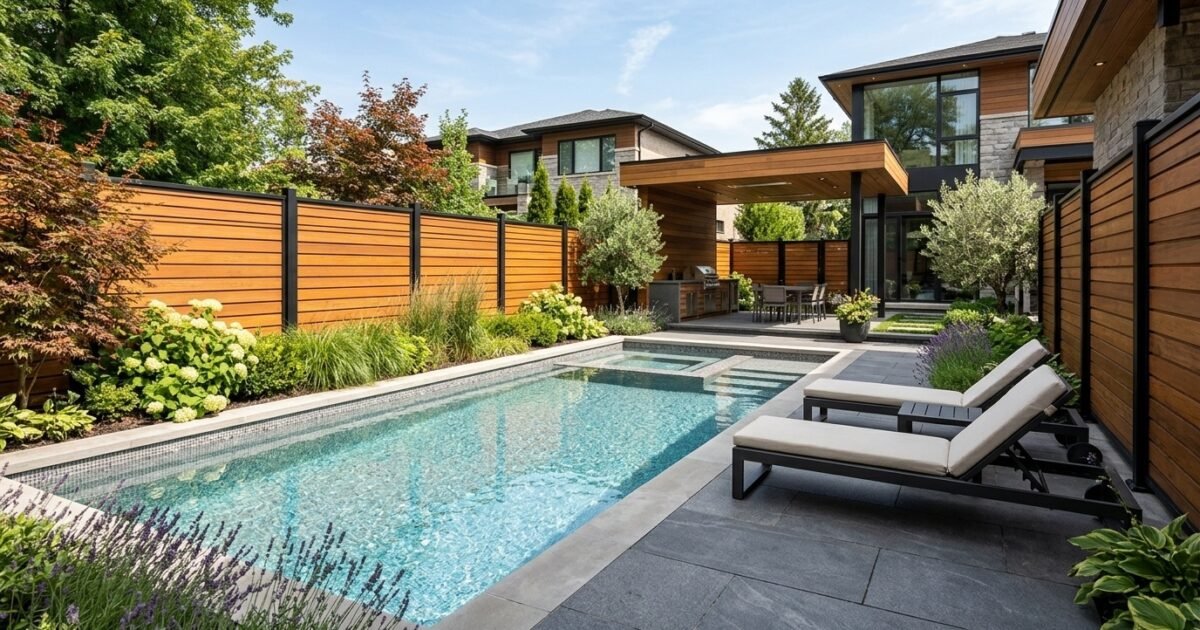
A modern horizontal slat pool privacy fence brings crisp lines to backyards. Instead of vertical boards, carpenters run 1×4 or 1×6 boards horizontally across posts. This horizontal pattern makes small pool decks feel wider and more spacious.
Furthermore, horizontal boards allow custom privacy spacing. You can butt boards tight for complete visual block. Alternatively, leave a narrow 1/4-inch shadow line gap between boards. This small gap vents heavy wind while keeping full eye-level privacy.
Western Red Cedar and Ipe hardwood work best for horizontal builds. Both wood types hold natural oils that fight water rot and insects. Apply a quality UV-blocking wood oil every two years to preserve rich wood tones.
Louvered Aluminum and Powder-Coated Metal Panels
Louvered aluminum panels stand out as the top choice for high-wind pool privacy fence setups. These modern systems use angled horizontal louvers fixed in tough aluminum frames. The tilted louvers block direct views from upper neighbor windows.
Meanwhile, the open louver gaps allow cool yard breezes to pass freely through the pool deck. This airflow stops hot air pockets from forming around your pool water. Powder-coated metal also fights pool splash-out and salt air rust.
Choose metal coatings tested under ASTM International standards for salt fog protection. Aluminum needs zero painting or insect sprays during its entire service life.
Solid Vinyl and Composite Tongue-and-Groove Walls
A vinyl pool privacy fence gives homeowners a hassle-free, washable privacy wall. Interlocking tongue-and-groove boards slide into grooved top and bottom rails. This tongue-and-groove joint forms a tight, gap-free privacy barrier.
High-grade vinyl boards resist fading from sun and staining from pool splash. Furthermore, composite fence boards offer rich wood grain texture without the chore of annual staining. Composite boards combine dense recycled wood fibers with strong plastic resin.
However, you must leave 1/4-inch expansion room inside post channels during assembly. Vinyl and composite boards expand and shrink as outdoor temperatures change through the year. For more yard railing ideas, review our guide on pool deck railing ideas.
Frosted Architectural Glass Pool Surrounds
Frosted architectural glass adds modern style to an upscale pool privacy fence. Builders set 1/2-inch thick tempered laminated glass panels into heavy stainless steel floor clamps. The frosted glass surface diffuses bright light while obscuring sharp body outlines.
In addition, solid glass panels work as great sound shields against neighborhood noise. Thick glass panels bounce street noise away from your lounge chairs. Glass also lets soft ambient daylight reach your pool patio without casting harsh shadows.
Clean glass surfaces twice each season with a rubber squeegee and mild soap water. Always specify marine-grade 316 stainless steel hardware to stop surface rust near saltwater pools.
Living Green Walls and Fast-Growing Privacy Hedges
A living green wall pairs structural fencing with lush outdoor climbing plants. You can build a sturdy cedar trellis or wire grid, then train climbing vines along the frame. Star Jasmine and climbing hydrangea form thick, fragrant green screens within two seasons.
Alternatively, plant tall evergreen hedges right behind a shorter code-compliant pool privacy fence. American Pillar Arborvitae and Green Giant Arborvitae grow up to 3 feet each year. These slim evergreen trees create dense, tall greenery up to 20 feet high.
Always plant trees at least 6 feet back from pool plumbing pipes. This space keeps tree roots from cracking buried pool pipes. It also cuts down on falling leaves inside your pool skimmers.
Acoustic Sound Dampening and Wind Relief Engineering
Sound Reduction Around Hardscape Pool Decks
Hard stone pool patios reflect sound waves easily. Splashing water, patio music, and talking voices bounce off concrete and tile surfaces. Consequently, adding a solid pool privacy fence helps contain pool patio noise inside your yard.
Thick solid materials like tongue-and-groove cedar or composite boards act as sound barriers. A solid 6-foot fence can cut sound noticeably. This drop cuts loud neighbor lawnmower noise in half.
To maximize sound dampening, eliminate all bottom gaps along patio edges. Install dense rubber base sweeps or concrete curb stops beneath the bottom fence rail. Sealing small air gaps keeps unwanted noise from leaking under your fence.
Slotted Infill and Airflow Gaps for Wind Relief
Solid fences in open yards take brutal force from sudden thunderstorms. However, you can lower wind force by adding micro-vent gaps between boards. A 1/4-inch gap between horizontal wood slats vents air without losing visual privacy.
Aerodynamic testing proves that narrow gaps drop lateral wind thrust by up to 35 percent. This drop relieves stress on posts, brackets, and underground concrete bases. In addition, vented boards allow gentle air cooling on hot July afternoons.
You can also alternate boards on the front and back of posts in a shadowbox pattern. Shadowbox fences block sightlines from straight ahead while letting wind slip through freely. As a result, shadowbox fences survive heavy wind storms better than solid panels.
Handling Sloping Yards with Stepped or Racked Panels
Backyards around swimming pools rarely stay completely flat. When ground slopes away from pool coping, you must choose between stepped or racked fence panels. A stepped pool privacy fence keeps each panel level while dropping down in steps.
In contrast, a racked fence angles boards down to follow the natural ground slope. Stepped fences look clean and formal alongside rectangular stone patios. However, stepping panels creates triangular gaps under bottom rails on downhill post sides.
Therefore, you must close triangular gaps to stay within the 2-inch ISPSC pool code limit. Builders pour stepped concrete curbs or install custom bottom filler boards beneath stepped panels. This extra step stops pets and kids from slipping under the fence line.
Step-by-Step Pool Privacy Fence Construction Guide
Layout, Plumb Lines, and Post Hole Excavation
Building a solid pool privacy fence starts with accurate layout work on your yard. First, drive wooden stakes at each fence corner and gate post spot. Run tight nylon mason line between stakes to mark your straight perimeter lines.
Next, use a measuring tape and marking paint to spot post centers along the string. Space posts on exact 6-foot or 8-foot centers. Verify that all corners form crisp 90-degree angles using the standard 3-4-5 triangle rule.
Then, dig your post holes using a gas power auger or heavy hand digger. Dig straight vertical holes without sloping the side walls. Ensure every hole reaches deep below your regional frost line depth.
Setting Posts with Gravel Base and Concrete Anchors
Proper base drainage keeps your pool privacy fence posts from rotting in wet dirt. First, pour 4 inches of crushed stone or angular gravel into the base of each hole. This gravel base lets ground moisture drain away from the post end.
Next, place your structural post in the middle of the hole. Use a 4-foot spirit level to plumb the post on two adjoining sides. Hold the post steady with two temporary 1×4 wood braces staked into the turf.
Then, mix 3,500 PSI concrete and shovel it evenly into the hole around the post. Stop pouring concrete 2 inches below the top soil surface. Trowel the top of the wet concrete into a slight slope to shed rainwater away from the wood face.
Framing Rails and Fastener Specifications
Let your concrete footings cure for at least 48 hours before you attach fence rails. A solid 6-foot pool privacy fence demands three horizontal rails to stay rigid. Position rails at the top, center, and bottom of the fence posts.
Use 2×4 pressure-treated lumber rated for ground contact and outdoor wet exposure. Attach rails to posts with heavy galvanized structural brackets. Alternatively, drive 3-inch 304 stainless steel wood screws directly through rail ends into posts.
Never use cheap interior drywall screws on an outdoor pool fence build. Chlorinated splash water and outdoor rain cause weak steel screws to snap within two years. Stainless steel screws provide permanent rust protection.
Installing Infill Boards and Expansion Gaps
After you secure your frame rails, start hanging your vertical or horizontal privacy boards. First, set a level baseline using a laser level or tight string line. Keep bottom board edges at least 2 inches above the patio pavers or grass line.
This air gap stops wood from soaking up groundwater from wet soil. When hanging wood pickets, drive two stainless fasteners at every rail crossing. For composite or vinyl panels, leave 1/4-inch expansion room inside post channels.
Check every third board with a level to stop boards from leaning off plumb. If boards start to slant, adjust spacing slightly across the next few boards. For helpful frame building steps, read our guide on how to build a pool deck.
Pool Privacy Fence Cost Breakdown and Budgeting
Material and Labor Cost Table
Budgeting for a pool privacy fence requires looking at both material costs and pro crew labor. Fence contractors price jobs by the linear foot installed. A standard backyard pool fence measures between 120 and 200 linear feet.
The pricing table below shows realistic cost ranges for common fence materials. These prices include digging, posts, infill panels, safety gate hardware, and crew labor.
| Fence System Type | DIY Material Cost / Linear Ft | Pro Installed Cost / Linear Ft | 150-Foot Total Project Cost | Typical Build Time |
|---|---|---|---|---|
| Treated Southern Pine | $18.00 to $26.00 | $32.00 to $45.00 | $4,800 to $6,750 | 20 to 28 hours |
| Western Red Cedar | $28.00 to $42.00 | $48.00 to $68.00 | $7,200 to $10,200 | 24 to 32 hours |
| Solid White Vinyl | $24.00 to $38.00 | $42.00 to $62.00 | $6,300 to $9,300 | 18 to 24 hours |
| Composite Tongue-and-Groove | $35.00 to $55.00 | $60.00 to $88.00 | $9,000 to $13,200 | 26 to 34 hours |
| Architectural Aluminum | $45.00 to $75.00 | $75.00 to $125.00 | $11,250 to $18,750 | 20 to 28 hours |
In addition, self-closing pool gates add $250 to $650 per gate opening. Most backyards need at least two gates for easy mower and pool gear access. For hardscape patio cost guides, check out our resource on pool deck pavers.
Hidden Site Costs and Permit Fees
Always keep extra funds ready for surprise site issues when building a pool privacy fence. First, rocky or hard clay dirt raises digging expenses. If an auger hits hard rock, crews charge $50 to $100 per hour for jackhammer time.
Next, city building permits cost between $75 and $350 depending on your town rules. Many towns also demand an official land survey before approving fence permits. A certified boundary survey costs between $400 and $900.
Finally, plan for old fence removal and tree clearing. Taking down and hauling old wood fencing costs $3 to $6 per linear foot. Trimming back heavy tree roots or thick shrubs adds $300 to $800 to your budget.
Maintenance, Cleaning, and Saltwater Protection
Washing Chlorine and Mineral Splash Marks
Splashing pool water leaves white mineral spots on a pool privacy fence over time. Salt, calcium, and pool chemicals bond to vinyl, wood, and metal surfaces. Fortunately, simple seasonal cleaning keeps your fence looking fresh and clean.
First, wash panels with fresh clean water from a garden hose. For stubborn mineral haze, mix 1 gallon of warm water with 1/3 cup of mild dish soap. Wipe surfaces gently using a soft car wash brush or sponge.
Avoid using high-pressure power washers on soft cedar wood boards. Pressure over 1,500 PSI tears wood fibers and leaves permanent wand marks. Instead, use gentle water pressure under 800 PSI to rinse away dirt.
Sealing Wood and Protecting Metal Hardware
Natural wood fences need regular defense against strong summer sunlight. Apply an oil-based, deep-soaking exterior wood stain every two to three years. Soaking stains penetrate deep into wood pores without peeling or flaking.
In addition, check metal hinges and latches twice each summer. Spray moving latch parts with dry Teflon silicone lubricant. Avoid thick grease sprays because heavy grease grabs dirt, sand, and lawn clippings.
If you own a saltwater pool, rinse metal gate hardware monthly with fresh tap water. Salt mist speeds up rust on cheap metal components. Using 316 stainless steel screws and hinges prevents dark rust stains on fence posts.
Fence Materials and Privacy Ideas: Vinyl, Glass, Wood, and Screened Pools
The fence material decides the look, the upkeep, and the price. Vinyl, glass, and wood each suit different pools, and a screen enclosure is a different kind of privacy altogether.
Vinyl Pool Fence, Pool Wood Fence, and Glass Pool Fence
A vinyl pool fence costs more upfront than wood but needs almost no upkeep: it never needs painting, and chlorine splash does not stain it. A pool wood fence costs less and looks warm, but it needs sealing every few years, especially near a pool. A glass pool fence keeps the view open while meeting barrier codes, which suits modern pools and small yards, but glass shows water spots and costs the most of the three.
Privacy Ideas for a Deck and Above Ground Swimming Pools with Decks and Fences
Privacy ideas for a deck include a fence on the deck edge, tall planters, a pergola with curtains, or a privacy screen mounted to the railing. These work on inground and above-ground decks alike. Above ground swimming pools with decks and fences need a fence that sits on the deck or at the yard edge: a deck-mounted fence keeps the pool area enclosed, while a yard fence around the whole pool and deck meets barrier codes with a self-closing gate.
Pool House Shed, Pool Screen Doors, and Florida Screened in Pool
A pool house shed stores pool toys, chemicals, and furniture near the pool, and it doubles as a privacy screen on one side of the deck. Pool screen doors are the self-closing doors in a screen enclosure: they must latch automatically to meet pool barrier codes. A florida screened in pool is a pool inside a large screen enclosure, common in Florida, which keeps bugs and leaves out and extends the swimming season. Screen enclosures need a level deck edge to anchor to and cost much more than a fence.
Frequently Asked Questions
Hover or tap any question below to reveal the answer.
Can I build a 6-foot fence around my swimming pool?
However, front yard fences often have a 4-foot height limit. Always verify your local town height rules before ordering materials.
Which fence material handles pool chlorine best?
Neither material absorbs water, and neither corrodes from pool chemicals. Wood also lasts well if you seal it with an exterior wood oil.
How far from the pool water should the fence sit?
This distance gives you plenty of space for walking, cleaning, and vacuuming. It also keeps splash water to a minimum.
Does a solid privacy fence meet pool barrier codes?
In addition, the bottom gap must stay under 2 inches, and gates must latch automatically. Always confirm your local ISPSC code rules before building.