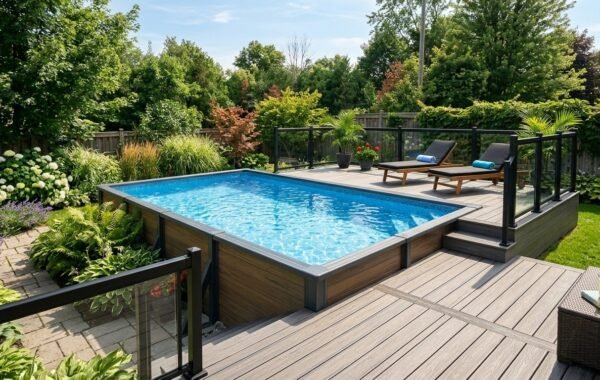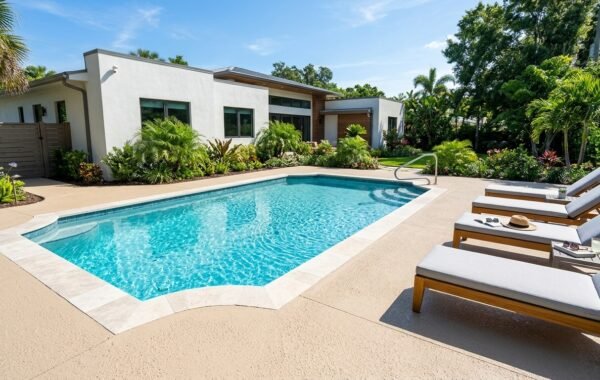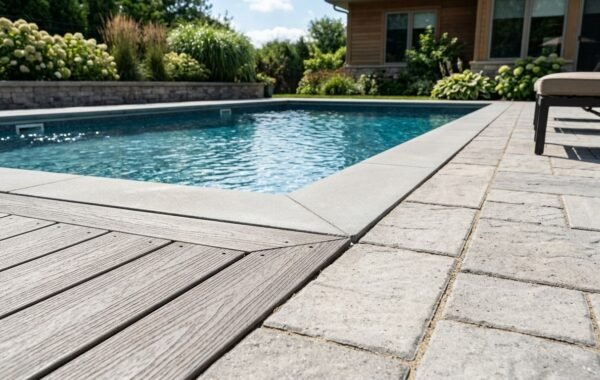

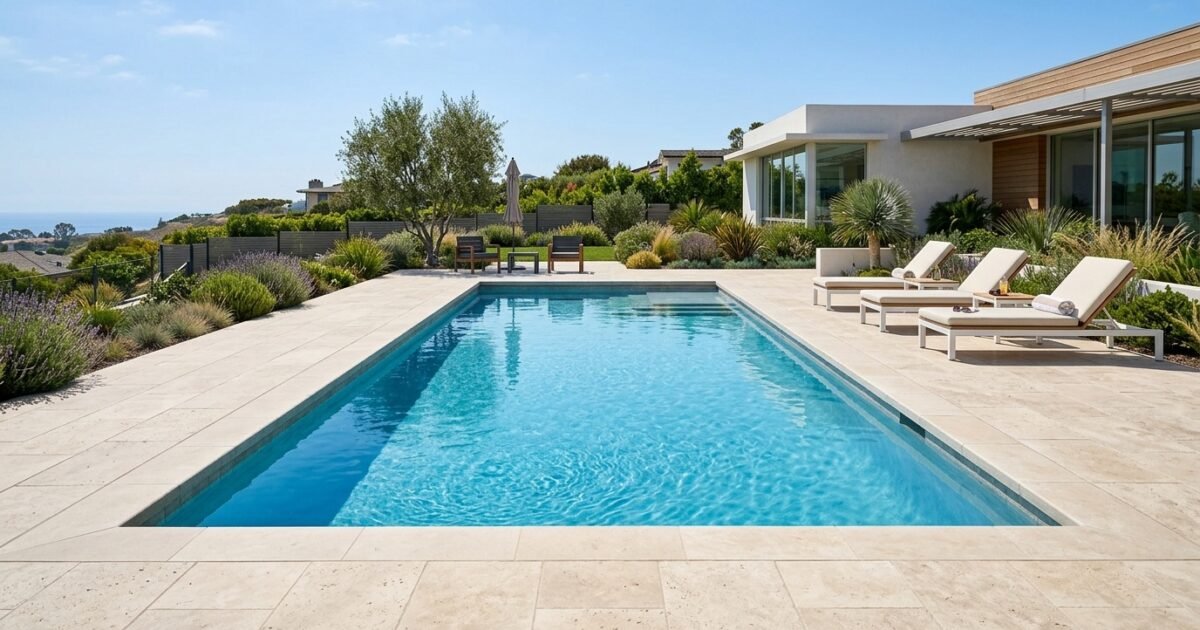
Installing interlocking pool deck pavers gives your swimming pool high-end appeal, excellent drainage, and long-term durability. Quality pool deck pavers cost $12 to $28 per square foot installed, depending on whether you choose concrete, porcelain, or natural stone. Unlike poured concrete slabs, individual pavers flex naturally with ground movement. Consequently, pavers never develop unsightly surface cracks.
In addition, pavers permit easy underground plumbing repairs. Workers can lift specific paver units, repair leaking pool pipes, and reinstall the exact same stones without leaving ugly patch marks. This builder guide breaks down material comparisons, base preparation formulas, slip safety standards, and joint stabilization techniques.
Pool Deck Pavers Material Comparison Table
Different paver materials deliver distinct thermal comfort, slip resistance, and chemical durability around chlorinated water. The comparison table below highlights critical contractor benchmarks for pool surrounds.
| Paver Material | Installed Cost Per Sq Ft | Barefoot Heat Level | Wet Slip Rating (DCOF) | Saltwater Resistance |
|---|---|---|---|---|
| Concrete Pavers (Standard) | $12.00 to $18.00 | Moderate to warm (115 to 125 deg F) | 0.55 to 0.65 (High traction) | Moderate (Requires penetrating sealer) |
| Porcelain Exterior Pavers (2cm) | $18.00 to $28.00 | Comfortable (105 to 118 deg F) | 0.50 to 0.60 (Textured grip) | Maximum (Non-porous, salt proof) |
| Tumbled Travertine Pavers | $16.00 to $26.00 | Very cool (100 to 108 deg F) | 0.58 to 0.68 (Excellent wet grip) | Good (Natural open stone pores) |
| Natural Flagstone Pavers | $18.00 to $30.00 | Hot in dark tones (120 to 135 deg F) | 0.52 to 0.62 (Natural cleft surface) | Moderate (Prone to flaking if unsealed) |
| Permeable Concrete Pavers | $14.00 to $22.00 | Moderate (112 to 122 deg F) | 0.60 to 0.70 (Maximum drainage) | High (Joint voids absorb splash-out) |
If you are deciding between poured slabs and modular units, review our comprehensive analysis on stamped concrete vs pavers for pool decks for long-term ownership costs.
Related: Pool Coping Ideas: Modern Styles, Pavers & Costs
Top 3 Pool Deck Paver Materials Explained
Homeowners must balance upfront material cost against summer barefoot comfort and chemical resistance.
1. High-Density Concrete Pavers
Interlocking concrete pavers offer the widest variety of shapes, color blends, and laying patterns. Manufactured under extreme pressure and vibration, modern pavers achieve compressive strengths exceeding 8,000 PSI. They withstand intense freeze-thaw cycles without chipping. In addition, textured tumbled concrete pavers provide reliable foot traction when wet. However, select light tan or cream tones to prevent excessive heat buildup under midday sun.
2. 20mm Exterior Porcelain Pavers
Porcelain pavers have become the premier choice for luxury modern pool decks. Fired at over 2,200 degrees Fahrenheit, porcelain has an absorption rate below 0.5 percent. This non-porous structure makes porcelain completely impervious to pool chemicals, saltwater, and mold. Furthermore, porcelain pavers never require sealing. Manufacturers imprint high-traction micro-textures that remain slip resistant while feeling smooth under bare feet.
3. Tumbled Travertine Stone Pavers
Natural travertine remains the benchmark for barefoot comfort in hot southern regions. Travertine stone absorbs water immediately and stays 20 to 30 degrees cooler than poured concrete in full sun. Its natural cavities provide organic slip resistance without sharp edges. For a deep dive into natural stone performance, read our guide on travertine vs concrete pavers for pool decks.
Sub-Base Excavation and Base Preparation Rules
A paver patio is only as stable as the soil underneath it. Settled, wavy pool pavers almost always stem from inadequate sub-base compaction or poor aggregate drainage.
Follow the Interlocking Concrete Pavement Institute (ICPI) residential installation standards:
- Excavation Depth: Excavate 7 to 9 inches below finished pool coping height. This accommodates 4 to 6 inches of compacted crushed stone, 1 inch of bedding sand, and the thickness of your pavers.
- Subgrade Soil Compaction: Compact the native soil thoroughly using a reversible plate compactor before spreading any gravel. Soft clay soils require non-woven geotextile fabric beneath the gravel to prevent base sinking.
- Crushed Aggregate Base: Install 4 to 6 inches of dense-graded aggregate (such as 21A or crusher run). Compact the gravel in 2-inch lifts to achieve 98 percent standard Proctor density.
- Sharp Bedding Sand Layer: Screed exactly 1 inch of washed concrete sand (ASTM C33). Never use fine masonry sand or stone dust, which retain moisture and wash out during pool splash-out.
- Slope Away from Pool: Pitch the paver base at least 1/4 inch per linear foot away from pool coping toward yard drains. Review our engineering recommendations in the pool deck drainage and slope guide.
Joint Sand Stabilization: Regular Sand vs Polymeric Sand
Standard joint sand washes away within months from pool splash-out and rain runoff. In addition, wet plain sand invites ants and weed growth between joints.
Instead, install high-performance polymeric joint sand designed specifically for pool surrounds. Polymeric sand contains dry chemical binders that activate upon water contact. It cures into a flexible yet firm grout line. This firm seal keeps paver units locked tightly, stops weed roots, and resists pool water erosion. Ensure the paver surface is completely dry before sweeping in polymeric sand to avoid white polymer haze.
Safety Codes and Slip Resistance Standards
Wet safety is paramount around swimming pools. Loose, slick walking surfaces pose severe slip hazards for running children.
Choose pool deck pavers that meet or exceed ANSI A326.3 Dynamic Coefficient of Friction (DCOF) standards of 0.55 wet. Furthermore, ensure edge restraint borders are anchored firmly with 10-inch steel spikes or reinforced concrete edge restraints. For comprehensive safety regulations, consult our overview of pool deck safety codes and standards.
Frequently Asked Questions
Hover or tap any question below to reveal the answer.
Do pool deck pavers get hot in the summer?
Dark colored pavers absorb significant solar heat and can reach 130 degrees Fahrenheit.
Do you need to seal pool deck pavers?
Sealers block salt crystallization and prevent chlorine discoloration. Porcelain pavers never require sealing.