
Elevating your backyard retreat begins with strategic pool deck decorating. Bare concrete slabs and unadorned paver patios feel clinical and uninviting under blazing summer sunlight. Proper styling transforms an empty poolside expanse into an outdoor living room with distinct zones for sunbathing, conversation, and alfresco dining. Most homeowners invest between $1,200 and $6,500 on outdoor styling depending on furniture materials and shade structures.
However, poolside spaces present severe environmental challenges that destroy ordinary patio decor. Chlorine splash, saltwater mist, relentless ultraviolet radiation, and sudden summer squalls quickly bleach cheap fabrics and rust thin metal frames. In addition, damp bare feet require slip-resistant pathways. This comprehensive guide covers professional pool deck decorating rules. You will master commercial-grade outdoor fabrics, marine planters, cantilever shade pergolas, weatherproof rugs, and ambient night lighting.
Pool Deck Decorating Styles and Material Comparison
Successful styling harmonizes your home architectural aesthetic with the reflective blue of the pool water. Selecting compatible materials prevents frequent replacement costs. The comparison table below highlights four popular pool deck decorating themes, recommended structural materials, heat management ratings, and estimated decor budgets.
| Decorating Design Theme | Primary Frame Materials | Textile & Cushion Specs | Barefoot Heat Management | Average Decor Budget |
|---|---|---|---|---|
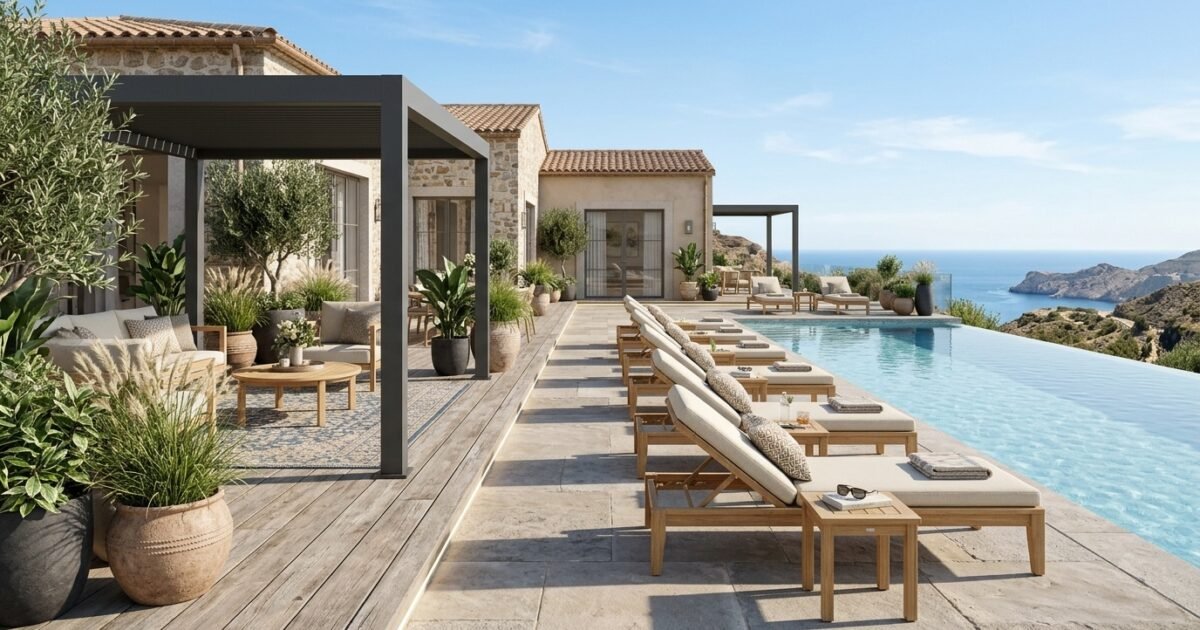
| Modern Mediterranean Resort | Grade-A plantation teak & powder-coated white aluminum | Solution-dyed acrylic (Sunbrella) in crisp ivory & navy | Excellent (light textiles & natural wood stay cool) | $3,500 to $8,000 |
| Coastal Minimalist | Marine-grade polymer (MGP) & 316 stainless steel | Quick-dry reticulated foam in sand & seafoam tones | Superior (polymer never absorbs summer heat) | $2,800 to $6,200 |
| Tropical Oasis Retreat | High-density polyethylene (HDPE) resin wicker | Olefin textured weave in olive, terracotta & charcoal | Good (requires breathable open weave patterns) | $2,200 to $5,400 |
| Contemporary Urban Chic | Dark bronze architectural aluminum & concrete accents | Heavyweight marine vinyl in stone gray & linen | Moderate (requires cantilever umbrella shade) | $3,200 to $7,500 |
Before styling furniture on bare or peeling surfaces, ensure your deck foundation is sound. Review our comprehensive evaluation of pool deck coatings and heat reduction finishes to drop surface temperatures before adding decor.
Related: Pool Coping Ideas: Modern Styles, Pavers & Costs
Creating Functional Poolside Living Zones
Placing furniture randomly around a pool creates hazardous obstacle courses for excited children. Experienced landscape architects divide pool deck decorating into three distinct functional zones.
1. The Active Splash and Sunbathing Zone
The splash zone occupies the immediate 4 to 6 feet along the pool coping. Keep this perimeter clear of loose rugs, delicate glass lanterns, and narrow side tables. Place reclining chaise lounges here, orienting them toward the midday sun.
Maintain at least 36 inches of clear walking space between the foot of the lounges and the pool edge. This safety clearance complies with the International Swimming Pool and Spa Code (ISPSC) walkway guidelines. In addition, select chaise lounges equipped with integrated back wheels. Wheels allow swimmers to easily follow the sun or roll furniture into shaded zones.
2. The Dry Conversational Lounge Zone
Position deep-seating outdoor sofas, club chairs, and low coffee tables at least 8 to 10 feet back from splash zones. Placing lounge furniture on higher deck elevations or under covered porches protects cushions from chlorinated water. Arrange seating in an open U-shape facing the pool water. This configuration allows parents to converse comfortably while maintaining direct visual supervision of swimming children.
3. The Outdoor Dining and Refreshment Zone
Dining sets require substantial deck footprint. A standard 6-person rectangular dining table requires a minimum 10ft x 12ft clear space. This footprint permits guests to pull chairs back comfortably without tipping off deck edges. Situate dining tables close to outdoor kitchens or patio doors to minimize long treks carrying heavy food trays.
Weatherproof Furniture: Woods, Metals and Polymers
Pool chemicals and summer heat destroy cheap interior furniture within weeks. Mastering pool deck decorating requires selecting frame materials engineered for harsh aquatic environments.
Grade-A Teak vs Shorea Wood
Grade-A teak remains the gold standard for luxury poolside furniture. Harvested from the dense heartwood of mature teak trees, it contains high natural oil concentrations and dense silica minerals. These natural oils repel water, resist pool chlorine, and prevent dry rot.
Left untreated, teak weathers over nine months into an elegant silver-gray patina. Alternatively, applying a breathable teak sealer annually preserves its warm honey-golden hue. Shorea wood offers a lower-cost hardwood alternative. However, shorea has lower oil content and requires bi-annual oiling to prevent hairline checking under intense sunlight.
Powder-Coated Aluminum vs Marine Polymer
Powder-coated extruded aluminum frames provide unmatched portability and corrosion resistance. Quality manufacturers apply electrostatic polyester powder coatings baked at 400 degrees Fahrenheit. This tough finish shields aluminum from chlorine oxidation and rust.
Marine-grade polymer (MGP) represents the latest innovation in poolside furniture. Manufactured from recycled high-density plastics, MGP will not swell, rot, splinter, or blister. Most importantly, MGP frames remain remarkably cool to the touch even under 100-degree midday heat. For material comparisons on surrounding decks, explore our guide comparing composite decking vs pavers for pool decks.
Textiles, Cushions and Non-Slip Outdoor Rugs
Cushions and rugs inject vivid personality into pool deck decorating. However, ordinary foam cushions act like giant sponges that trap chlorinated water, fostering toxic black mold within days.
Solution-Dyed Acrylics vs Printed Polyester
Never buy outdoor cushions made from piece-dyed or printed polyester. Polyester prints fade within three months of UV exposure and tear easily when wet. Always specify 100 percent solution-dyed acrylic fabrics, such as Sunbrella or Outdura.
In solution dyeing, liquid acrylic polymers are mixed with rich color pigments before the yarn is extruded. Consequently, color permeates the entire fiber core like a carrot, rather than coating just the outer surface like a radish. Solution-dyed acrylics can be cleaned with straight household bleach without losing their vibrant color.
Reticulated Quick-Dry Foam Cores
The secret to durable poolside cushions lies in the internal foam core. Specify open-cell reticulated polyurethane foam (often sold as Dry Fast foam). Unlike standard closed-cell upholstery foam, reticulated foam features large, porous honeycomb voids.
Splash water flows straight through the cushion and drains out the bottom within twenty minutes. In addition, insist on cushion covers featuring breathable mesh venting panels along the bottom seam. Bottom mesh prevents water entrapment and accelerates air circulation.
Poolside Rug Safety and Backing Rules
Outdoor rugs define seating zones and provide soft barefoot walkways across hot concrete. However, smooth rugs create deadly slip hazards around water. Observe these strict rug rules:
- 100 Percent Polypropylene Weave: Flat-woven polypropylene yarn absorbs zero water, resists chlorine bleaching, and dries rapidly in the sun.
- Zero Latex or Rubber Backing: Rubber and latex rug backings trap moisture vapor escaping from concrete slabs. Trapped moisture causes concrete spalling and permanently stains pool deck coatings.
- Commercial Non-Slip Gripper Pads: Always place an open-weave polyester non-slip pad beneath outdoor rugs. The open grid allows water drainage while locking the rug firmly to the deck.
Architectural Shade: Pergolas, Umbrellas and Sails
Unshaded pool decks become uninhabitable during peak summer afternoon hours. Thoughtful pool deck decorating incorporates multi-layered architectural shade structures to protect family and guests from harmful UV exposure.
Cantilever vs Market Umbrellas
Traditional center-pole market umbrellas require tables with center holes. In contrast, cantilever umbrellas mount heavy support masts offset to the side. A heavy-duty 10ft to 13ft cantilever umbrella rotates 360 degrees and tilts to block low-angle afternoon sun.
However, pool decks experience high thermal wind gusts. Always anchor cantilever umbrella bases with at least 250 to 400 pounds of sand or water ballast. Better yet, bolt the mounting plate directly into concrete deck footings using stainless steel wedge anchors.
Louvered Aluminum Pergolas
Motorized louvered pergolas represent the pinnacle of outdoor climate control. Extruded aluminum louvers rotate at the touch of a button. Swimmers can open louvers to bask in gentle morning sun or close them completely to block intense midday heat and summer rainstorms.
Built-in gutter systems channel rainwater down interior post columns, discharging water safely away from pool coping. For structural framing spans, consult our contractor blueprints in above ground pool deck plans and layouts.
Tensile Shade Sails
Triangle and hyperbolic shade sails deliver striking geometric silhouettes at an accessible price point. Woven from high-density polyethylene (HDPE) mesh, quality shade sails block up to 95 percent of UV rays while allowing hot air to escape upward.
Never anchor shade sail tension turnbuckles to light wooden fascia boards or thin pool railing posts. A 15-foot shade sail generates several thousand pounds of lateral tension in a 35-mph summer gust. Always anchor turnbuckles to heavy 6×6 pressure-treated posts set in deep concrete footings.
Poolside Planters, Foliage and Container Gardening
Living plants soften harsh hardscape edges and introduce lush organic textures. However, choosing the wrong foliage turns pool maintenance into a nightmare of clogged skimmer baskets and stained plaster.
Selecting Pool-Friendly Plant Species
Contractors recommend low-litter, thornless, and chlorine-tolerant plant varieties for poolside containers:
- Broadleaf Palms & Cycads: Sago palms, windmill palms, and Mediterranean fan palms drop zero blossoms and create an instant tropical ambiance.
- Ornamental Grasses: Blue fescue, feather reed grass, and fountain grass sway gracefully in summer breezes, adding soothing movement and visual texture.
- Hardy Succulents: Agave attenuata, blue glow agave, and aloe varieties require minimal watering and thrive in hot, reflected pool deck heat.
- Banned Poolside Species: Avoid bougainvillea, crape myrtles, and jacarandas. Their falling petals clog pump impellers and stain light-colored deck coatings. Furthermore, avoid flowering plants like lantana near walkways, as they attract aggressive stinging bees to bare swimmers.
Heavy-Duty Container Materials
Thin plastic planters crack under intense solar heat, while lightweight pots tip over in summer storms. Select heavy commercial planters made from fiberglass, glazed ceramic, or fiber cement.
Line container bases with three inches of clean drainage gravel before adding soil. Most importantly, install solid drainage saucers beneath planters situated on coated decks. Fertilizer runoff contains concentrated nitrogen and iron that permanently discolors paver joints and stamped concrete. To maintain clean joints, review our instructions in how to seal a pool deck properly.
Color Palettes, Accent Pillows and Visual Rhythm
A cohesive color palette ties pool deck decorating elements into an intentional architectural vision. Swimming pool water already contributes a dominant field of vibrant turquoise, cerulean, or deep navy blue. Decorating haphazardly with clashing neon shades creates visual noise that detracts from the serene water view.
Establishing the 60-30-10 Exterior Color Formula
Landscape designers apply the classic interior 60-30-10 color rule to exterior pool spaces to maintain aesthetic balance:
- 60 Percent Dominant Base: The largest visual surface area consists of your deck flooring, primary sofa frames, and large architectural shade pergolas. Keep these foundation pieces in neutral organic tones, such as weathered driftwood gray, warm travertine ivory, or clean matte white.
- 30 Percent Secondary Tone: Secondary furnishings, including dining chairs, outdoor area rugs, and cantilever umbrella canopies, provide supportive contrast. Excellent secondary hues include crisp navy, coastal seafoam, natural olive green, or soft charcoal.
- 10 Percent Accent Pops: The final layer injects vibrant energy through toss pillows, patterned pool towels, ceramic side stools, and flowering container plants. Saturated coral orange, sun yellow, and bright turquoise draw the eye across seating vignettes.
Preventing Pattern Overload with Scale Variation
When selecting outdoor throw pillows and floor cushions, combine three distinct pattern scales rather than repeating identical designs. Pair one large-scale botanical or nautical print with a medium-scale geometric stripe. Then, balance both busy designs with solid textured weaves. Always verify that accent pillow covers feature waterproof marine zippers and double-stitched French seams that withstand pool wave splashes.
All-Weather Sound Systems and Outdoor Entertainment
Sensory pool deck decorating extends beyond physical furniture to encompass ambient acoustics and media entertainment. Listening to relaxing music while sunbathing elevates the backyard resort experience. Outdoor speakers and their power supplies near the water fall under the National Electrical Code pool rules, so hire a licensed electrician for any new circuits.
Selecting Marine-Grade Outdoor Speakers
Never rely on small portable Bluetooth speakers placed on poolside tables. Portable units lack bass presence in wide open backyards and present annoying tripping hazards from charging cables. Instead, install a multi-zone outdoor sound system utilizing marine-grade landscape satellite speakers.
Leading manufacturers (such as Sonance and Coastal Source) engineer composite landscape speakers that blend invisibly into foliage containers. Bury direct-burial audio cabling 6 inches below ground in PVC conduit. Position speakers aimed inward toward lounging chairs rather than outward toward neighbor property lines. In addition, pair perimeter satellite speakers with an in-ground subwoofer to deliver rich, balanced sound across the entire pool basin at polite listening volumes.
Outdoor Television Placement and Anti-Glare Enclosures
Mounting an outdoor television near pool dining tables creates the ultimate summer sports viewing patio. However, placing delicate indoor consumer televisions outside destroys internal electronic circuits within months due to humidity and chlorine aerosols.
Always specify an all-weather television rated IP54 or higher for moisture and dust protection. High-brightness outdoor displays produce over 1,500 nits of light output, cutting through midday sun reflections. Mount displays inside articulating weatherproof aluminum enclosures, positioned away from direct water splash zones. For structural clearances around patio covers, review our guide on small backyard pool deck ideas and layouts.
Ambient Night Lighting, Lanterns and Fire Features
When the sun sets, strategic illumination transforms your poolside retreat into a magical evening entertainment venue. Proper pool deck decorating balances soft mood lighting with essential perimeter safety illumination.
Low-Voltage LED Fixtures
Never rely on harsh overhead security floodlights that glare into swimmers’ eyes. Instead, install a dedicated 12-volt low-voltage landscape lighting transformer.
Mount subtle flush LED step lights into stair risers, spaced every three to four feet. In addition, install down-facing under-cap lights beneath perimeter bench seating and stone coping overhangs. These discreet fixtures cast soft pools of light across walking surfaces without shining directly into the pool basin. For wiring and NEC code standards, study our guide on swimming pool deck lights and transformer sizing.
Safe Flame and Fire Bowl Integration
Gas fire pits and natural stone fire bowls extend pool season well into crisp autumn months. Situate fire features at least 10 feet away from swimming pool coping and clear of overhead umbrella canopies.
Always fuel fire bowls with piped natural gas or liquid propane tanks tucked inside decorative end tables. Never burn real firewood on a finished pool deck. Wind-blown wood embers melt vinyl pool liners, burn holes in Sunbrella cushions, and scorch sealed deck surfaces.
Seasonal Care, Winterizing and Furniture Longevity
High-end pool deck decorating furnishings represent a substantial financial investment. Neglecting end-of-season maintenance cuts furniture lifespan in half, causing premature fading and structural rust.
Deep Cleaning Fabrics and Frame Maintenance
At the close of each swimming season, perform a comprehensive deep clean on all furnishings before winter storage. Remove cushion slipcovers and launder with mild soap and warm water. For stubborn mildew spots, soak fabric in a solution of one cup household bleach and 1/4 cup mild soap per gallon of water. Solution-dyed acrylic yarns never lose their color from bleach sanitizing.
Wash powder-coated aluminum and teak frames with a soft car-wash sponge and automotive carnauba wax soap. The wax leaves a microscopically thin hydrophobic barrier that repels winter snow and freezing rain. For teak furniture, sand light surface stains with 220-grit sandpaper before applying a fresh coat of golden teak sealer.
Breathable Winter Furniture Covers
Never wrap outdoor furniture in cheap non-breathable plastic tarps. Non-breathable vinyl covers trap ground moisture, creating greenhouse conditions that rot wood and cause mold blooms under cushions. Instead, invest in custom-fitted furniture covers manufactured from breathable polyester (such as Duck Covers or Coverstore marine fabric).
Ensure winter covers feature built-in mesh air vents, heavy-duty click-close buckles, and adjustable elastic hem cords. The vents facilitate continuous air movement while the buckles prevent winter gale winds from tearing covers off furniture. Store cushions indoors in dry basement storage bags to protect them from nesting rodents.
Comprehensive Pool Deck Decorating Budget Breakdown
Establishing a realistic budget prevents overspending on decorative accessories while underfunding durable structural seating. The master cost guide below breaks down estimated expenses for styling a 600-square-foot residential pool deck with commercial-grade furnishings.
| Poolside Decor Item | Recommended Commercial Spec | Typical Quantity | Estimated Cost Range |
|---|---|---|---|
| Sun Loungers with Wheels | Grade-A teak or powder-coated aluminum with Sunbrella pads | 4 loungers | $1,400 to $3,200 |
| Outdoor Lounge Sofa & Chairs | HDPE all-weather resin wicker with reticulated dry foam | 4-piece sectional set | $1,800 to $4,500 |
| Cantilever Shade Umbrella | 10ft octagonal aluminum frame with 300 lb base ballast | 1 unit | $650 to $1,800 |
| All-Weather Flatweave Rugs | 100% UV-stabilized polypropylene with open-grid pads | 2 rugs (8×10 & 5×7) | $350 to $750 |
| Heavy Architectural Planters | Fiber cement or glazed ceramic with low-litter palms | 4 large containers | $400 to $900 |
| Low-Voltage LED Accent Lights | Cast brass 12V downlights & step lights with transformer | 8 fixtures + cabling | $550 to $1,200 |
| Deck Box & Towel Valet | 150-gallon hydraulic resin deck box + aluminum towel rack | 2 pieces | $300 to $650 |
| Total Estimated Decor Scope | Complete resort-style pool deck transformation | Turnkey package | $5,450 to $13,000 |
For modular stone options that complement luxury styling, explore our cost analysis comparing stamped concrete vs pavers for pool decks.
Decorating by Deck Surface and Pool Type: Pavers, Stone, Marble, and Colored Concrete
The deck surface decides what decorating works. A paver deck, a stone deck, and a colored concrete deck each take furniture, rugs, and plants differently, and inground and above-ground pools need different layouts.
Pool Deck Pavers, Stone Pool Deck, and Marble Pool Deck
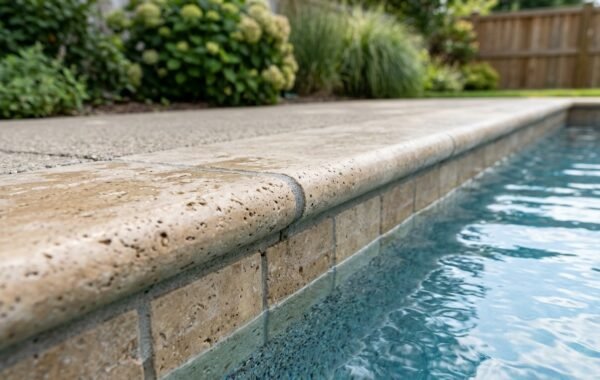
Pool deck pavers are the most forgiving surface for decorating, because pavers drain well, stay cooler than poured concrete, and can be lifted and reset if furniture legs mark them. See our Pool Deck Pavers guide for types, costs, and slip ratings. A stone pool deck uses natural stone slabs, which look warm and suit traditional gardens, but the surface is uneven, so rugs and furniture need level spots. A marble pool deck stays cool underfoot in hot sun and looks bright, but marble is slippery when wet and stains from leaves and sunscreen, so it needs sealing and non-slip rugs in walking areas.
Colored Concrete Pool Deck Colors
Colored concrete pool deck colors are made by adding pigment to the concrete or staining it after it cures. Light colors like sand, light grey, and pale terracotta stay cooler and suit bright decorating, while dark colors show water spots and get hot. Pick the deck color first, then choose furniture and rug colors that sit well against it, because repainting a deck is much harder than swapping a cushion.
Pool Deck Ideas for Inground Pools and Deck Ideas for Inground Pools
Pool deck ideas for inground pools start with the fact that the deck is level with the ground, so furniture, planters, and shade structures sit directly on it. Deck ideas for inground pools that work well include a sunbathing zone on one side, a dining zone under a pergola, and planters along the fence line to soften the edge. See our Inground Pool with Deck Ideas guide for travertine, wood, and concrete layouts.
Sliding Deck Pool Cover and Above Ground Pool Deck Alternatives
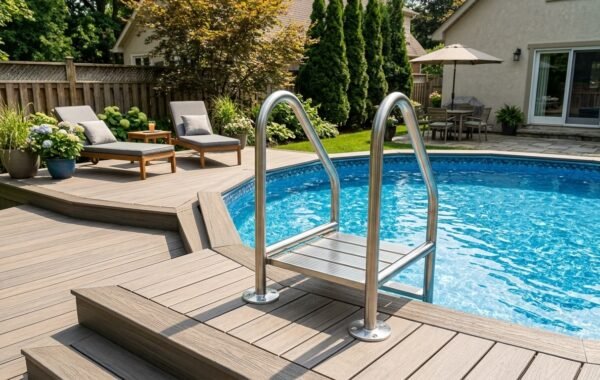
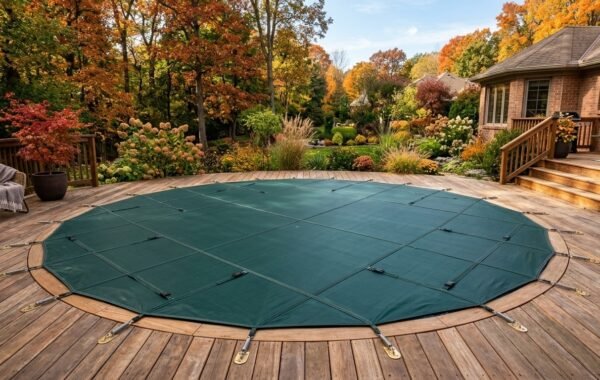
A sliding deck pool cover is a deck section that slides over the pool when it is not in use, which doubles as a patio and keeps leaves and heat in. It suits inground pools with flat surrounding deck space, and the furniture on it must be light enough to move when the cover slides. Above ground pool deck alternatives include a freestanding deck beside the pool instead of a wraparound deck, a gravel patio with outdoor rugs, or a small landing deck with steps. These cost less than a full wraparound deck and suit renters and smaller yards.
Frequently Asked Questions
Hover or tap any question below to reveal the answer.
What is the best fabric for pool deck decorating?
The color pigment permeates the liquid polymer fiber core, resisting bleach cleaners, pool chlorine, and intense solar fading.
How do you keep outdoor rugs from blowing away on a pool deck?
In addition, install an open-grid rubberized rug pad beneath the rug. Never use tape or glue that damages deck sealers.
Can you put an outdoor rug over stamped concrete?
Solid backings trap moisture vapor, causing concrete whitening, efflorescence, and surface spalling.
What plants are best around swimming pool decks?
Avoid flowering trees like crape myrtles or bougainvillea, which shed messy blossoms that clog filters and attract stinging bees.
How do you clean chlorine stains off pool furniture?
Scrub furniture frames and Sunbrella cushions using a soft nylon bristle brush, rinsing thoroughly with clean garden hose water.
How much clearance do you need around pool loungers?
This clearance complies with municipal safety codes and prevents swimmers from tripping into the water.
What is the best deck surface for decorating around a pool?
A stone pool deck suits traditional gardens, and a marble pool deck stays cool but needs sealing and non-slip rugs because it is slippery when wet.
Can you decorate an above ground pool deck the same way as an inground one?
Above ground pool deck alternatives like a freestanding deck or a gravel patio with rugs work well when a full wraparound deck does not fit the yard or the budget.