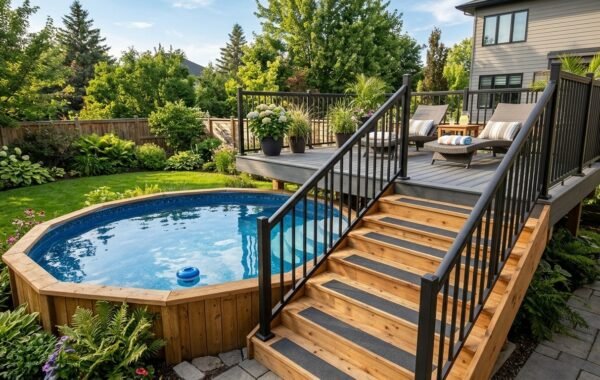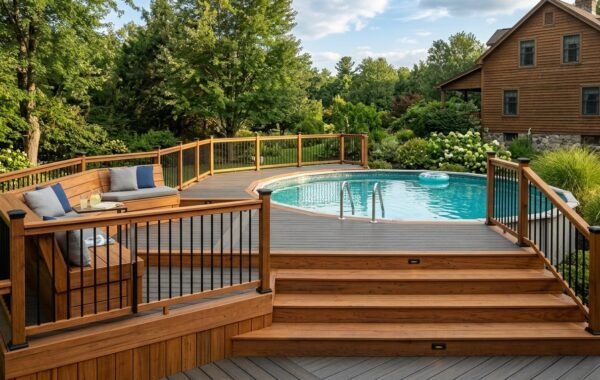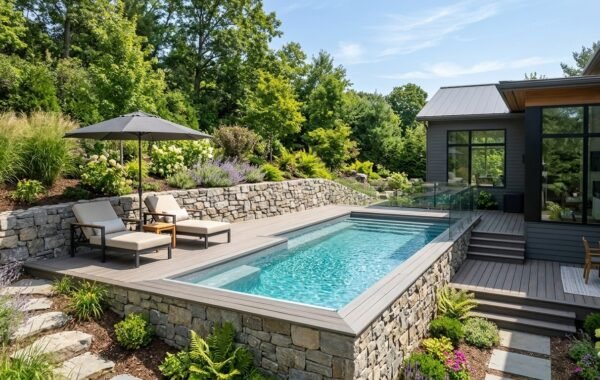

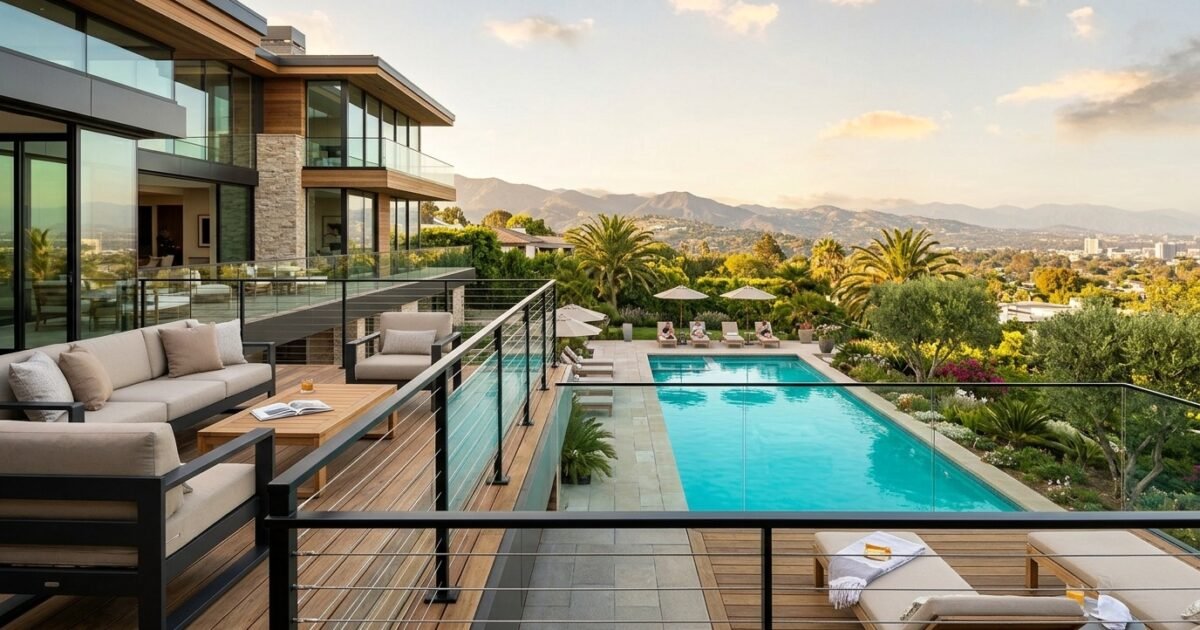
Choosing the right railing transforms an elevated pool surround from an ordinary platform into a secure architectural showpiece. Most pool deck railing ideas cost $65 to $220 per linear foot installed. Total costs depend on whether you choose marine cable, frameless glass, or aluminum. Elevated pool decks require strict barrier protection. Therefore, your railing must blend unobstructed water views with uncompromising structural safety.
Local municipal codes impose strict regulations on railings surrounding residential swimming pools. You must satisfy minimum height requirements and non-climbable baluster spacing. In addition, self-closing gate latches are required to pass final inspection. This builder guide covers the top five railing materials and linear foot costs. In addition, you will find essential building codes and mounting details.
Pool Deck Railing Material Comparison Table
Different railing materials offer unique advantages for view preservation and cleaning. In addition, they must withstand continuous chlorinated splash-out. The comparison table below highlights critical contractor metrics across the five leading railing systems.
| Railing System | Installed Cost Per Linear Foot | View Preservation | Code Compliance Level | Corrosion Resistance |
|---|---|---|---|---|
| Horizontal Cable Railing (316 Marine) | $85 to $145 | Excellent (Open sightlines) | High (Requires vertical post spacers) | Maximum (Resists saltwater pitting) |
| Frameless Tempered Glass Panels | $140 to $240 | Flawless (100% transparent) | Maximum (Solid non-climbable barrier) | High (Requires periodic squeegee care) |
| Powder-Coated Aluminum Balusters | $60 to $95 | Moderate (Traditional vertical bars) | Maximum (Universal code approval) | High (AAMA 2604 powder finish) |
| Composite Railing with Aluminum Pickets | $75 to $120 | Moderate (Substantial handrail profile) | High (Splinter-free bare hand feel) | High (Impervious to chlorine rot) |
| Custom Wrought Iron / Steel | $90 to $160 | Good (Slender solid bars) | High (Requires zinc primer undercoat) | Moderate (Rusts if paint scratches) |
Are you planning your overall project budget? Check our pool deck cost guide to balance decking and railing expenses.
Related: Pool Coping Ideas: Modern Styles, Pavers & Costs
5 Popular Pool Deck Railing Ideas Explained
Homeowners must balance open sightlines against child safety. In addition, consider local wind protection when selecting a railing style.
1. 316 Marine-Grade Stainless Cable Railing
Stainless steel cable railing delivers an open nautical look. It preserves clear, uninterrupted sightlines of the pool water. Contractors install 1/8-inch or 3/16-inch horizontal cables tensioned through powder-coated aluminum posts. Always specify Type 316 marine-grade stainless steel for pool environments. Standard 304 stainless steel develops tea staining when exposed to chlorine mist and salt systems.
2. Frameless Glass Panel Railings
Glass railings provide complete visual transparency and serve as a windbreak for exposed elevated patios. Installers clamp 1/2-inch architectural tempered safety glass panels into heavy-duty stainless steel base spigots. Glass panels eliminate horizontal ladder footholds entirely. Consequently, glass represents the safest barrier against climbing toddlers.
3. Modern Powder-Coated Aluminum Railings
Aluminum railing kits offer low lifetime maintenance and exceptional structural rigidity. Factory-applied architectural powder coatings resist chipping and salt spray degradation. In addition, slender 3/4-inch square vertical pickets provide clean contemporary lines without obstructing views. Aluminum posts anchor easily into wood joists or concrete pool slabs.
4. Wide-Top Drink Rail Railings
A drink rail system attaches a matching deck board horizontally across the top railing cap. This creates a functional 5.5-inch flat bar ledge where guests can set drinks and sunglasses. Builders frequently pair black aluminum pickets with capped composite drink rail caps to match surrounding decking boards. For layout ideas, review our small backyard pool deck designs.
5. Full Privacy Screen Wall Railings
Homeowners with close neighbors often incorporate solid privacy railings along rear deck borders. You can install horizontal composite slats, frosted glass panels, or decorative laser-cut aluminum panels. These modern privacy screens block wind gusts while shielding poolside sunbathers from adjacent second-story windows.
Critical Pool Deck Railing Building Codes
Swimming pool barriers must comply with strict safety mandates. The International Swimming Pool and Spa Code (ISPSC) governs these barrier rules. Inspectors check these dimensions carefully. For layered child-safety advice beyond the code minimums, see the federal Pool Safely drowning prevention campaign.
Ensure your pool deck railing ideas satisfy these non-negotiable code rules:
- Minimum Railing Height: Decks higher than 30 inches above grade require 36-inch railings. For pool perimeters, most towns mandate 48-inch barriers.
- The 4-Inch Sphere Test: Openings between balusters or cables must be small. A solid 4-inch sphere must not pass through any gap. This standard prevents toddlers from falling through openings.
- The Ladder Effect and Climbability: Horizontal railing members must not create ladder rungs that children can scale easily. If using horizontal cable, space cables under 3 inches apart under tension to prevent cable spreading.
- Structural Load Standards: The top handrail must support a 200-pound point load. Infill balusters must withstand 50 pounds per square foot. Review detailed regulatory specs in our pool deck safety codes and standards guide.
Post Mounting Details and Structural Blocking
A railing is only as strong as its connection to the deck frame. Surface mounting posts solely through deck boards creates dangerous wobble that fails inspection.
Contractors always install solid lumber blocking inside the rim joist cavity directly beneath each railing post location. Secure each post base bracket with 1/2-inch hot-dip galvanized through-bolts backed by heavy washers. Never use drywall screws or exterior wood screws for structural post anchorage.
Building on an elevated platform? Review the framing spans in our above ground pool deck ideas guide.
Handrails, Stair Railings, and Railing Kits: Cable, Wood Posts, and Balcony Styles
The deck edge railing is only part of the job. Stairs need handrails, cable systems need the right posts, and kits can make the whole job simpler.
Cable Deck Railing and Cable Deck Railing with Wood Posts
Cable deck railing uses thin stainless steel cables strung between posts, which keeps the view open while meeting barrier codes. Cables need high tension and tight spacing, usually under 4 inches apart, so children cannot climb through. Cable deck railing with wood posts pairs the cables with wood posts instead of metal, which suits traditional and rustic decks and costs less than metal posts. Wood posts need sealing, because pool water and sun wear them faster than metal.
Deck Stair Railing, Cable Stair Railing, and Pool Handrails
Deck stair railing runs along the deck stairs and must meet the same 48-inch barrier rules as the deck edge, with a handrail at 34 to 38 inches high for gripping. Cable stair railing uses cables on the stair side instead of balusters, which keeps the view open but needs the same tight cable spacing. Pool handrails are the grab rails at pool steps and ladders: they help swimmers get in and out safely and must be stainless steel or powder-coated aluminum to resist pool chemicals.
Deck Rail Kits, Modern Porch Railing, and Balcony Railing
Deck rail kits are pre-cut railing sections with posts, rails, and balusters in one box, which suit DIY builders because the parts match and the instructions cover the code heights. Modern porch railing uses slim horizontal rails or thin metal balusters, which suits modern pools and looks clean against a wood deck. A balcony railing is the same idea on a raised deck or second floor: it needs the same 48-inch height and 4-inch baluster spacing as a pool deck railing, plus stronger posts because the fall is higher.
Frequently Asked Questions
Hover or tap any question below to reveal the answer.
Can you use cable railing around a swimming pool?
Always verify with your local building inspector, as some municipalities restrict horizontal ladder rungs on safety enclosures.
What is the best railing material for saltwater pools?
Both resist galvanic corrosion and saltwater spray without pitting.
How tall does a deck railing need to be around an above ground pool?
This height stops children from climbing over into deep water.
How do you clean glass pool railings?
Avoid abrasive scrub pads that can scratch the tempered glass surface.
Do I need a handrail on pool deck stairs?
Pool handrails at the pool steps help swimmers get in and out safely.
Are deck rail kits good for a pool deck?
Check that the kit meets the 48-inch height and 4-inch baluster spacing rules for pool decks before buying.