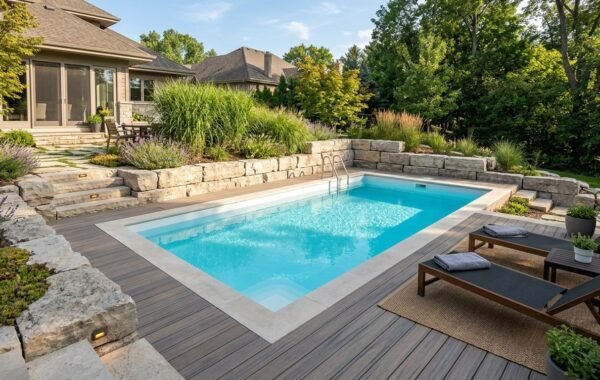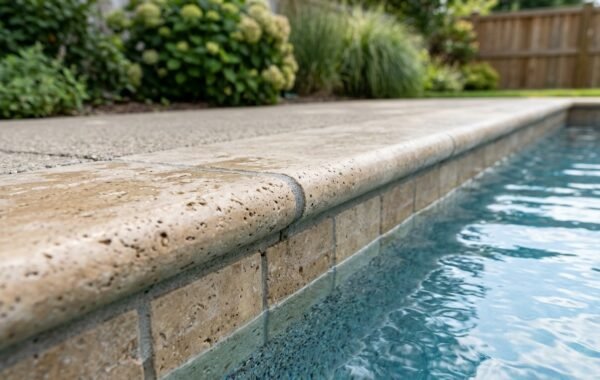

Bare concrete pool decks absorb intense solar radiation, turning backyard patios into blistering hot walking surfaces. Quality pool deck coatings drop surface heat by up to 25 degrees Fahrenheit while adding crucial slip resistance. Professional pool deck coatings cost $3.50 to $12.00 per square foot installed, depending on the chemical system you choose. Applying a protective coating extends slab longevity and conceals hairline spider cracks.
However, selecting the wrong coating chemistry leads to premature peeling, yellowing, and slick surfaces when wet. Different formulas respond differently to chlorinated pool splash-out, hydrostatic moisture, and ultraviolet exposure. This contractor comparison evaluates the five primary pool deck coating systems, barefoot heat benchmarks, wet slip ratings, and surface preparation requirements.
Pool Deck Coatings Comparison Table
Homeowners must balance upfront installation costs against expected lifespan, slip safety, and solar heat reduction. The comparison table below highlights contractor performance metrics across the top five coating chemistries.
| Coating Chemistry | Installed Cost Per Sq Ft | Barefoot Heat Level | Wet Slip Rating (DCOF) | Expected Lifespan | Saltwater Tolerance |
|---|---|---|---|---|---|
| Acrylic Lace Knockdown | $4.00 to $7.50 | Cool (105 to 118 deg F) | 0.52 to 0.58 (Textured grip) | 8 to 12 years | High (Impermeable resin) |
| Polymer Cementitious Overlay | $6.00 to $11.00 | Very Cool (100 to 108 deg F) | 0.58 to 0.65 (High traction) | 15 to 20 years | Moderate (Requires sealer) |
| Epoxy Pebble Stone Matrix | $8.50 to $14.00 | Moderate (112 to 122 deg F) | 0.55 to 0.62 (Natural river stone) | 10 to 15 years | High (Porous water runoff) |
| Elastomeric Cool-Deck Paint | $2.50 to $4.50 | Moderate (115 to 124 deg F) | 0.45 to 0.52 (Requires sand additive) | 3 to 5 years | Moderate (Prone to chipping) |
| Polyaspartic Vinyl Flake System | $7.00 to $12.50 | Warm (120 to 132 deg F) | 0.50 to 0.58 (Broadcast texture) | 15+ years | Maximum (Chemical proof) |
If you are exploring modular hardscape alternatives, review our detailed guide comparing stamped concrete vs pavers for pool decks for total ownership numbers.
Related: Pool Covers for Above Ground Pools with Decks: Types & Cost
Top 5 Pool Deck Coatings Explained
Contractors select coating formulations based on the physical condition of your concrete. In addition, they evaluate your local summer climate.
1. Acrylic Lace Knockdown Coatings
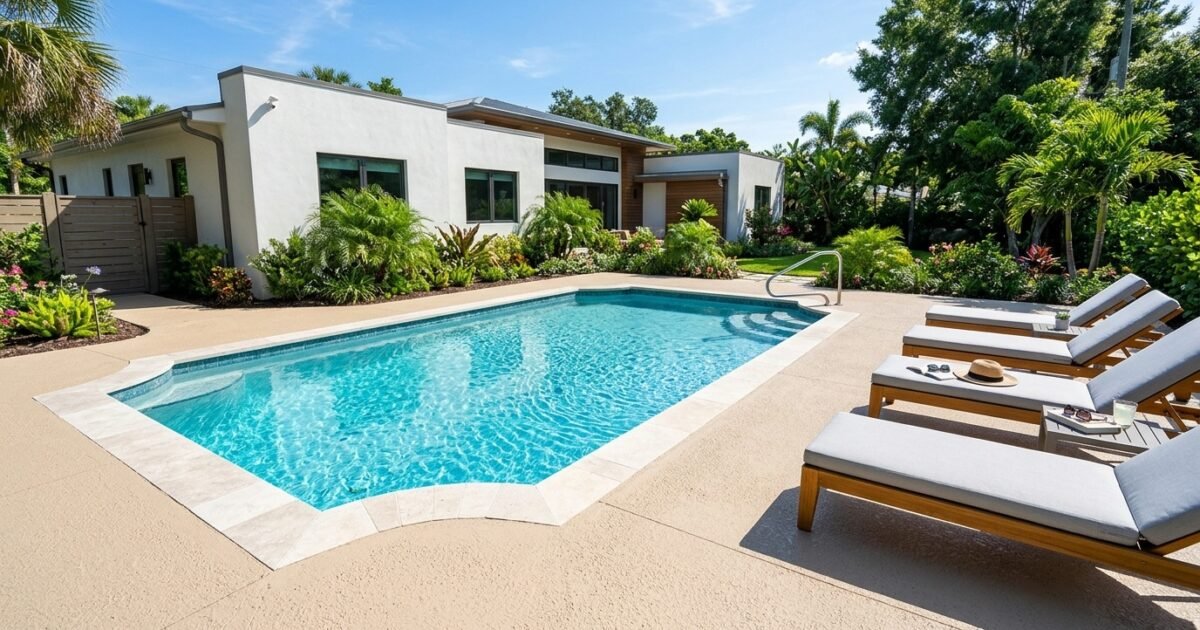
Acrylic lace is the undisputed industry standard for residential swimming pool decks across the Sun Belt. Contractors spray an acrylic cement slurry across etched concrete using a hopper gun. After five minutes of flash drying, workers glide a flat steel pool trowel across the ridges. This creates thousands of tiny cooling voids beneath bare feet, reducing surface heat dramatically.
2. Polymer Cementitious Overlays
Cementitious overlays combine Portland cement, white marble aggregate, and liquid polymer resins. This mixture forms a durable mineral stone topping that bonds monolithically with concrete. Because it contains real natural minerals, it dissipates solar energy into the ground faster than plastic paints. For a brand comparison, read our breakdown of kool deck vs acrylic coatings.
3. Epoxy Pebble Aggregates
Epoxy pebble coatings blend smooth natural river stones or crushed marble chips with clear ultraviolet-stable epoxy binders. Installers hand-trowel the aggregate mixture at 3/8-inch thickness over your existing concrete. Water filters through the open voids between pebbles, eliminating standing puddles. This creates a resort-style walking surface that feels massage-like on bare feet.
4. Elastomeric Acrylic Pool Deck Paints
Elastomeric pool deck paints represent the most affordable DIY resurfacing option. These heavy-bodied water-based paints bridge hairline concrete cracks and provide a uniform solid color. However, paints form thin surface films that tend to blister after three to five years under constant chlorine exposure. Professional installers always blend micronized polypropylene anti-slip beads into the final coat to prevent hydroplaning.
5. Polyaspartic and Polyurea Flake Systems
Polyaspartic coatings offer the highest chemical durability and UV stability on the market. Fused with dense vinyl color flakes and a clear non-yellowing topcoat, polyaspartics resist chlorine bleaching and pool acid spills completely. However, polyaspartic coatings absorb more solar heat than textured cementitious toppings. Therefore, builders recommend lighter tan or off-white color blends.
Barefoot Heat Tests and Solar Reflectance
Dark colored pool decks can reach 140 degrees Fahrenheit in July, causing painful blisters on children’s feet.
Look for pool deck coatings with high Solar Reflectance Index (SRI) ratings. White and light beige acrylic lace coatings reflect over 65 percent of solar rays. Consequently, they keep surface temperatures under 112 degrees Fahrenheit on a 95-degree afternoon. To compare natural stone heat absorption against synthetic finishes, explore our guide on travertine vs concrete pavers for pool decks.
Wet Slip Resistance and Safety Standards
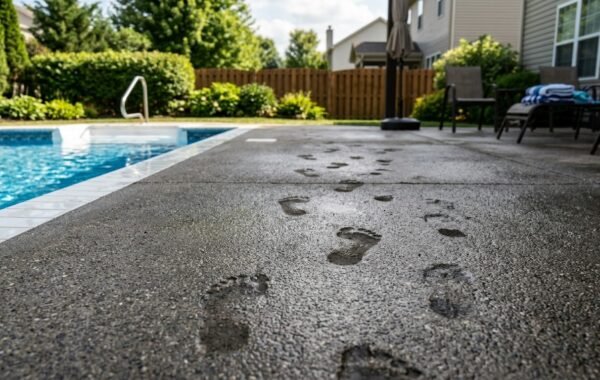
Safety around water is paramount. Smooth untextured deck paint becomes as slippery as ice when wet.
The ANSI A326.3 Dynamic Coefficient of Friction (DCOF) standard requires a minimum wet rating of 0.42 for exterior floors. However, reputable pool contractors mandate a wet DCOF of 0.55 or higher for pool coping and splash perimeters. Knockdown textures achieve this rating naturally. When installing smooth coatings, contractors always broadcast aluminum oxide or SharkGrip polymer beads into the wet sealer. Review comprehensive regulations in our pool deck safety codes guide.
Surface Preparation: The Secret to Long-Lasting Coatings
Coatings fail when applied over dirty, sealed, or damp concrete slabs. Surface prep accounts for 70 percent of total project labor.
Contractors follow the International Concrete Repair Institute (ICRI) standards:
- Diamond Grinding: Mechanically grind the concrete with 30-grit diamonds to remove old paint and achieve a Concrete Surface Profile of CSP-2.
- Crack Repair: Rout all cracks with a diamond blade and fill with structural polyurea sealant. Follow our step-by-step instructions in how to fix cracks in a concrete pool deck.
- Moisture Testing: Tape a plastic sheet to the slab for 24 hours. Moisture accumulation beneath the plastic indicates hydrostatic vapor pressure that requires specialized epoxy moisture barriers.
Frequently Asked Questions
Hover or tap any question below to reveal the answer.
What is the coolest coating for a concrete pool deck?
Both lower surface heat by 20 to 25 degrees Fahrenheit compared to plain concrete.
Can you roll on pool deck coatings yourself?
However, commercial acrylic knockdown textures and polyaspartic systems require professional spray hoppers and mechanical grinders.
How long do pool deck coatings last?
In contrast, thin DIY deck paints typically require recoating every 3 to 4 years.
How do you clean a coated pool deck?
Avoid pressure washers exceeding 2,000 PSI to prevent dislodging decorative texture ridges.