
|—|—|—|—|—|—|—|
| Plunge pool | 12 x 8 ft | 96 sq ft | 3.5 to 5 ft | $25,000 to $45,000 | $365 | 2,500 to 4,500 | $10.00 |
| Spool / cocktail pool | 14 x 8 ft | 112 sq ft | 3.5 to 4.5 ft | $30,000 to $50,000 | $357 | 3,000 to 3,800 | $11.94 |
| Stock tank pool | 8 ft round | 50 sq ft | 2 ft | $400 to $1,500 | $20 | 750 | $1.34 |
| Compact fibreglass shell (context) | 10 x 20 ft | 200 sq ft | 4 to 5 ft | $45,000 to $75,000 | $300 | 6,000 to 7,500 | $8.00 |
Read the table as a buyer, not a fan. The plunge and the spool cost almost the same per sq ft of water, about $357 to $365, so the choice between them is not price. It is use: cold water for cooling off, or hot water with jets for sitting. The stock tank costs $1.34 per gallon against $10 to $12 per gallon for a built pool, because you are buying a tank, not excavation, steel, plumbing, and a deck. The compact fibreglass row is there for scale: a 10 x 20 ft shell under 26 ft long runs $45,000 to $75,000 installed, which is the price of a small real pool, not a tiny one, and it needs a yard a plunge pool does not.

Plunge Pool: $25,000 to $45,000 for Cooling Off in 10 to 16 Ft
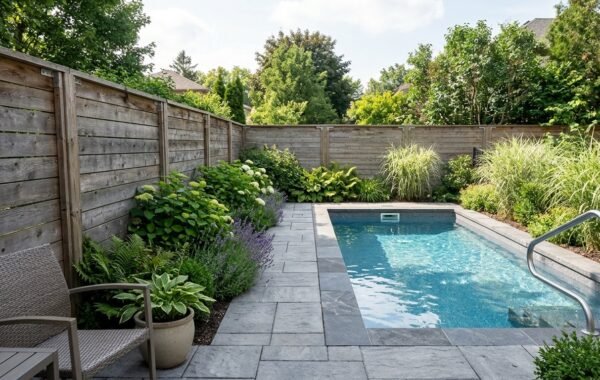
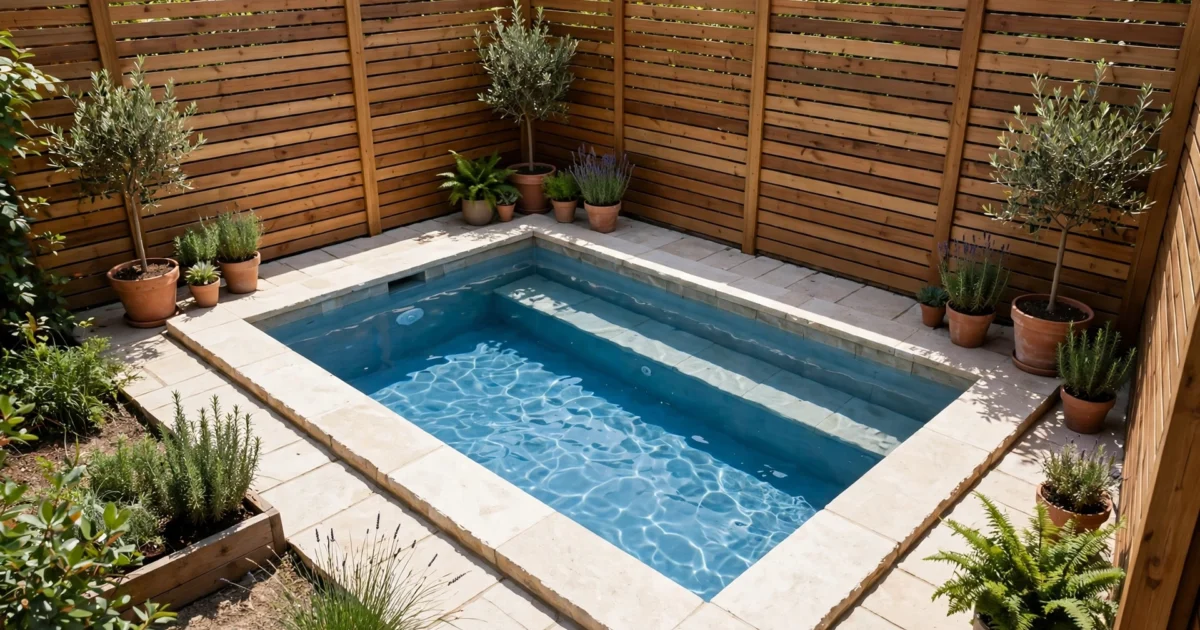
A plunge pool is a short, fairly shallow pool built for cooling off, sitting on a bench, and floating, not for swimming laps. Typical size is 10 to 16 ft long, 7 to 10 ft wide, and 3.5 to 5 ft deep. Installed cost runs $25,000 to $45,000 in 2026, with precast concrete shells starting at about $25,000 for the shell and its equipment before delivery and site work, and running to $69,000 and up installed for a finished precast build. The average plunge pool lands at about $28,000, with most buyers paying $10,000 to $40,000 depending on shell material: vinyl $10,000 to $30,000, fibreglass $18,000 to $55,000, concrete $20,000 to $75,000.
A plunge pool holds 2,500 to 4,500 gallons, against about 20,000 gallons for a standard pool. That is why it costs less to fill, less to heat, and less to run: a small pool runs roughly $50 to $120 per month on chemicals, filters, and pump electricity. It is also why a plunge pool is the default answer for a small lot. It is the runaway trend of 2026 because it is the smallest practical built pool, and it installs faster than a full-size pool: a fibreglass shell install takes about 3 to 5 weeks, and a precast concrete plunge pool can be craned in and plumbed in days once the hole is dug.
What a plunge pool cannot do matters as much as what it can. You cannot swim laps in 10 to 16 ft, and you cannot enter headfirst in 3.5 to 5 ft of water. No tiny pool is deep enough for headfirst entry, and a plunge pool is no exception. If fitness is the job, a narrow lap pool with a swim jet is the honest answer, not a plunge pool. If cooling off after work, floating with a drink, or giving kids a place to splash is the job, a plunge pool is the right product. Add a heater and you can use it for much of the year; add a swim jet and you can swim on the spot, but the jet adds thousands to the install and hundreds per year to run.
Spool: $30,000 to $50,000 for Hot Water, Jets, and Entertaining
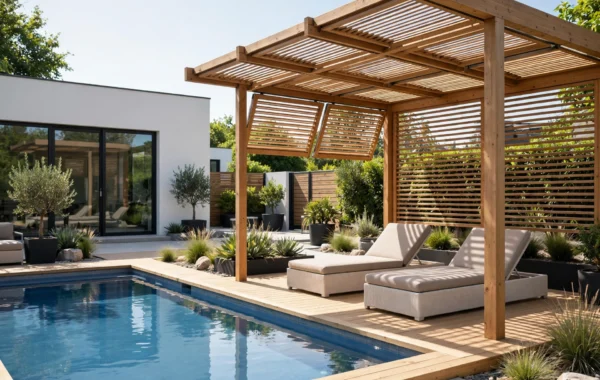
A spool, also called a cocktail pool, is a plunge pool built for sitting in with a drink rather than cooling off after a run. Typical size is 12 to 16 ft long, under 400 sq ft of water, with a built-in bench, bubblers, and often spa jets. Installed cost runs $30,000 to $50,000 for a basic build in 2026, with other 2026 guides putting the range at $22,000 to $42,000 depending on jets, heating, and finish. The spool is the most versatile of the 3: heat it to spa temperature in winter for hydrotherapy, keep it cool in summer for a dip, and seat 4 to 6 people around the bench for an evening.
The spool’s trade is running cost and complexity. Jets, heating, and filtration add to the base shell cost, and a heated spool runs at the top of the $50 to $120 per month range, or above it in a cold climate, because you are heating water you also cool. A spool also needs more equipment than a plunge pool: a heater, a jet pump, and a larger filter, each with its own failure mode and its own repair bill. Buy a spool if you will use it year-round and you want to sit in hot water with friends. Buy a plunge pool if you want cold water, lower running costs, and a simpler build. The 2 pools cost almost the same per sq ft of water, so do not pick the spool thinking it is a cheaper plunge pool with jets thrown in. It is a different product with a different monthly bill.
Stock Tank Pool: Under $1,500 for the Smallest Budget
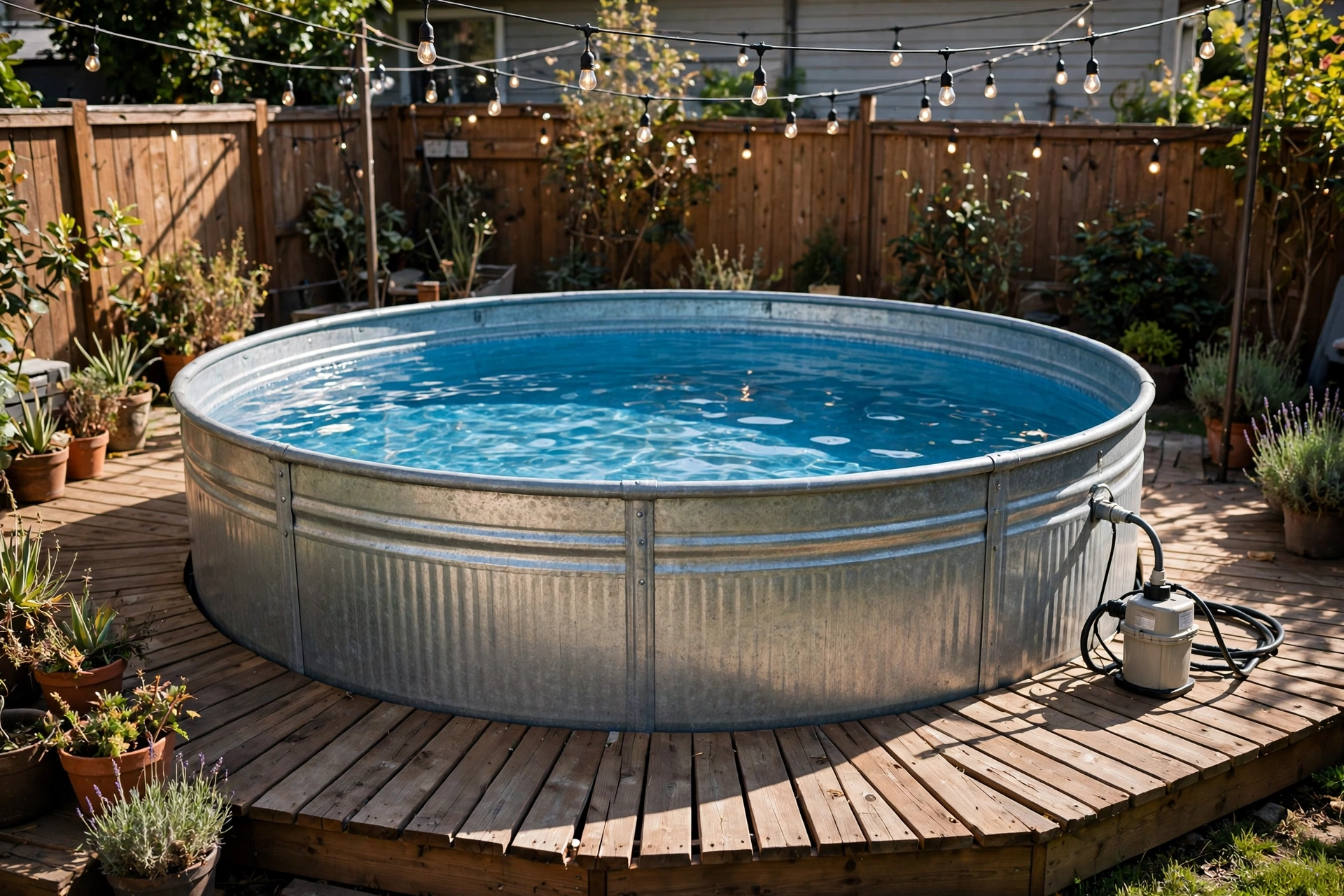
A stock tank pool is a galvanized livestock tank, usually 6 to 10 ft across and about 2 ft deep, turned into a simple plunge pool. The popular size is the 8 ft round model. A quality tank costs $400 to $1,200, and a basic setup with a small filter pump and hoses can come in under $1,500 in total. It holds about 750 gallons, seats 2 to 3 adults, and is ready in a weekend. No excavation, no permit for the pool itself in most places, no 3 to 5 week install. That is why it is the lowest-cost entry on every 2026 list.
The trade is depth, lifespan, and finish. At 2 ft deep, a stock tank pool is a splash pool, not a swimming pool: adults sit, kids splash, nobody swims. Galvanized steel lasts 5 to 10 years as a pool before rust and seam wear end it, against 30 to 50 years for a built plunge pool. The water also heats fast in full sun and cools fast at night, because 750 gallons has almost no thermal mass. Partially sinking the tank by 50 to 60 percent of its height cuts the visual bulk, brings the entry to a comfortable step-in level, and improves stability, but a sunk tank still needs a pump, a filter, and a level base, and a tank sunk into a yard that floods will float or shift. Buy a stock tank pool if your budget is under $2,000 and you want water this summer. Do not buy it expecting a 20-year pool. For a full in-ground build around a small pool, see how to build a pool deck.
A 12 x 8 Ft Plunge Pool in a Real Yard: Footprint, Gallons, and 10-Year Cost
A 12 x 8 ft plunge pool needs an 18 x 14 ft footprint once you add 3 ft of deck on each side, which is 252 sq ft of deck and pool together. That is the worked example, start to finish. Pool water area is 96 sq ft. At 4 ft average depth, water volume is 384 cubic ft, or about 2,870 gallons, inside the published 2,500 to 4,500 gallon range for a plunge pool. Deck area is 252 sq ft minus 96 sq ft of pool, or 156 sq ft of walking surface, priced per sq ft in how much a pool deck costs. Fence clearance comes on top: the barrier must sit at least 48 in. high with self-closing, self-latching gates, and the fence line needs clearance from the pool edge, so measure the fence line before you measure the pool.
The 10-year table below adds running costs to the install price, using $50 to $120 per month for a small pool, with the plunge at the $90 mid-point, the spool at the $120 top end because it is heated, and the stock tank at the $30 low end for a small pump and chemicals in summer only. Say those monthly figures as planning numbers, because your electricity rate and your heating months move them more than the pool does.
| Cost over 10 years | Plunge pool | Spool | Stock tank pool |
|---|---|---|---|
| Install, mid-range | $35,000 | $40,000 | $1,000 |
| Running costs, 10 years | $10,800 ($90/month) | $14,400 ($120/month) | $3,600 ($30/month) |
| 1 replacement or major repair | $2,000 (say pump and filter) | $3,500 (say heater and jets) | $1,000 (say new tank) |
| 10-year total | $47,800 | $57,900 | $5,600 |
| Cost per year | $4,780 | $5,790 | $560 |
The stock tank’s 10-year total is $5,600, which includes buying a second tank in year 6, because a stock tank lasts 5 to 10 years. Even with a full replacement, it costs about one tenth of a plunge pool over a decade. The spool costs $10,100 more than the plunge over 10 years, and almost all of that gap is heat and jets, not the shell. If you will heat the spool 6 months a year, budget the top end. If you will run the plunge cold, budget the mid-point or below.
Which Tiny Pool Fits Your Yard: 4 Questions That Decide It
Four answers pick the pool. First, what is your budget? Under $2,000 means a stock tank pool, full stop. $25,000 to $45,000 means a plunge pool. $30,000 to $50,000 means a spool if you want heat and jets, or a plunge pool with money left over if you do not. Second, what is the job? Cooling off and floating means a plunge pool. Sitting in hot water with friends means a spool. A cheap summer splash means a stock tank. Third, how much yard do you have? A 12 x 8 ft plunge pool needs 252 sq ft with deck, a 14 x 8 ft spool needs about 280 sq ft with deck, and an 8 ft stock tank needs about 110 sq ft with a narrow surround. If the yard cannot hold 252 sq ft of pool and deck plus a fence line, the stock tank is the only product that fits. Fourth, will you use it year-round? Year-round use with heat means a spool. Summer-only use means a plunge pool or a stock tank. Answer those 4 and the choice is made.
Permits, Barriers, and Setbacks: 5 Checks Before You Dig
A tiny pool is still a pool, and the rules do not shrink with it. Work through these 5 checks before you pay a deposit.
- Barrier height: the barrier must stand at least 48 in. high, with self-closing and self-latching gates. That is the safety guidance for home pools, and local rules control the final design, so confirm the height and the gate hardware with your building department.
- Permit: an in-ground plunge pool or spool needs a permit in most places. A stock tank pool above ground typically does not need a pool permit, but a sunk tank or a deck around it can trigger one. Ask before you dig, not after.
- Setbacks: most jurisdictions require the water’s edge to sit some distance from property lines, and there are often separate rules for the equipment pad. On a small lot, the setback can decide the pool size more than the yard does.
- Rock and access: rock excavation alone can add $5,000 to $15,000 to any in-ground pool, and a fibreglass shell needs crane access. Get the site checked before you sign a fixed price.
- Electrical and permits budget: permits run $475 to $1,900 and electrical work runs $3,000 to $5,000 on a fibreglass install, and neither is in most shell quotes. Fencing runs $17 to $34 per linear foot, and it is not in the shell quote either.
5 Ways a Tiny Pool Fails and What Each Fix Costs
Tiny pools fail at the hole, the heater, and the steel, not in the middle of the water. Here are the 5 that show up most.
- Rock in the hole. A plunge pool or spool hits rock and the excavation bill jumps $5,000 to $15,000. Fix means a rock clause in the contract before digging, or a smaller pool that fits the dig.
- Spool heater failure. A spool heater or jet pump fails in year 3 to 5, and the pool becomes a cold plunge pool with a bench. Fix means a heater replacement at say $1,500 to $3,500, plus the jet pump at say $500 to $1,000.
- Stock tank rust. A galvanized tank rusts at the seams after 5 to 10 years and starts to leak. Fix means a new tank at $400 to $1,200, and the pump and fittings move over if they are still sound.
- Barrier failure at inspection. A gate that does not self-close or a fence under 48 in. fails inspection and stops the build. Fix means new gate hardware at $100 to $300, or a fence rebuild at $17 to $34 per linear foot.
- Wrong pool for the job. A plunge pool bought for laps, or a spool bought for cooling off, gets used twice and ignored. Fix means a swim jet added to the plunge at say $2,000 to $4,000, or accepting that the pool does the job it was built for and nothing else.
Before You Buy: 6 Measurements and Checks
Work through this list before you order anything, and write your own numbers in the blanks.
- Yard space: measure the area for pool plus deck plus fence clearance. Length ___ ft x width ___ ft = ___ sq ft. Compare it with 252 sq ft for a 12 x 8 ft plunge pool.
- Pool size: pick the product first, then the size. Plunge 10 to 16 ft, spool 12 to 16 ft, stock tank 8 ft round. Length ___ ft, width ___ ft, depth ___ ft.
- Budget: install plus permits plus electrical plus fencing. Install $___ , permits $___ , electrical $___ , fencing $___ , total $___ .
- Barrier: confirm the 48 in. height and the self-closing, self-latching gate with your building department. Confirmed on ___ (date).
- Access: can a truck and a crane reach the yard for a fibreglass or precast shell? Yes / No. If no, a built concrete pool or a stock tank is the answer.
- Running costs: budget $50 to $120 per month for a small built pool, and $30 per month or less for a stock tank in summer. Monthly budget $___ .
6 Questions About Tiny Pool Ideas
How much does a tiny pool cost in 2026?
A stock tank pool costs $400 to $1,500 all-in. A plunge pool costs $25,000 to $45,000 installed. A spool costs $30,000 to $50,000 installed. A compact fibreglass shell under 26 ft long runs $45,000 to $75,000 installed.
What size is a plunge pool?
A plunge pool is typically 10 to 16 ft long, 7 to 10 ft wide, and 3.5 to 5 ft deep. It holds 2,500 to 4,500 gallons, against about 20,000 gallons for a standard pool. A 12 x 8 ft plunge pool plus 3 ft of deck on each side needs an 18 x 14 ft footprint.
Is a spool the same as a plunge pool?
No. A spool is a plunge pool built for sitting in hot water, with a bench, bubblers, and often spa jets. It is typically 12 to 16 ft long and under 400 sq ft. A plunge pool is built for cooling off in cold water. The 2 cost almost the same per sq ft of water, so pick by use, not by price.
How long does a stock tank pool last?
A stock tank pool lasts 5 to 10 years before rust and seam wear end it. A built plunge pool lasts 30 to 50 years. Budget a replacement tank at $400 to $1,200 in year 6, and the 10-year cost is still about $5,600 all-in.
Do tiny pools need a fence?
Yes, in most places. The safety guidance is a barrier at least 48 in. high with self-closing, self-latching gates, and local rules control the final design. A stock tank pool above ground may not need a pool permit, but it still needs a barrier if children can reach it. Confirm both with your building department.
Can you swim laps in a tiny pool?
No, not in a plunge pool, a spool, or a stock tank. A plunge pool is 10 to 16 ft long and 3.5 to 5 ft deep, and no tiny pool is deep enough for headfirst entry. If fitness is the job, add a swim jet to a plunge pool or build a narrow lap pool instead.
Editorial Note: This guide was researched and written by our small editorial team under the pen name Dave Hendrick. We are homeowners and researchers, not licensed contractors. Prices are typical national ranges, not quotes — confirm locally before you buy.