
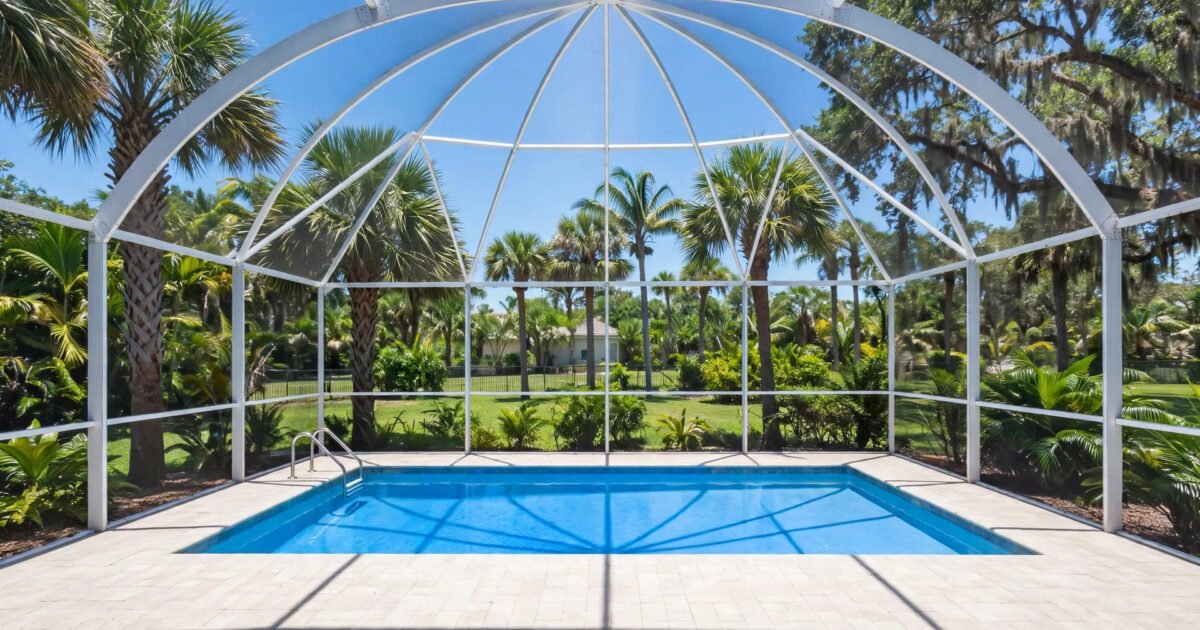
A pool screen is an aluminum frame with mesh walls and a mesh or solid roof over your pool and deck. In Florida it is called a pool cage, a screen enclosure, or a lanai. The default choice is a screen cage at $8 to $15 per sq ft installed, and most projects land between $6,944 and $18,831, with a national average of $12,055. Glass runs $30 to $75 per sq ft. Retractable runs $75 to $200 per sq ft. If you want privacy from neighbors as well as bugs, our pool privacy fence guide covers fences, and the privacy ideas for a deck guide ranks 7 options by 10-year cost.
| Enclosure type | Cost per sq ft | 1,536 sq ft cage | Best for |
|---|---|---|---|
| Screen cage | $8-$15 | $12,288-$23,040 | Bugs, leaves, debris; Florida standard |
| Glass enclosure | $30-$75 | $46,080-$115,200 | Wind, cold, year-round use |
| Retractable enclosure | $75-$200 | $115,200-$307,200 | Open sky in summer, closed in winter |
| No enclosure | $0 | $0 | Mild climates, low bug pressure |
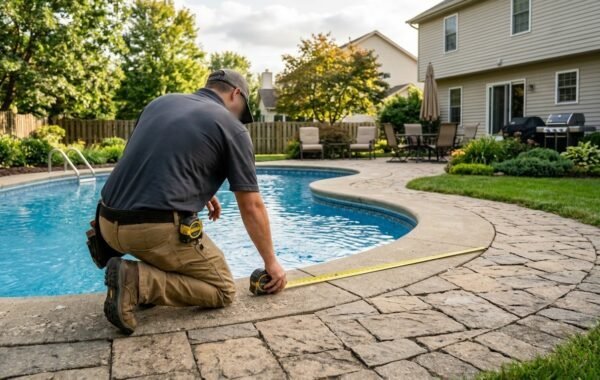
The 1,536 sq ft figure is a 16 ft by 32 ft pool with an 8 ft deck margin all around. Your cage is sized by pool plus deck, not by the pool alone, and that is the first number most quotes get wrong.
Screen Cage: $8 to $15 per Sq Ft
A screen cage is an aluminum frame with fiberglass mesh walls and a mesh roof. It keeps out mosquitoes, leaves, and debris, and it lets the breeze through. It is the standard pool enclosure in Florida because it is the cheapest type that handles the bug load and the afternoon storms. A standard cage runs $9 to $10.50 per sq ft in Fort Myers pricing, and a premium cage with heavy-gauge frame and upgraded mesh runs $14 to $15.50 per sq ft.
Best for: Florida and the Gulf Coast, where bugs and leaves are the daily problem and the budget is under $25,000. It is also the right choice when you want shade without a solid roof.
Typical cost: $8 to $15 per sq ft installed. A small cage of about 20 ft by 30 ft runs $12,000 to $15,000. A medium cage of about 30 ft by 50 ft runs $15,000 to $21,000. A large or custom cage runs $21,000 to $30,000 and up.
Downside: mesh tears, and a torn panel lets in every bug the cage was built to stop. The frame also corrodes where it meets a wet deck and pool chemicals, so the base rails need inspection every year.
Measured stat: a screen cage blocks bugs and leaves but not rain. Heavy rain comes straight through the mesh roof, so the deck underneath still needs a 1/4 in. of fall per foot away from the pool and the house.
Glass Enclosure: $30 to $75 per Sq Ft
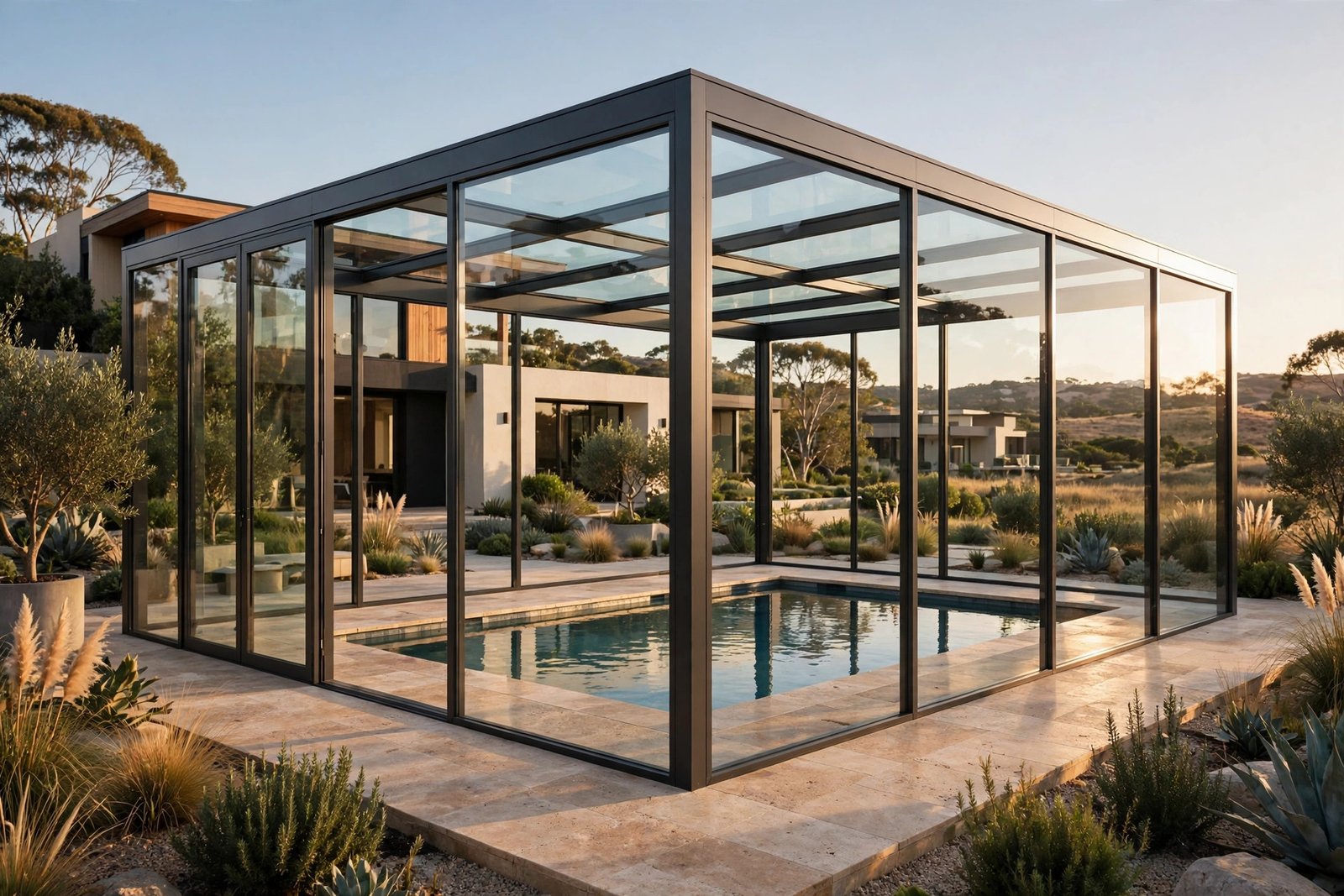
A glass enclosure replaces the mesh with tempered glass panels in an aluminum frame. It blocks wind and cold as well as bugs, so the pool area stays usable in winter and on windy days. It also blocks more sound than mesh. The panels are heavier than mesh, so the frame and the footings are heavier too.
Best for: cold or windy climates, and pools used year-round. If you heat the pool in winter, glass keeps the heat in and the wind out in a way mesh never will.
Typical cost: $30 to $75 per sq ft installed. A 1,536 sq ft glass enclosure runs $46,080 to $115,200. That is 3 to 5 times the cost of a screen cage for the same footprint.
Downside: glass shows every water spot and fingerprint, and a broken panel costs far more than a torn mesh panel. It also traps heat in summer, so a glass enclosure in Florida needs ventilation or it turns into a greenhouse.
Measured stat: at $30 to $75 per sq ft, glass costs $22 to $60 more per sq ft than a screen cage. On a 1,536 sq ft enclosure, that gap is $33,792 to $92,160.
Retractable Enclosure: $75 to $200 per Sq Ft
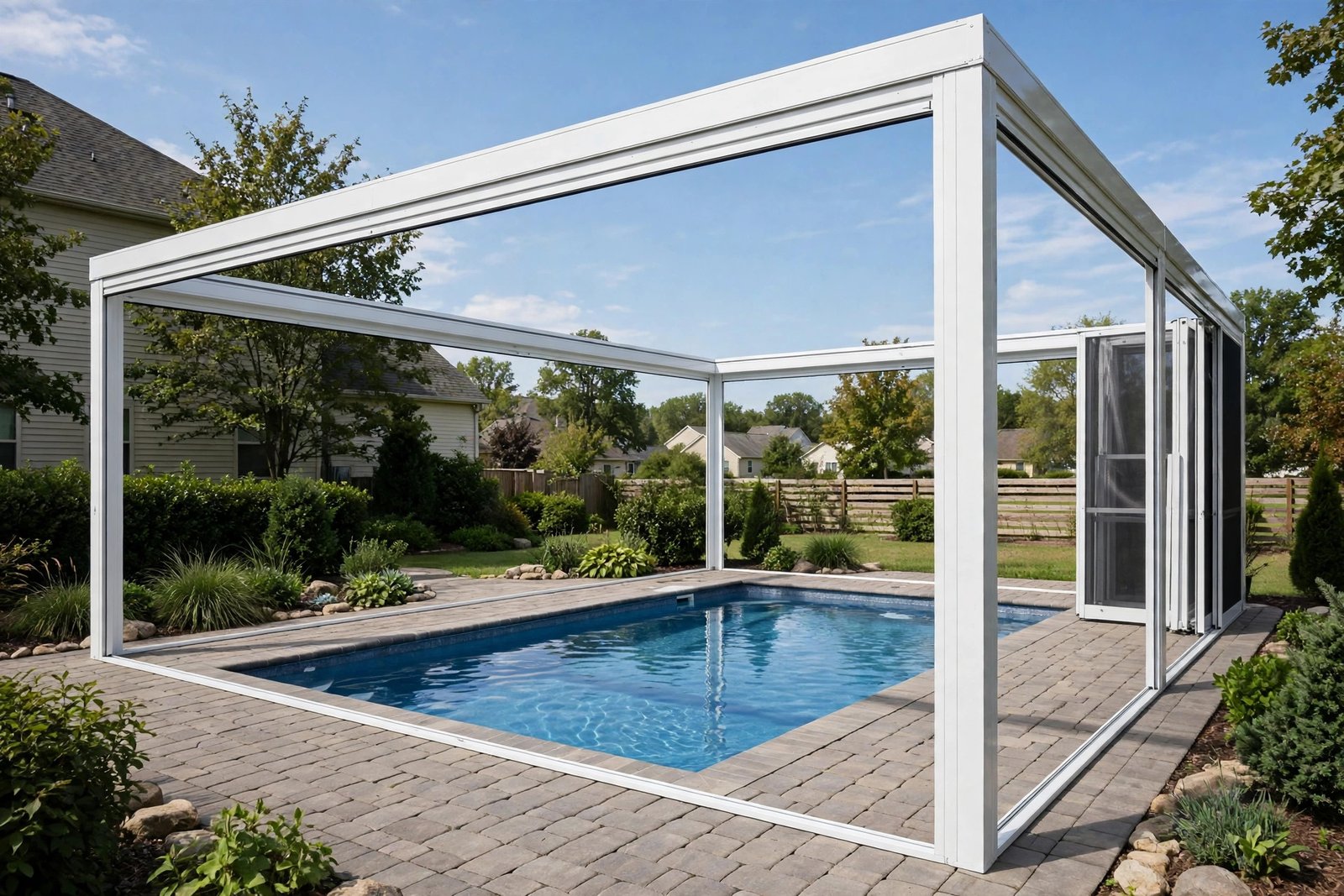
A retractable enclosure slides its roof and wall panels open, so the pool is open to the sky in summer and closed in winter. The maker Roll-A-Cover publishes $150 to $180 per sq ft for its retractable systems. Other guides put retractable enclosures at $75 to $200 per sq ft, and about $100 per sq ft on average.
Best for: four-season climates where you want the pool open for 4 months and closed for 8. It is the only enclosure type that gives you both an open pool and a closed pool.
Typical cost: $75 to $200 per sq ft installed. A 1,536 sq ft retractable enclosure runs $115,200 to $307,200. That is 9 to 13 times the cost of a screen cage.
Downside: the track and motor system needs service, and a failed motor leaves the roof stuck half open. Budget for a motor service contract, and say the maker publishes no fixed service price — get it in the quote.
Measured stat: at $150 to $180 per sq ft, the Roll-A-Cover maker price alone is 10 to 12 times the $8 to $15 screen cage rate. The mechanism is the cost, not the material.
No Enclosure: 3 Cases When a Screen Is the Wrong Spend
A screen is not always the right answer. Three cases argue against one.
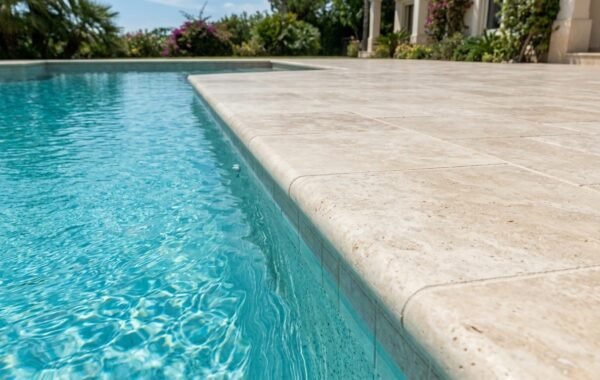
1. You live outside the bug belt. In a dry or cool climate with low insect pressure, a $12,000 to $23,000 cage buys you little. A fence and a good skimmer do the same job for less. Spend the money on the deck instead — pavers at $12 to $20 per sq ft or travertine at $18 to $30 per sq ft.
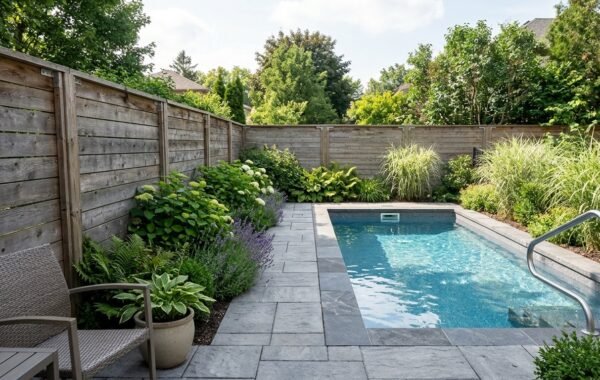
2. Your yard cannot take the footings. A cage needs concrete footings at every post, and the posts sit on the deck edge. If the deck is already poured thin, or the pool is closer than 3 ft to the property line, the cage may not fit at all. A pergola or a shade sail covers the seating area for a fraction of the cost.
3. You want an open sky. Some pools are built for sunbathing, and a mesh roof shades the water. If the pool is for sun, not for shade, skip the cage and budget for a pool cover instead.
Screen Mesh: 5 Types Compared
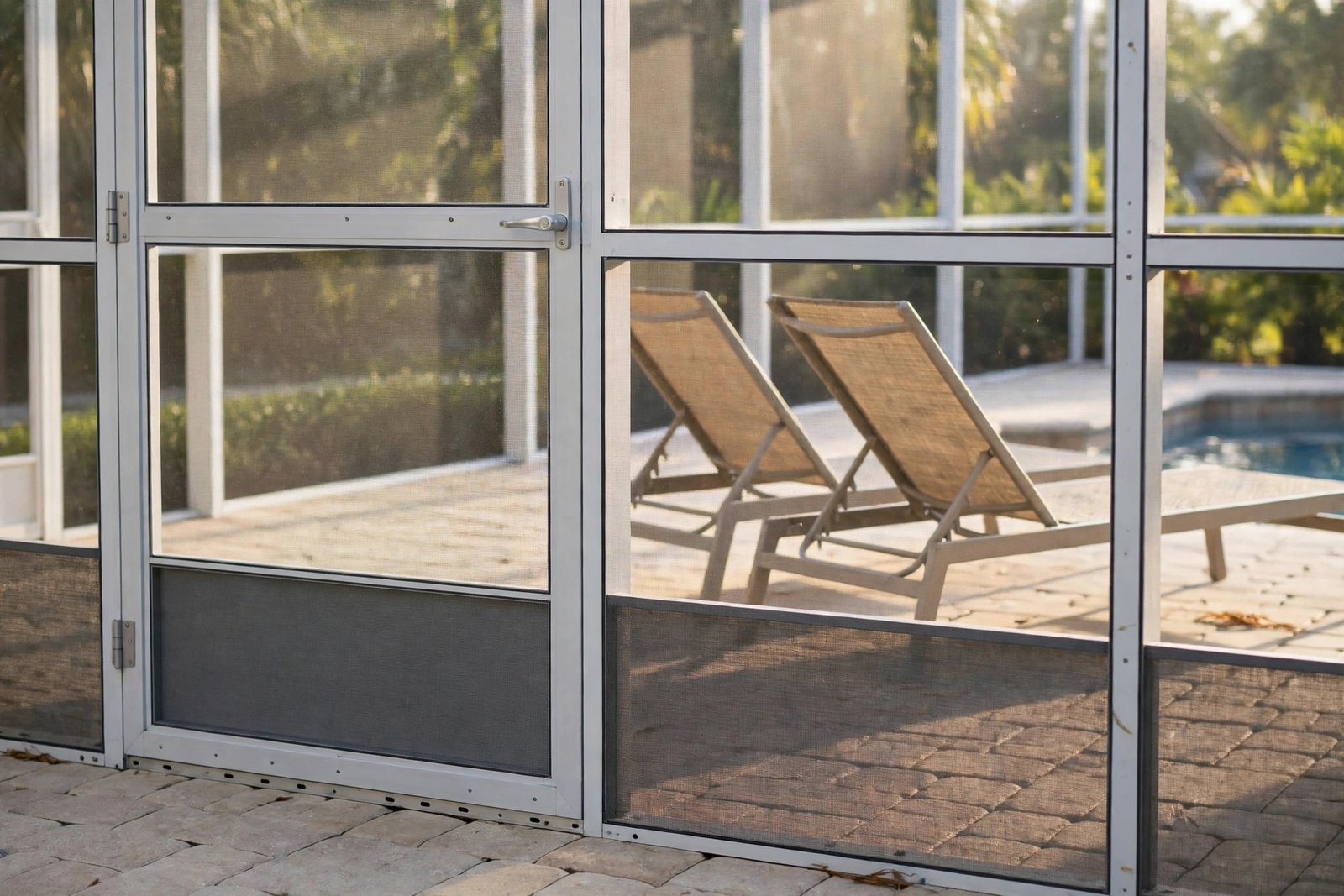
The mesh is the part you look through every day, so it is worth choosing carefully. Most Florida cages use fiberglass screening, and many mix types: no-see-um mesh on the walls with pet screen along the bottom, where wear happens most.
| Mesh type | What it blocks | Best for | Cost note |
|---|---|---|---|
| 18×14 standard fiberglass | Mosquitoes, most flying insects, leaves | Most pool cages | Included in the base cage price |
| 20×20 no-see-um | Tiny biting insects | Near lagoons, canals, marshes | Upgrade, adds to the base price |
| TuffScreen pet screen | Claws, punctures, tears | Dogs, cats, kids, lower panels | Upgrade, use on lower panels only |
| Florida Glass privacy screen | Views into the pool | Neighbors, street side | Vinyl-laminated 18×14, walls only, never the roof |
| SunTex 80/90 solar screen | 80-90% of sun heat and glare | Hot, sunny exposures | Upgrade, adds to the base price |
Screen upgrades like no-see-um, solar, privacy, and pet mesh can add $3,000 to $5,000 and up depending on enclosure size. Pick the mesh by the wall, not by the cage: standard 18×14 on the roof and the quiet sides, 20×20 on the marsh side, pet screen on the bottom 3 ft where the dog runs, and Florida Glass on the street side.
What a 1,536 Sq Ft Screen Cage Costs
Here is the full math for a real pool and deck, so you can check a quote line by line. Say the pool is 16 ft by 32 ft with an 8 ft deck margin all around. The cage has to cover the pool plus the deck: 32 ft long plus 8 ft on each end is 48 ft, and 16 ft wide plus 8 ft on each side is 32 ft. That is 48 ft by 32 ft, or 1,536 sq ft of cage.
| Line item | Math | Cost |
|---|---|---|
| Screen cage, standard | 1,536 sq ft at $8-$15 | $12,288-$23,040 |
| Screen door | 1 door | $50-$500 |
| Permit | 1 permit | $200-$800 |
| Engineering drawings | 1 set | $1,000-$2,000 |
| Total, new cage | $13,538-$26,340 | |
| Rescreening later | 1,536 sq ft at $3-$6 | $4,608-$9,216 |
| Mesh upgrade (no-see-um, pet, solar) | whole cage | $3,000-$5,000+ |
The Florida builder range for a standard enclosure is $8,000 to $15,000, and a full rescreen of an existing cage runs $3,000 to $7,000 and up. If a quote comes in under $8,000 for a cage this size, ask what is missing — usually the permit, the engineering, or the door.
10-year cost table. Say one rescreen in 10 years, and say the door hardware is replaced once. Glass and retractable need almost no mesh work, but their install cost dominates.
| Enclosure | Install (1,536 sq ft) | 10-year upkeep | 10-year total |
|---|---|---|---|
| Screen cage | $12,288-$23,040 | $4,608-$9,216 rescreen + $50-$500 door | $16,946-$32,756 |
| Glass | $46,080-$115,200 | $1,000 seals and gaskets | $47,080-$116,200 |
| Retractable | $115,200-$307,200 | $2,000 motor service | $117,200-$309,200 |
The screen cage is the cheapest enclosure over 10 years — a glass enclosure costs at least $14,000 more, and a retractable one at least $84,000 more. Glass costs about 3 times as much over 10 years. Retractable costs 7 to 9 times as much.
How a Screen Changes Your Deck: 4 Decisions
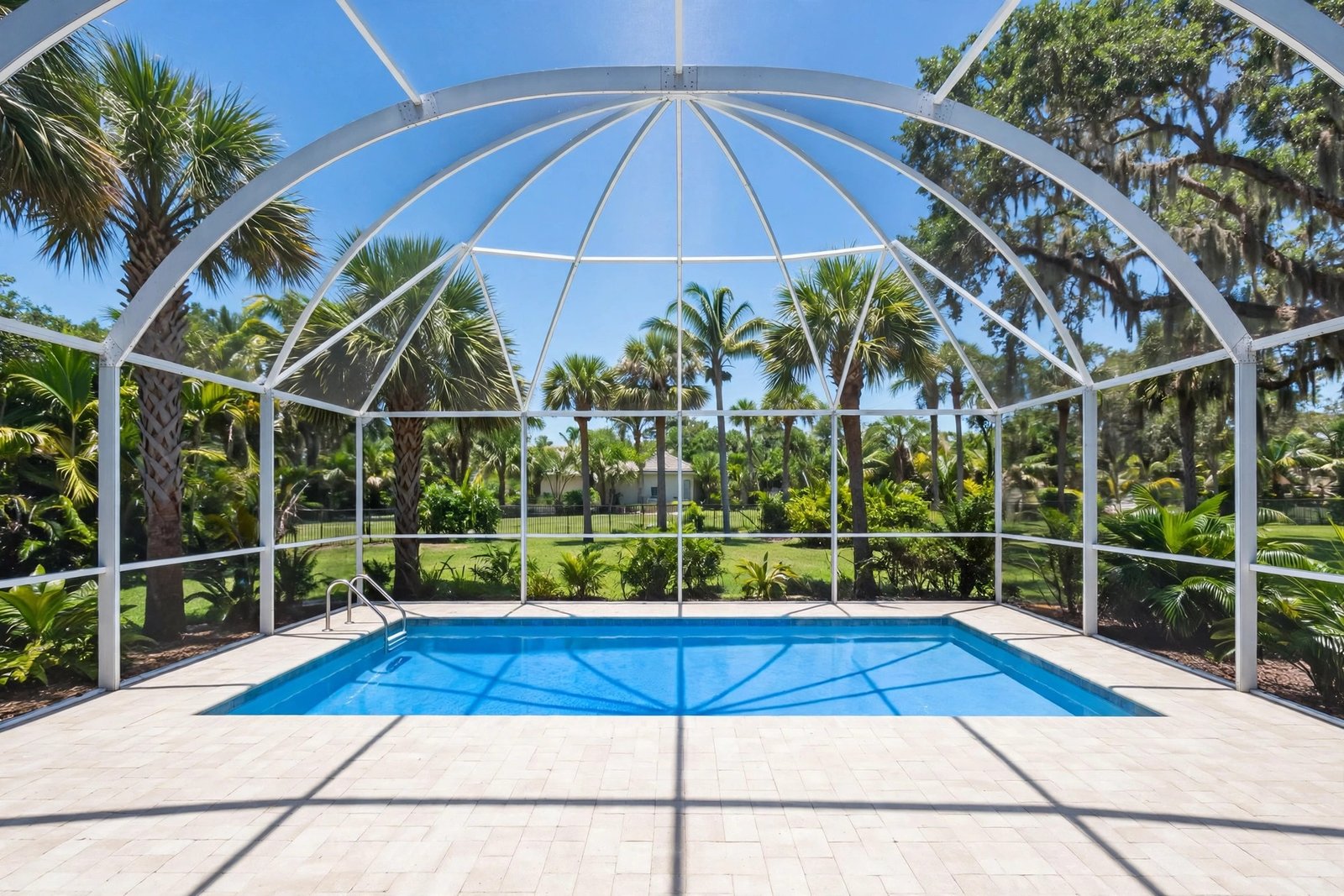
A cage is not a roof over a pool. It is a structure that sits on your deck and changes how the deck works. Four decisions follow from that.
1. Deck width inside the posts. The cage posts sit on the deck edge, and the usable deck is the space inside the posts. Leave 4 ft of clear deck inside the posts for chairs and walking. A deck that is 8 ft wide on paper is 7 ft wide inside a cage once the posts and the door swing are counted.
2. Drainage still matters. Rain comes through a mesh roof, and a solid roof sheds water to the gutters at the cage edge. Either way the deck needs a 1/4 in. of fall per foot away from the pool and the house. Our pool deck drainage guide covers slope rules and channel drains.
3. Door placement decides the traffic flow. Put the screen door on the path from the house, not across the deck. Every door is a $50 to $500 item plus the frame, and a door in the wrong place forces everyone to walk across wet deck to get in and out.
4. Deck material under a cage. The cage cuts direct sun, so heat matters less under a screen than in the open. Slip matters more, because a shaded deck stays wet longer. Concrete pavers test 0.55 to 0.70 wet on the slip scale. Capped composite tests 0.32 to 0.45 wet, which is below the 0.42 code floor in many cases. The 0.55 figure is the generally accepted target for exterior wet surfaces, not a code requirement — the code floor is 0.42 where tested. Under a cage, pick the paver. Our pool deck pavers guide covers types and base prep, and the composite vs pavers comparison covers heat and slip for both.
Roof Styles: 3 Shapes Compared
Dome. A rounded, arched roof that rises toward the center. It gives the most open height over the water and the most headroom for tall swimmers. It is the most common roof style on Florida pool cages.
Mansard. Four sloped sides topped by a flat center section. The flat top admits more light than a dome, and the shape suits houses with a mansard or flat roof line. It costs more than a dome because the frame has more joints.
Solid roof. A fully roofed cage with an insulated pan roof for complete weather and UV protection. Fort Myers pricing puts a solid-roof cage at $13 to $16.50 per sq ft. It is the right choice for a heated pool used year-round, and the wrong choice if you want sun on the water.
Permits, Wind Loads, and the Barrier Rule: 3 Checks
1. Permit and engineering. A pool cage is an engineered structure, so it needs sealed drawings and a permit. Permit fees run $200 to $800, and engineering drawings run $1,000 to $2,000. Get both in the quote before you sign, or they arrive as extras.
2. Wind load. Florida screen enclosures are designed to the Florida Building Code Table 2002.4 pressures of 24 psf at 110 mph to 56 psf at 170 mph in Exposure C. Coastal and high-wind builds cost $30,000 and up, and hurricane-zone framing adds roughly 10 percent to the cage price. If you live outside Florida, check your local code for the wind load that applies to your county.
3. Barrier rule. The cage walls can count toward the pool barrier in many jurisdictions, but the door has to close and latch on its own, and the latch has to sit where a small child cannot reach it. Check your local code for the gate and latch rules in your city. Our pool deck safety codes guide covers the barrier and slip rules, and the pool deck crack repair guide covers what happens when the deck under a cage settles.
Screen and Deck Maintenance Schedule: 5 Jobs
One schedule for the cage and the deck together, so neither gets forgotten.
| Job | When | Cost |
|---|---|---|
| Inspect base rails for corrosion | Every spring | $0, visual check |
| Wash mesh with a hose and soft brush | Every 3 months | $0 |
| Reseal the deck | Every 2-3 years | Acrylic overlay $4-$8 per sq ft |
| Rescreen torn or sagging panels | When torn, or about every 10 years | $3-$6 per sq ft |
| Service the screen door latch and hinges | Every year | $50-$500 for a new door |
A full rescreen of a 1,536 sq ft cage at $3 to $6 per sq ft runs $4,608 to $9,216. Most cages need only the walls rescreened, not the roof, so ask for a wall-only price before you approve a full rescreen. Reseal the deck in the same visit as the rescreen and you pay one mobilization, not two. Our how to seal a pool deck guide covers sealing for every surface type, and the pool deck coatings guide covers coating types and costs.
Which of the 4 Should You Choose?
- Budget under $25,000 and you live in Florida or the Gulf Coast? Screen cage with 18×14 standard mesh. It is the default for a reason.
- Budget $25,000 to $75,000 and you use the pool in winter? Glass enclosure. The wind and cold protection is worth the premium if the pool is heated.
- Budget over $75,000 and you want the sky in summer? Retractable enclosure. Nothing else gives you an open pool and a closed pool.
- Bugs are light and the climate is mild? No enclosure. Spend the money on pavers at $12 to $20 per sq ft and a good fence.
- No-see-ums are the problem? Screen cage with 20×20 mesh on the walls. Standard 18×14 mesh will not stop them, and a glass enclosure is overkill for bugs alone.
If two options tie on budget, pick the screen cage. It is the cheapest to build, the cheapest to rescreen, and the easiest to repair — and it leaves money for the deck, which is where you actually spend your time.
6 Questions About Pool Screens
What is the screen over a pool called?
A pool cage, a screen enclosure, or a lanai. In Florida, pool cage is the common name. The structure is an aluminum frame with fiberglass mesh walls and a mesh or solid roof.
How much does a pool screen enclosure cost?
Most projects run $6,944 to $18,831, with a national average of $12,055. Screen cages run $8 to $15 per sq ft, glass $30 to $75, and retractable $75 to $200 per sq ft.
How often do you rescreen a pool cage?
When the mesh tears, sags, or lets bugs through. A full rescreen runs $3 to $6 per sq ft, or $3,000 to $7,000 and up for a whole cage. Most cages need only the walls rescreened, not the roof.
Can you put a pool screen on an existing pool?
Yes. A retrofit cage is built around the existing pool and deck, with concrete footings at every post. It needs a permit and engineering drawings, and the deck edge has to be thick enough to hold the post anchors.
Does a pool screen keep out no-see-ums?
Only with 20×20 no-see-um mesh. Standard 18×14 mesh blocks mosquitoes and most flying insects, but no-see-ums pass through it. Use 20×20 on the walls facing water or marsh.
Is a pool screen worth it outside Florida?
Yes, if bugs or leaves are the problem. A cage keeps the pool clean and the swimmers bite-free in any warm climate. No, if your main problem is wind or snow load — a mesh cage is not a snow structure, so check your local code before you build one.
Editorial Note: This guide was researched and written by our small editorial team under the pen name Dave Hendrick. We are homeowners and researchers, not licensed contractors. Prices are typical national ranges, not quotes — confirm locally before you buy.