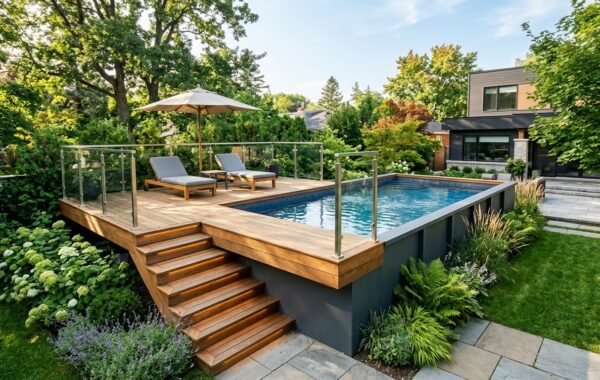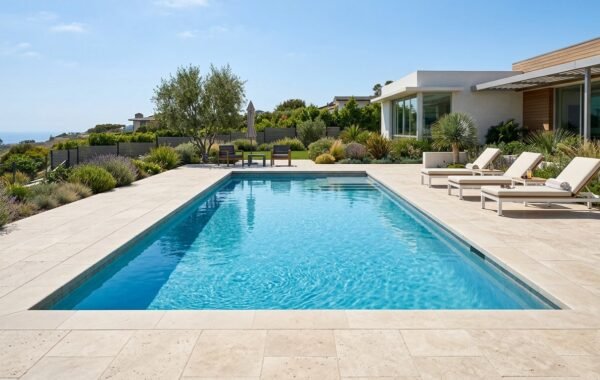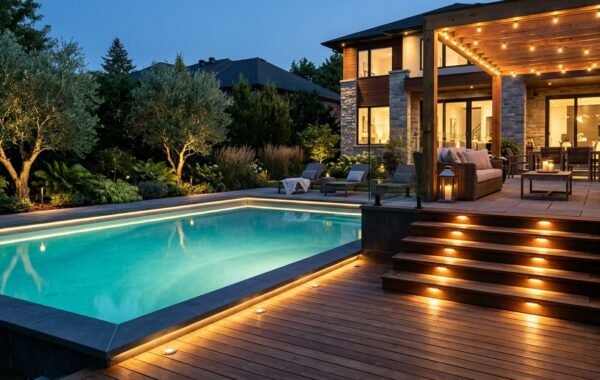

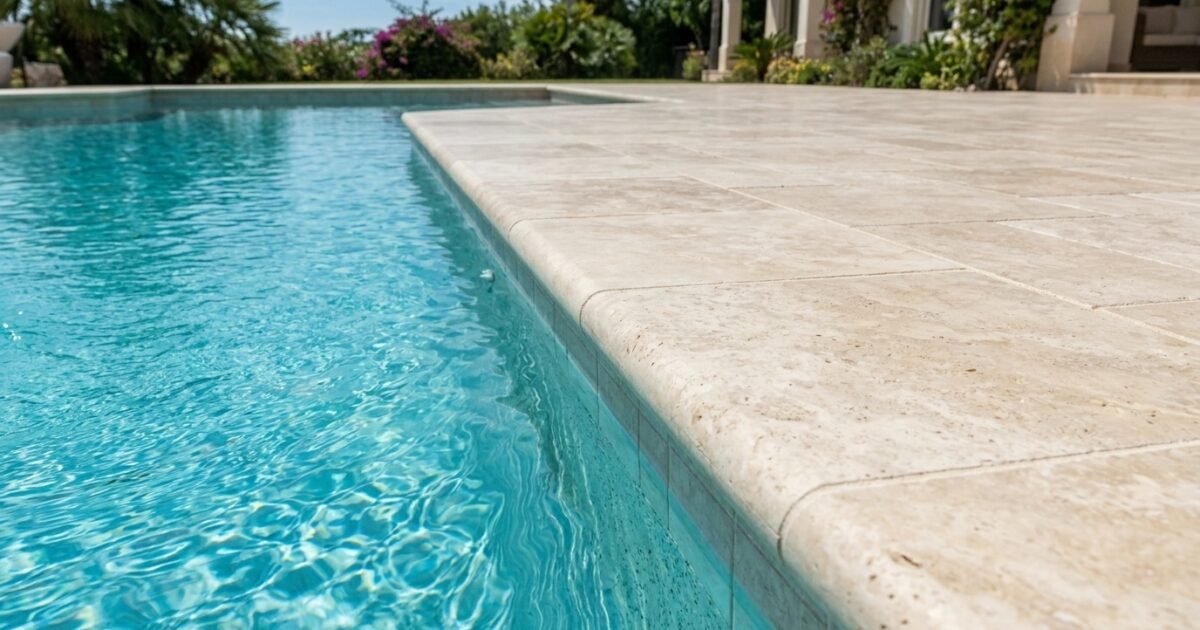
Pool coping caps the pool bond beam, protects the pool edge, and sets the look of the whole patio. Stone coping creates a focal point at the waterline while separating waterline tile from the deck. It separates waterline tile from patio deck boards. Most families spend between $2,500 and $7,800 for pool coping. but, your pool shape impacts total job cost. Final costs depend on stone type and edge style. Also, longer pool perimeters require more stone slabs.
in fact, pool coping performs vital structural work also to looking beautiful. Coping stones guide splash water away from pool walls. Water drains safely toward patio drains. Also, rounded stone edges protect delicate skin. Swimmers exit deep pool water without scraped knees. This builder guide explores top pool coping ideas, profile edges, natural stone choices, and real-world prices.
Material Comparison for Pool Coping Ideas
Travertine, Bluestone, Concrete, and Granite Specs
Selecting the best pool coping ideas requires comparing options. You should compare natural stone and cast concrete specs. Different coping stones handle sun heat differently. Also, winter freeze cycles affect stone durability. For example, ivory travertine stays naturally cool. Bare feet do not burn on hot summer days. Meanwhile, dense granite resists salt mist and pool acid. In fact, it needs zero stone sealer.
so, review the detailed test data in our table. We compare costs across four top stone choices. We compare four top pool coping ideas in detail. Our table shows retail stone prices, pro labor, and lifespan. This data helps you pick the right pool coping ideas. In fact, you can match your budget to yard style.
| Pool Coping Material | Material Cost (Lin Ft) | Labor Cost (Lin Ft) | Total Installed Cost | Barefoot Heat Rating | Expected Lifespan |
|---|---|---|---|---|---|
| Tumbled travertine Pavers | $18 to $30 | $22 to $35 | $40 to $65 / lin ft | Cool (Reflects intense summer sun) | 30+ years |
| Thermal-Finish Bluestone | $24 to $40 | $26 to $38 | $50 to $78 / lin ft | Warm (Absorbs moderate solar heat) | 25 to 35 years |
| cantilever Poured Concrete | $12 to $22 | $18 to $30 | $30 to $52 / lin ft | Warm (Standard concrete heat soak) | 20 to 30 years |
| Flamed Gray Granite | $28 to $48 | $30 to $45 | $58 to $93 / lin ft | Moderate (Dense igneous rock retention) | 40+ years |
also, standard backyard pools run 80 to 140 linear feet. That length requires careful budgeting. so, raw coping stones account for roughly half of your total builder estimate. Choosing quality coping stones boosts home value. also, it stops costly pool beam damage later. Review our companion guide covering pool coping styles explained for basic profile diagrams.
Bullnose vs cantilever vs Square Edge Performance
Evaluating edge profile shapes is key when you browse modern pool coping ideas. In fact, pool coping ideas define how your backyard pool looks and functions. The profile edge dictates how swimmers grip the pool rim. Safe grip is vital when treading water. For example, a full bullnose edge features a rounded half-circle shape. It has zero sharp edges. Bullnose stones eliminate sharp corners completely. As a result, they are safest for families with kids.
Meanwhile, modern architects often favor sleek square-edge coping stones with pencil-eased top corners. Square edges create clean, modern horizontal lines around geometric rectangular pools. but, square stone edges feel sharper. Sitting on square edges can irritate bare legs. Choosing between round and square edges shapes your pool style. Both options offer distinct benefits.
in fact, cantilever poured concrete coping creates a seamless transition between pool water and patio deck. foam forms extend fresh concrete two inches over the pool waterline tile. As a result, cantilever decks eliminate joint lines. The concrete flows smoothly right to the water rim. Compare these stone edges to our analysis of travertine vs concrete pavers pool deck options.
Related: Multi Level Deck with Pool: Design Plans & Cost Guide
Natural Stone Pool Coping Ideas for Luxury Patios
Tumbled Travertine Bullnose for Cool Barefoot Comfort
travertine remains a top pick for pool coping ideas. In fact, builders love it across North America. In fact, travertine pool coping ideas provide barefoot comfort in hot sun. travertine is a dense limestone. Hot mineral springs form this rock over thousands of years. Natural tiny cavities inside travertine disperse solar heat. In fact, heat vents into the ground quickly. As a result, travertine coping stays cool to the touch. It feels pleasant even in 95-degree heat.
also, tumbled travertine gives great slip grip. Yet, it never feels rough on delicate skin. Masons tumble cut stone blocks in large drums. This process rounds off all sharp corners. Tumbled stones display soft pastel tones. Popular colors include ivory, walnut, and warm silver. These neutral earth tones blend with green lawns. They also reflect clean pool water nicely.
in fact, travertine copings resist chemical degradation from standard chlorine and bromine sanitizers. but, owners with salt water chlorine pools should apply an impregnating siloxane sealer every two seasons. Sealers prevent salt crystals from deep porous stone pores during winter evaporation cycles. Quality travertine coping delivers timeless luxury. In fact, it provides decades of family pool fun.
Flamed Granite and Bluestone for Modern Linear Aesthetics
For crisp designs, dark bluestone coping stones offer bold visual impact. In fact, natural stone pool coping ideas give pool edges a luxury feel. In fact, charcoal bluestone creates bold contrast. Dark stone makes turquoise pool water pop. Quarried bluestone features fine rock layers. Masons split the stone into uniform coping slabs. Heat flame treatments give bluestone a rough texture. As a result, wet bare feet grip the stone firmly.
Similarly, flamed granite delivers supreme hardness. In fact, granite resists pool chemicals totally. Granite consists of tight mineral crystals. It ignores pool acid and chlorine completely. In fact, granite coping never chips or flakes. It survives freezing winter ice without damage. Many luxury resort builders choose flamed granite coping for high-traffic public swimming facilities.
but, dark stones absorb more solar heat. Pale travertine stays much cooler in full sun. In hot southern states, dark bluestone can burn bare feet. Midday sun heats dark stone fast. so, builders suggest dark granite for shaded yards. It also works great in northern climates. Contrast these heavy slabs with our guide on pool deck pavers.
Poured-in-Place and Precast Concrete Coping Options
Cantilever Concrete Forms for Seamless Monolithic Decks
Poured-in-place cantilever concrete ranks among the best pool coping ideas available today. In fact, seamless pool coping ideas create clean, modern lines. Crews do not lay single stone blocks here. Instead, they pour wet deck concrete right over the pool wall. Special reusable foam forms clamp onto tile lines. Workers lock them tight before pouring wet concrete. Once concrete cures, workers peel foam forms away. This reveals a smooth, rounded pool rim.
In fact, cantilever decks remove joint lines. Pool edges and walking decks blend seamlessly. Deck concrete flows right to the water rim. Swimmers enjoy a clean edge with zero gaps. Also, cantilever coping saves families money by combining pool deck flatwork and coping into a single pour. You avoid paying separate part shipping fees and stone setting labor costs.
but, cantilever concrete requires skilled workers. Good finishers must time each step carefully. Crews strip foam forms while concrete is green. Then, they hand-sponge the bottom rim smooth. in fact, settling pool decks can cause hairline cracks along concrete cantilever edges if soils lack firm packing. Proper base prep stops deck cracking. Solid ground keeps cantilever edges sound for decades.
Precast Concrete Paver Caps with Textured Slip Resistance
If you prefer modular stones, precast concrete coping pavers offer great value. In fact, precast pool coping ideas fit many family budgets easily. Precast makers cast dense 5,000 PSI concrete. They use precision molds and rich color dyes. These modular coping units measure 12 to 24 inches long. Matching corner blocks complete each pool bend. As a result, precast concrete coping units set rapidly with tight, uniform mortar joints.
also, makers cast precast stones with textured faces. Chiseled slate profiles give great grip. Textured faces mimic natural stone edges. Yet, they cost half the price of cut stone. Also, precast units resist winter freeze-thaw cycles because factory vibratory firm packing eliminates air voids. Low water intake stops winter stone flaking. Concrete surfaces stay smooth through hard freezes.
in fact, precast concrete coping pairs seamlessly with interlocking concrete paver patios. You can match your main deck paver colors easily. Or, you can choose bold border tones. Dark charcoal precast coping frames light sand-toned paver decks with crisp clean definition. Explore resurfacing methods in our guide on concrete pool deck resurfacing.
Brick and Porcelain Tile Pool Coping Ideas
Vintage Brick Bullnose for Historic and Standard Pools
Classic fired clay brick coping brings standard charm to home swimming pools. In fact, brick pool coping ideas fit historic and rustic home styles. In fact, vintage brick bullnose stones display rich terracotta, crimson, and burnt amber color tones. Clay bricks bake at 2,000 degrees in kilns. This high heat creates dense brick that repels water. Rounded brick edges provide comfortable handholds. Swimmers grip the smooth edge easily in deep water.
also, brick coping stones measure roughly four inches wide by eight or nine inches deep. This compact size makes brick ideal for curved pools. Masons wrap kidney pool curves with ease. Masons fan single bricks around tight pool curves. They do not need complex angle saw cuts. Radial mortar joints create charming patterns. Brick coping adds historic craftsman style to your pool.
but, standard brick coping requires periodic mortar joint repointing every eight to twelve years. Splashing pool water degrades old mortar joints. Winter freeze cycles cause hairline joint cracks. so, masons use polymer waterproof mortar. High-grade mortar bonds bricks tight to pool beams. Proper mortar keeps brick coping water-tight. Your pool edge stays solid through wet summers.
Rectified Porcelain Coping for Zero Water soak
Modern exterior porcelain pavers represent the newest trend among modern pool coping ideas. In fact, porcelain pool coping ideas offer zero water soak. Porcelain tiles are pressed from refined ball clay and feldspar under intense pressure before firing. As a result, porcelain coping absorbs almost zero water. Stone intake stays well below 0.5 percent. This dense baked tile body makes porcelain completely impervious to pool chlorine, salt water, and frost.
in fact, factory makers produce porcelain coping with ultra-realistic digital prints of marble, limestone, and aged oak. You can enjoy the look of wood planks near water. Yet, you get all the perks of tile. Unlike wood, porcelain never splinters or warps. Harsh summer sun cannot fade tile colors. Also, porcelain coping cleans easily. A quick hose wash and mild soap remove all dirt.
also, porcelain units feature laser-cut edges. Masons lay sleek two-millimeter mortar joints. Installers bond drop-face skirts to top treads. Strong exterior epoxy holds front edges tight. This drop-face look mimics thick four-inch stone slabs. It gives pool rims a bold luxury profile. Modern porcelain delivers sleek European clean sophistication to luxury backyard spaces.
Expansion Joints, Waterproofing, and Mortar Installation
Mastic Expansion Joint Caulking Between Coping and Deck
Correct expansion joint engineering is vital when executing pool coping ideas. In fact, successful pool coping ideas require flexible joints that absorb deck shifts. A steady open gap must separate your rigid pool coping stones from the adjoining concrete deck. This joint lets pool shells and deck slabs shift. Summer heat expands concrete without breaking stones. Without this gap, expanding concrete crushes coping stones. It also cracks waterline pool tiles.
in fact, building codes require a three-quarter-inch to one-inch expansion joint along pool perimeters. Masons insert closed-cell foam backer rods into the joint channel before applying sealant. Then, technicians inject self-leveling flexible joint sealant complying with ASTM C920 flexible joint standards. Flexible sealant creates a watertight shield. It keeps rain and splash water out of soil.
in fact, inspect your pool deck mastic expansion joints every spring for signs of tearing or drying. Sun heat dries out joint seals over five to seven years. Old caulking loses its stretch over time. Replacing worn joint seal stops winter frost heave. Water cannot seep beneath coping stones. Proper joint upkeep protects both your pool coping and your pool shell from structural movement.
Polymer-Modified Thin-Set and waterproof pool grout
Bedding parts beneath coping stones dictate bond strength. In fact, durable pool coping ideas rely on polymer mortar and solid bond beams. Pool bond beams endure steady vibration from active swimmers jumping into deep water. so, masons prep pool beams by ICRI standards. They prep the base carefully for strong bonding. Masons grind away loose surface dust from beam tops. Rough concrete bonds tight to fresh mortar.
Next, masons spread polymer thin-set mortar. High-bond mortar meets strict ANSI pool standards. Polymer mixes boost bond strength in wet spots. Mortar stays flexible under submerged conditions. also, masons back-butter each stone back. They coat the stone before setting it into mortar. Back-buttering eliminates hollow air pockets under stones. Trapped water cannot freeze and pop stones.
Finally, fill vertical stone joints with waterproof grout. Color-matched grout seals every seam. High-performance pool grouts contain water-blocking agents that repel dirty water and resist algae growth. Let cured mortar dry for 72 hours before filling pools. Undisturbed setting time ensures a strong bond. Solid mortar beds ensure pool coping ideas last. Your stone coping stays rock-solid for decades.
Maintenance, Salt Water Sealing, and Freeze-Thaw Protection
Deep Silane-Siloxane Sealers for Mineral Haze Defense
Protecting stone coping from salt water damage requires proactive care. In fact, lasting pool coping ideas include quality stone sealers. Salt chlorination systems generate active sanitizers by dissolving raw sodium chloride directly in pool water. When swimmers splash salt water onto warm coping stones, water evaporates and leaves microscopic salt crystals behind. Expanding salt crystals inside stone pores create subsurface pressures that cause spalling over time.
so, treat natural limestone, travertine, and sandstone coping with deep-deep silane-siloxane sealers. Silane molecules penetrate deep into stone pores and bond chemically with mineral silica particles. In fact, deep sealers create a water-resistant shield that repels liquid water while allowing stone vapors to escape freely. Stones breathe naturally without trapping subsurface moisture that could freeze and cause winter cracks.
also, deep sealers protect coping from mineral haze, a white powdery mineral salt deposit. mineral haze forms when ground moisture migrates upward through concrete bond beams, carrying dissolved calcium salts. Applying a dual-action water barrier stops mineral migration, preserving your pool coping original stone colors. Reapply deep stone sealer every two to three years for maximum outdoor defense.
Repairing Loose Coping Stones and Cracking Mortar Joints
Routine inspection helps families catch loose stones early. In fact, maintaining pool coping ideas prevents trips and keeps pool rims secure. Swimmers grab coping stones with full body weight when climbing out of the pool water. Over time, ground settling and heat swings can break the mortar bond beneath isolated coping units. A hollow, drum-like sound when tapping stones indicates that thin-set mortar has separated from the pool beam.
To repair a loose stone, carefully chisel away crumbling old mortar from both the coping bottom and pool beam. Vacuum away all loose dust, masonry grit, and organic debris from the repair cavity. Next, paint the clean concrete beam surface with a liquid bonding agent to maximize adhesion. Then, apply fresh polymer-fortified thin-set mortar and press the coping stone firmly back into level alignment.
in fact, scrape out crumbling mortar from vertical joints between adjacent coping stones. Re-point joints with matching polymer grout, smoothing the joint profile with a clean masonry sponge. Regular joint upkeep prevents pool water from seeping beneath adjacent coping stones during summer use. Simple repairs keep your pool coping looking brand new and structurally secure year after year.
Color Matching and Paver Deck Integration
Monochromatic vs High-Contrast Pool Deck Borders
Coordinating stone colors across your pool coping ideas creates visual harmony in your backyard. In fact, monochromatic designs use coping stones that match your main deck pavers closely. For example, pairing ivory travertine coping with cream shellstone pavers makes small pool decks feel much larger. Visual boundaries vanish, creating an open, expansive outdoor living space.
In contrast, high-contrast borders frame swimming pools with crisp, bold definition. Placing dark charcoal granite or charcoal bluestone coping around pale paver decks draws the eye directly to water. Dark border frames act like picture frames around clear blue pool water. so, consider your home exterior trim colors when reviewing pool coping ideas. also, contrasting borders improve poolside safety by highlighting the pool edge clearly for children.
Coping Edge LED Lighting and Waterline Glow
Adding low-voltage LED strip lights beneath coping overhangs takes pool coping ideas to the next level. In fact, subtle LED channels tuck neatly under the front bullnose or cantilever lip. Soft perimeter downlighting illuminates waterline tiles and pool steps without creating harsh night glare. Swimmers enjoy a calm, ambient glow reflecting across the entire pool surface after sunset.
so, plan electrical conduit channels before masons spread mortar along pool bond beams. Run low-voltage cables through drilled notches behind coping stones to reach your yard transformer. Also, select IP68 water-rated silicone LED light channels that resist pool chemical splash. Outdoor LED waterline lighting makes your pool coping ideas shine during evening family swims.
Frequently Asked Questions
Hover or tap any question below to reveal the answer.
What Is the Most Cost-Effective Pool Coping Material?
In fact, these pool coping ideas deliver great durability at low cost. cantilever poured concrete costs between and per linear foot installed. Because crews pour coping alongside main deck slabs, you save much on separate mason labor. Precast concrete paver units offer another affordable choice at to per linear foot installed.
Which Pool Coping Stays the Coolest Under Direct Sunlight?
Natural cavities inside travertine stones allow heat to dissipate rapidly into surrounding ground soils. In contrast, dark gray granite, black slate, and deep bluestone absorb solar heat and can feel hot on bare feet. For southern backyard pools, pale travertine is the top pick for barefoot comfort.
How Often Should You Replace Pool Deck Expansion Joints?
Sun ultraviolet rays, summer heat, and pool chlorine gradually dry out flexible silicone and joint caulking. When joint sealant dries and pulls away from coping edges, surface water leaks into underlying foundation soils. Replacing joint caulking promptly protects your pool coping from frost heave and shifting.
Can You Set Pavers Directly Over Old Concrete Coping?
Remodel coping stones feature an extended front lip that covers old pool tile lines and concrete edges. but, the existing concrete coping must be structurally sound and free from structural settlement cracks. Professional builders grind down uneven concrete surfaces before bonding remodel stones with epoxy adhesive.