
Cracked, spalling, or discolored concrete makes an otherwise beautiful swimming pool look neglected. Concrete pool deck resurfacing typically costs $4 to $15 per square foot, depending on the overlay system — acrylic spray textures at the lower end, stamped and epoxy-pebble overlays at the higher end. See our pool deck cost guide for the full breakdown by system. In comparison, jackhammering and pouring a new slab costs $16 to $32 per square foot. Resurfacing saves homeowners thousands of dollars. In addition, it avoids heavy excavation equipment damaging your lawn.
However, successful resurfacing requires sound structural concrete underneath. Polymer modified cement overlays bond permanently to stable slabs. Conversely, slabs with severe soil settling or active shifting require structural mudjacking first. This contractor guide covers top overlay options, realistic square foot costs, critical surface prep steps, and maintenance practices.
Concrete Pool Deck Resurfacing Cost Comparison Table
The total cost to resurface a pool deck depends on the texture system and decorative finish you select. The comparison table below details installed contractor costs, expected lifespans, and performance characteristics across major overlay systems.
| Resurfacing Method | Applied Thickness | Installed Cost Per Sq Ft | Expected Lifespan | Best Application |
|---|---|---|---|---|
| Spray Texture (Knockdown) | 1/8 inch | $4.50 to $7.50 | 8 to 12 years | Cool barefoot walking, slip resistance |
| Stamped Concrete Overlay | 1/4 to 3/8 inch | $8.00 to $13.50 | 12 to 18 years | Flagstone and slate architectural patterns |
| Epoxy Pebble Aggregate | 3/8 to 1/2 inch | $9.00 to $15.00 | 10 to 15 years | Porous water drainage, rustic resort look |
| Micro-Topping Smooth Finish | 1/16 to 1/8 inch | $5.00 to $8.50 | 6 to 10 years | Modern minimalist decks, light foot traffic |
| Full Slab Demolition and Repour | 4 inches | $16.00 to $32.00 | 25+ years | Sunken slabs, severe structural failure |
For complete regional labor rates and budgeting tips, examine our detailed pool deck cost guide before requesting contractor bids.
Related: Pool Covers for Above Ground Pools with Decks: Types & Cost
4 Proven Concrete Pool Deck Resurfacing Methods
Selecting the right overlay depends on your climate, budget, and desired slip resistance. Professional contractors rely on four primary resurfacing methods.
1. Acrylic Spray Knockdown Texture
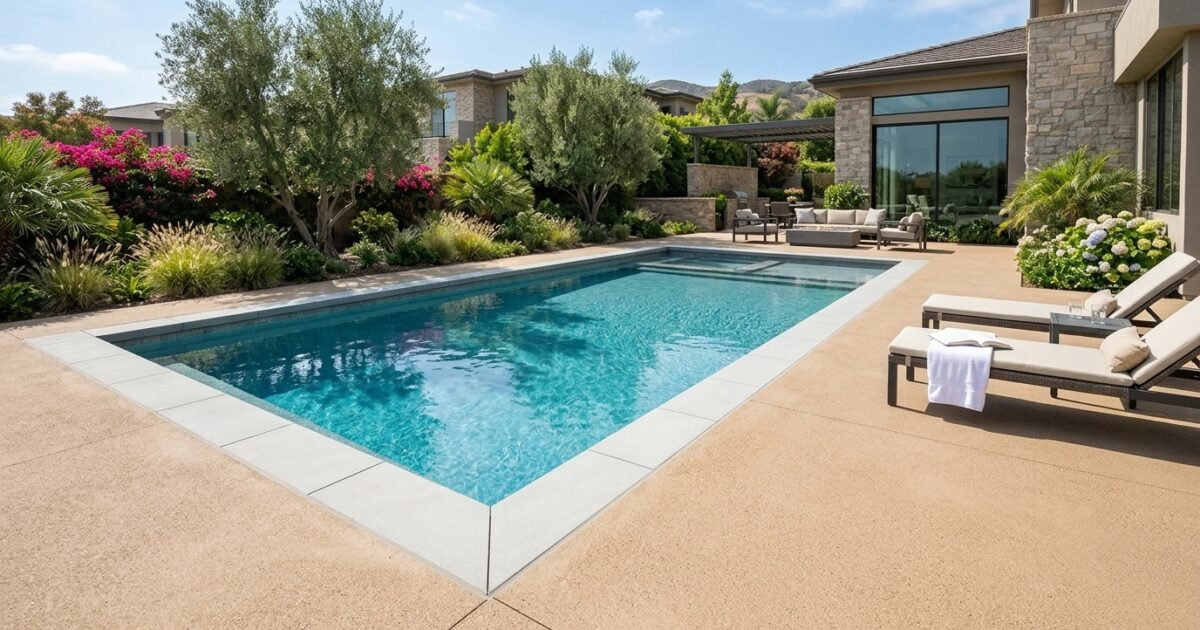
Acrylic spray texture remains the most popular pool deck resurfacing option across sunny states. Installers spray a polymer modified cement slurry through a hopper gun. Then, they glide a flat pool trowel across the wet droplets to create a lace pattern. This knockdown texture leaves comfortable air voids beneath your bare feet. Consequently, it lowers surface heat and provides dependable wet traction.
2. Stamped Polymer Concrete Overlays
Stamped overlays recreate the luxurious look of natural flagstone, slate, or wood planks over existing concrete. Crews apply a thicker 1/4-inch to 3/8-inch high-strength cementitious base. While the mortar is pliable, workers press patterned rubber texture mats into the surface. After curing, artisans apply acid stains or water-based pigments to highlight natural stone grout lines.
3. Epoxy Pebble Aggregates
Epoxy pebble stone overlays blend natural river pebbles or crushed marble with UV-stable epoxy resins. Workers hand-trowel the blended matrix over the primed slab. This system creates a seamless, porous carpet around the pool. Water filters through the pebbles rather than forming puddles. However, you must seal pebble decks with fresh polyurethane every two to three years to prevent stone loss.
4. Colored Micro-Topping Overlays
Micro-toppings provide an ultra-smooth, contemporary aesthetic for modern swimming pools. Installers squeegee thin coats of micro-cement across etched concrete. This method eliminates minor pitting and blotchy discolorations. In addition, you can incorporate broadcast silica sand to maintain wet grip. For specialized coating comparisons, read our guide on the best non-slip coating for wet concrete pool decks.
Critical Surface Preparation Steps Before Resurfacing
Ninety percent of concrete resurfacing failures stem from poor surface preparation. You cannot simply apply a decorative coating over dirty or sealed concrete. The overlay will blister and peel within one season.
Contractors follow the International Concrete Repair Institute (ICRI) Concrete Surface Profile guidelines to ensure maximum bond strength:
- Degreasing and Chemical Stripping: Wash the slab thoroughly with heavy-duty alkaline degreasers to extract oils, sun tan lotions, and algae spores.
- Mechanical Diamond Grinding: Grind the concrete using 30-grit diamond tooling. This opens up concrete pores and achieves an ICRI CSP-2 to CSP-3 profile similar to medium sandpaper.
- Structural Crack Repair: Chase all cracks with a diamond blade. Clean out loose debris, and pack fissures with low-viscosity structural epoxy or elastomeric polyurea sealant. For step-by-step guidance, follow our tutorial on how to fix cracks in a concrete pool deck.
- Expansion Joint Preservation: Never apply cement overlays directly over control joints or expansion joints. Honor all existing slab joints by taping them off, or saw-cut through the cured overlay within 24 hours.
Resurfacing vs Full Slab Replacement: How to Decide
Homeowners often wonder whether resurfacing is worth the investment on older pool patios. Use this simple contractor rule of thumb to make the right choice. If you want to understand why a slab is failing before you pay for an overlay, the Portland Cement Association technical resources are a reliable reference.
Resurface your pool deck if:
- The concrete slab is structurally level and has not dropped or tilted toward the pool wall.
- Cracks are hairline or surface-level (under 1/8 inch wide) without major vertical height displacement.
- The surface exhibits minor cosmetic pitting, scaling, or old paint peeling.
Replace the entire slab if:
- Individual concrete slabs have sunk more than 1/2 inch due to soil erosion around pool plumbing lines.
- Wide structural cracks run continuously through the concrete coping edge into the bond beam.
- Concrete crumbles under moderate hammer taps due to severe freeze-thaw alkali-silica reactions.
Maintenance and Sealing Rules for Resurfaced Decks
Protecting your newly resurfaced deck ensures it lasts 10 to 15 years without flaking. Sunlight and pool sanitizers constantly degrade unsealed surfaces.
Apply a breathable penetrating silane-siloxane sealer or clear water-based acrylic sealer every two to three years. In addition, keep pressure washing under 2,000 PSI with a 40-degree wide spray tip. High-pressure narrow tips can etch decorative overlay edges. For complete chemical recommendations, read our detailed article on how to seal a pool deck properly.
Repairs, Paint, and Alternative Surfaces: Crack Repair, Rubber Decking, and Pool Remodel Ideas
Resurfacing is not the only option. Small cracks can be repaired, paint can refresh a deck for a season, and rubber or spray coatings suit decks that need a new surface without a full overlay.
Concrete Pool Deck Crack Repair, Pool Deck Crack Repair, and Concrete Pool Deck Repair Services
Concrete pool deck crack repair starts with finding why the deck cracked: settlement, tree roots, or a failed expansion joint. Pool deck crack repair for hairline cracks uses a flexible polyurethane sealant, while wider cracks need routing and a cement patch. See our How to Fix Cracks in a Concrete Pool Deck guide for diagnosis and repair. Concrete pool deck repair services suit larger jobs: a repair company can grind, patch, and seal a deck in a day, which costs less than resurfacing but does not change the deck color or texture.
Repaint Pool Deck, Swimming Pool Deck Paint, and Acrylic Deck Coating
To repaint pool deck surfaces, clean the concrete, etch it, and use a paint made for pool decks, not house paint. Swimming pool deck paint is usually an acrylic or epoxy paint that resists chlorine and sun, and it lasts one to three years before it needs recoating. An acrylic deck coating is thicker than paint and adds texture for slip resistance, which suits wet pool decks. See our Pool Deck Coatings guide for types, costs, and slip ratings.
Spray Decking, Rubber Pool Decking, and Concrete Decking for Pools
Spray decking is a sprayed acrylic texture, often called spray texture or Kool Deck, that stays cool underfoot and hides small cracks. Rubber pool decking uses recycled rubber granules bound into a soft, cushioned surface, which suits families with small children because falls hurt less, but it costs more than acrylic coatings. Concrete decking for pools covers all concrete-based deck surfaces, from broom-finish slabs to stamped overlays, and it remains the most common pool deck surface because it is durable and easy to repair.
Pool Remodel Ideas
Pool remodel ideas that include the deck are resurfacing the deck, adding a new coping edge, replacing the waterline tile, and adding shade or lighting. Doing the deck and the pool together costs less than doing them separately, because the crew is already on site and the materials match.
Frequently Asked Questions
Hover or tap any question below to reveal the answer.
How long does concrete pool deck resurfacing take?
Preparation and crack repair take one day, overlay application takes one day, and color sealing takes one final day.
Can you resurface a pool deck with stamped concrete?
How long after resurfacing can you walk on the pool deck?
However, wait at least 48 to 72 hours before returning heavy patio furniture and allowing swimming activity.
Does concrete pool deck resurfacing hold up to saltwater?
Can I repaint a pool deck instead of resurfacing it?
An acrylic deck coating lasts longer and adds slip resistance, and resurfacing is the better choice for a deck with many cracks or a worn surface.
What is rubber pool decking?
It cushions falls, stays cool, and drains well, but it costs more than acrylic coatings and needs a stable concrete base underneath.