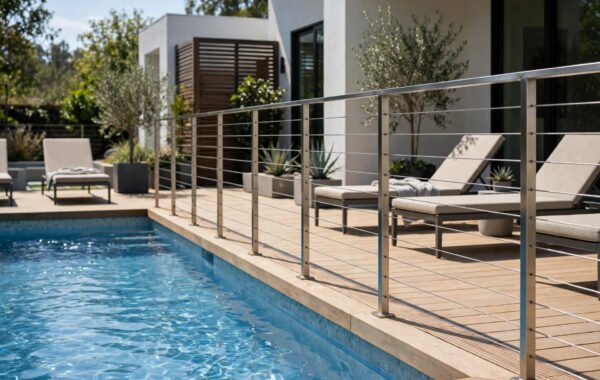

A glass pool fence costs $95 to $210 per linear foot installed, depending on the system. Frameless runs $150 to $210 per foot, semi-frameless $115 to $175, and framed $95 to $130. A typical 60 to 80 foot enclosure lands between $5,000 and $25,000 with the gate and the permit included. Frameless is the best-looking system and the most expensive. Semi-frameless is the value pick. Framed is the cheapest compliant barrier. The right pick depends on your budget, your view, and your local code — and the code part is not optional, because a glass fence is a safety barrier first and a design feature second.
| System | Cost per linear foot | Glass | Hardware | Best for |
|---|---|---|---|---|
| Frameless | $150-$210 | 12mm tempered | Spigots or base channel | Uninterrupted views, modern pools |
| Semi-frameless | $115-$175 | 10-12mm tempered | Slim posts at joints | Near-frameless look, lower cost |
| Framed | $95-$130 | 8-10mm tempered | Perimeter frame on posts | Long perimeters, tight budgets |
All three systems meet the same code rules when they are built right: at least 60 in. tall, no gap over 2 in. at the bottom, no opening that passes a 4 in. sphere, and a self-closing, self-latching gate that opens away from the pool. The glass in every system is tempered safety glass that meets the ANSI Z97.1 and CPSC 16 CFR 1201 safety glazing standards. If a quote does not name those standards, ask for them in writing.
Frameless Glass Pool Fence: $150 to $210 per Linear Foot
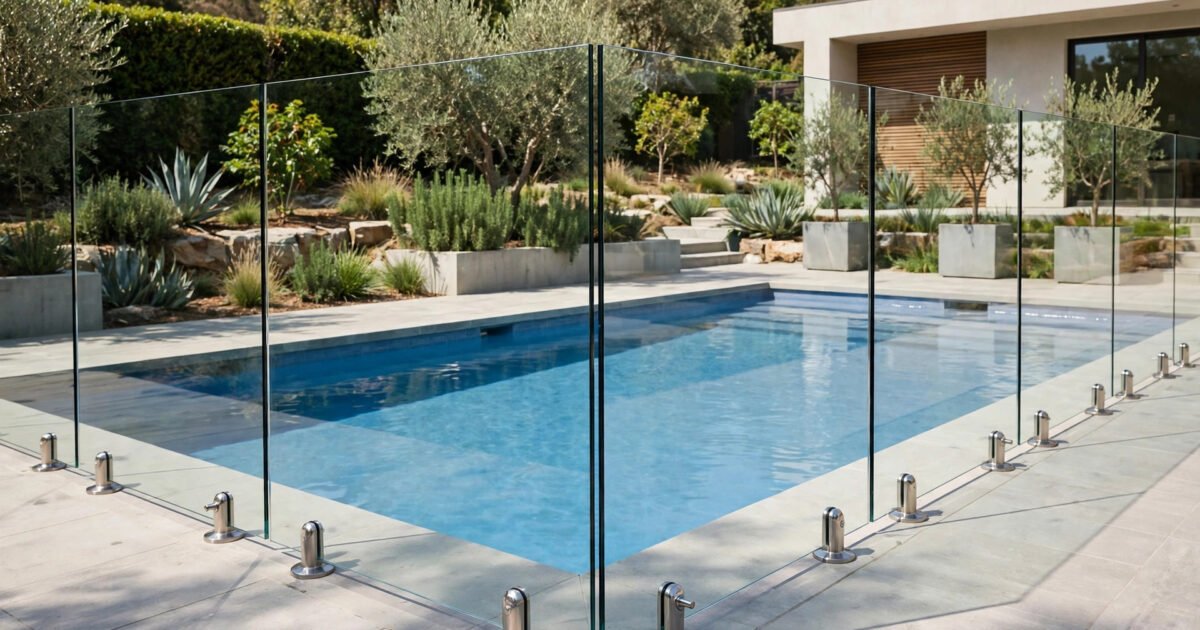
A frameless fence is individual tempered glass panels held at the base by stainless steel spigots or a continuous base channel, with no posts between the panels. There is nothing between you and the water except glass, which is why it is the standard pick for infinity-edge pools, oceanfront yards, and rooftop decks. The glass is 12mm thick, about half an inch, because the panels have to support themselves with no posts.
Best for: pools where the view is the point. If you paid for a view, a water feature, or an infinity edge, frameless is the only fence that does not put a post in front of it.
Typical cost: $150 to $210 per linear foot installed. An 80 foot run costs $12,000 to $16,800 before the gate and the permit. A 4 ft by 5 ft panel of 12mm tempered glass weighs about 120 lb, so the install crew and the deck footings both have to be rated for the weight.
Downside: it is the most expensive system, and it shows every water spot and fingerprint. The panels also cannot be trimmed or drilled once they are made — tempered glass shatters if you cut it — so a measuring mistake means a new panel, not a fix on site.
Measured stat: at $150 to $210 per foot, frameless costs $35 more per foot than semi-frameless. On an 80 foot run, that gap is $2,800.
Semi-Frameless Glass Pool Fence: $115 to $175 per Linear Foot
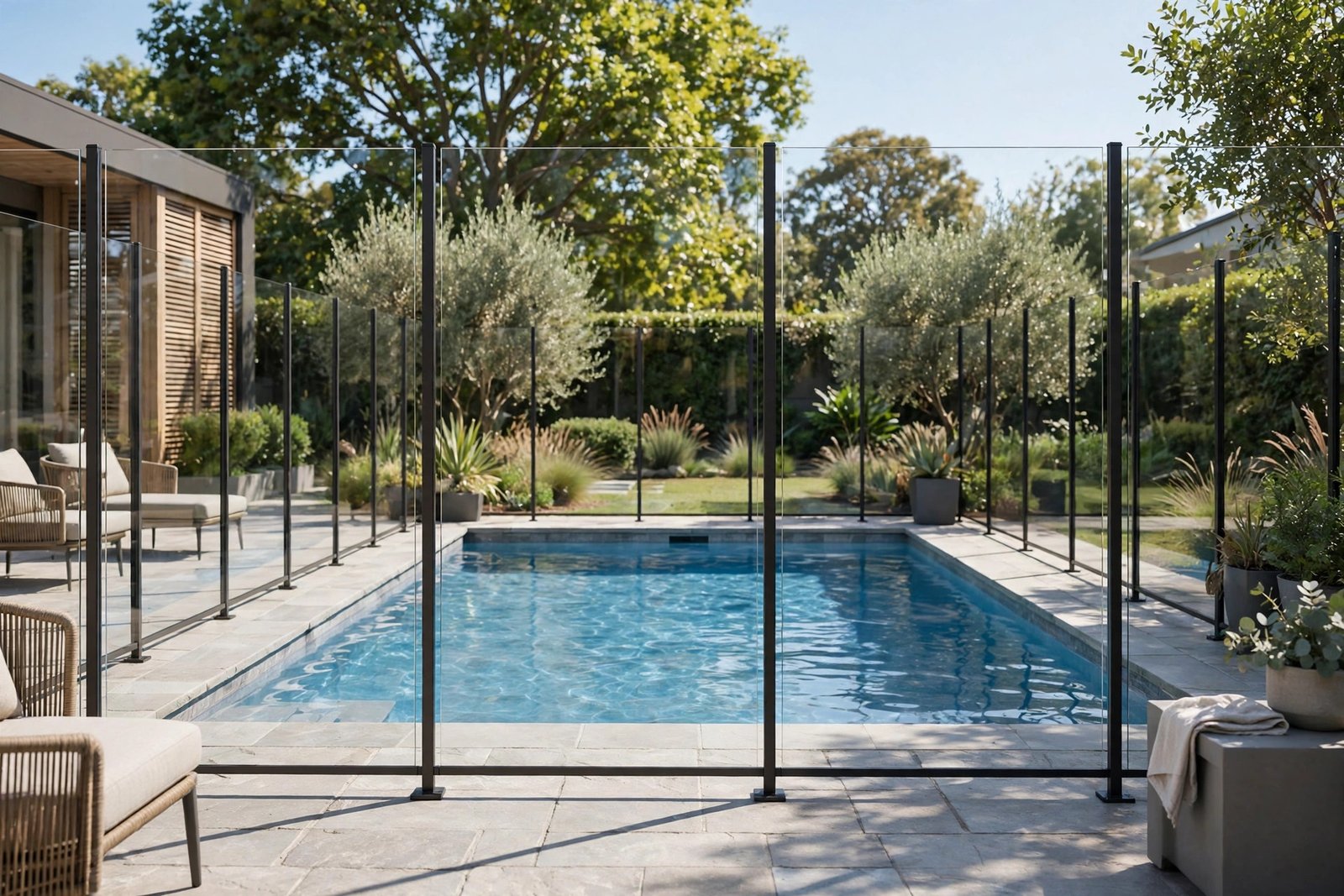
A semi-frameless fence is glass panels spanning between slim posts at the joints. You see the posts, but they are thin, and the glass still does most of the work. The glass is 10mm to 12mm tempered, and the posts take the structural load, so the panels can be thinner than a frameless system in some builds.
Best for: most backyards. You get a near-frameless look for $35 to $80 less per foot than frameless, and the posts make the fence more forgiving on uneven ground and long runs.
Typical cost: $115 to $175 per linear foot installed. An 80 foot run costs $9,200 to $14,000 before the gate and the permit. That is $2,800 less than frameless for the same perimeter.
Downside: the posts are visible, and they are the first thing to show corrosion if the hardware grade is wrong. Near a saltwater pool or the coast, the hardware has to be grade 316 stainless at a minimum, and many installers recommend duplex 2205 spigots and hinges because they resist tea staining and pitting far better.
Measured stat: semi-frameless saves 17 to 23 percent against frameless on the same run, and it is the only system where the saving buys nothing you will notice from inside the house — the posts read as thin lines at 10 ft away.
Framed Glass Pool Fence: $95 to $130 per Linear Foot
A framed fence captures the glass in a perimeter frame on posts. It is the most visible system and the cheapest, and it is the right pick when the perimeter is long and the budget is the deciding factor. The glass is 8mm to 10mm tempered, thinner than the other two systems, because the frame carries the load.
Best for: long perimeters, rental properties, and budgets under $10,000. If the run is 100 ft or more, the framed saving against frameless is $5,500 to $8,000, which pays for the gate and the permit twice over.
Typical cost: $95 to $130 per linear foot installed. An 80 foot run costs $7,600 to $10,400 before the gate and the permit.
Downside: the frame is the look. If you want a near-invisible barrier, this is the wrong system — the frame reads as a fence, not as glass. The frame also has more joints to clean and more places for water to sit.
Measured stat: framed glass costs $55 less per foot than frameless at the low end, $95 against $150, and it is the only system where the frame itself can be the climbable feature an inspector flags — check the frame profile against your local code before you order.
The Code Rules: 4 Numbers That Decide Pass or Fail
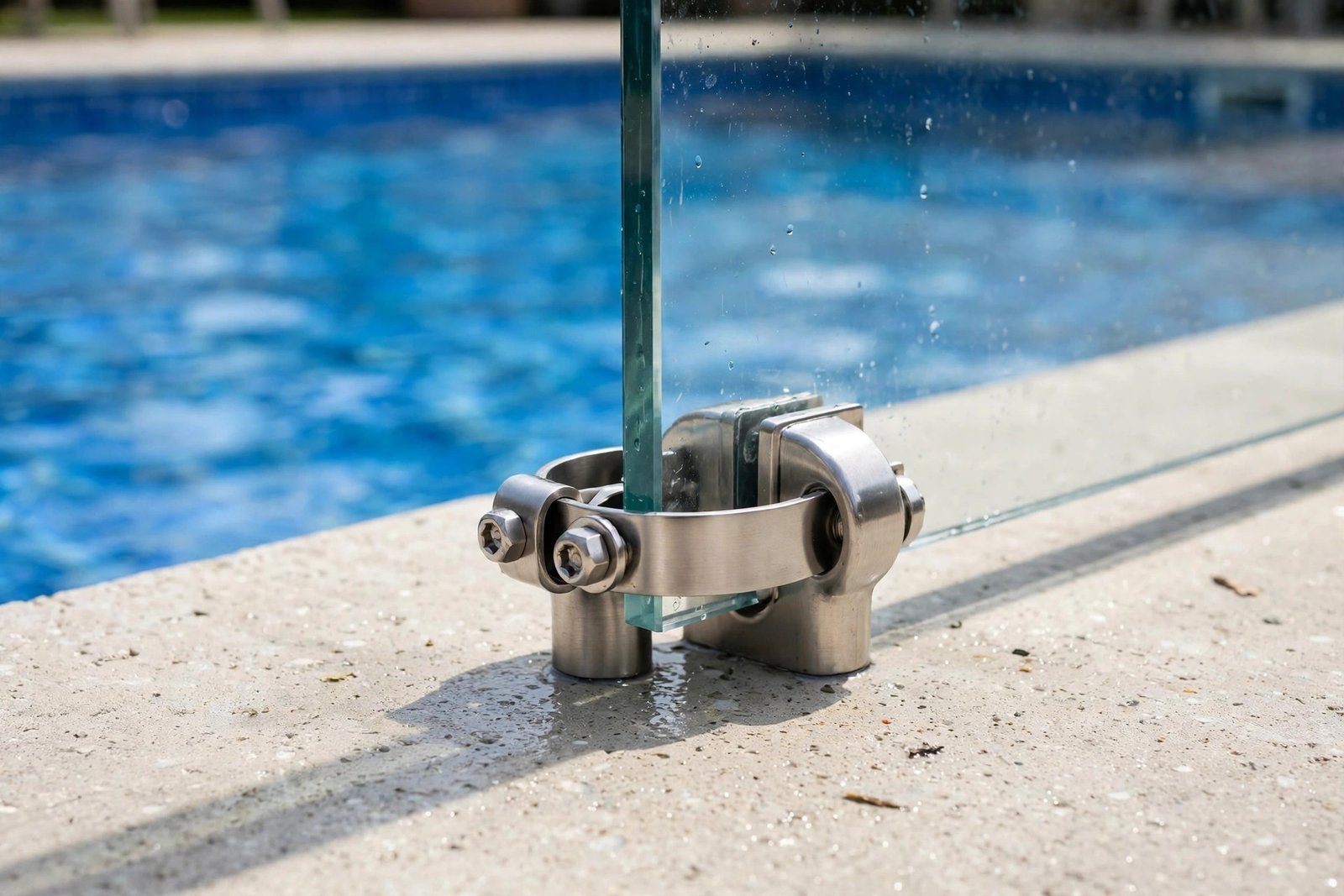
Glass pool fences are safety barriers, and the inspection checks numbers, not looks. These are the rules that apply in most US jurisdictions — your city or county can be stricter, so confirm locally before you order glass.
1. Height: at least 60 in. The barrier has to be at least 60 in. tall, measured from the exterior side of the fence, the side facing away from the pool. Panels shorter than 60 in. do not meet code in any jurisdiction that follows the standard, no matter how good they look.
2. Bottom gap: no more than 2 in. The gap between the bottom of the glass and the deck can be no more than 2 in. This is the rule that fails the most installs: stock frameless hardware often sits the glass about 4 in. off the deck, which looks right and fails the inspection. A 59 in. panel set with a 2 in. gap puts the top at 61 in., which clears the 60 in. minimum with the bottom still compliant.
3. Openings: no 4 in. sphere passes. No opening in the barrier may allow a 4 in. sphere to pass through. A solid glass panel has no openings at all, so this rule is met by the glass itself — it bites on the gaps between panels and posts in semi-frameless and framed systems.
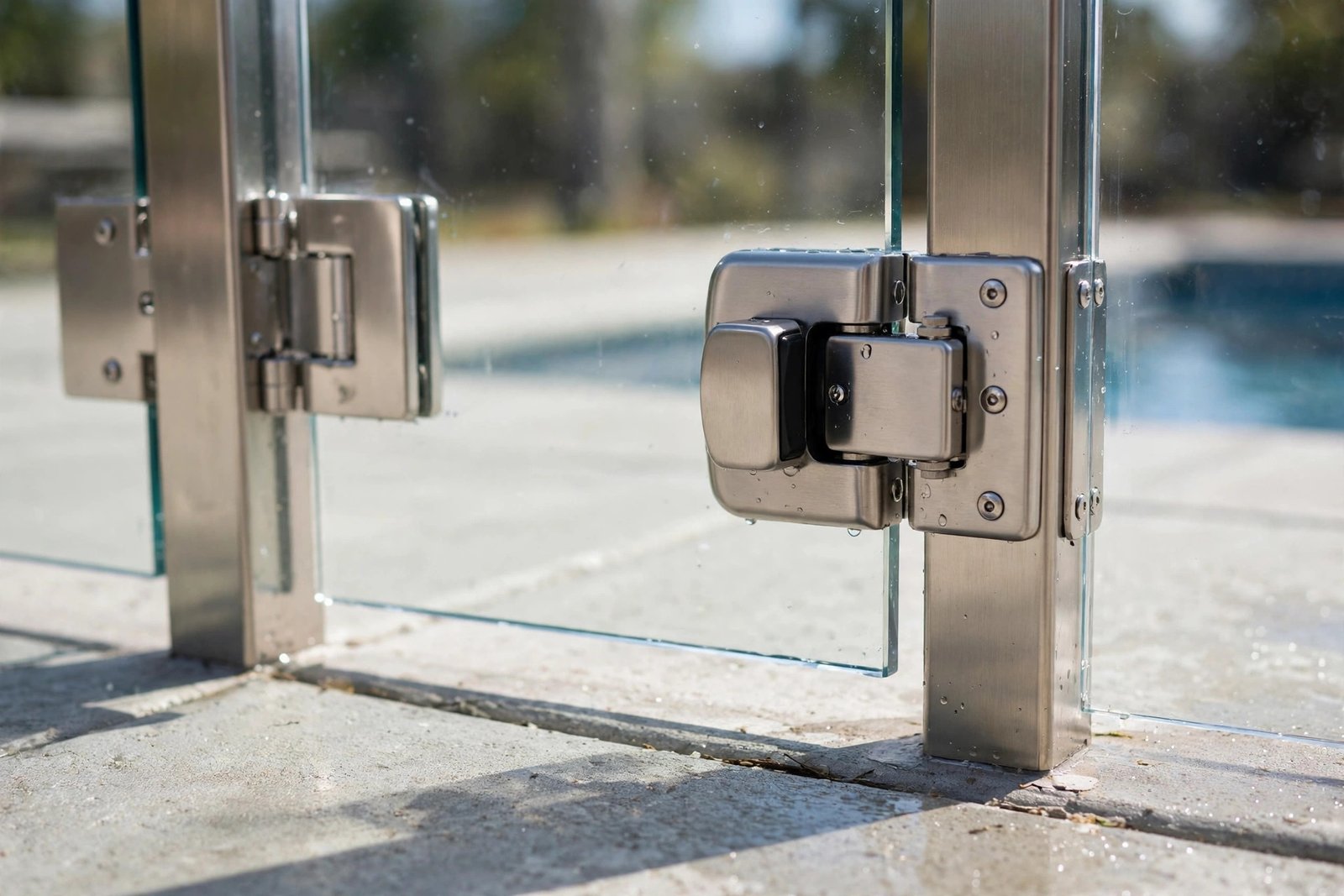
4. Gate: self-closing, self-latching, opens away from the pool. The gate has to close and latch on its own, and it has to open away from the pool so a child pushing on it cannot push it open toward the water. The gate hardware has to be engineered for glass — standard fence gate hardware does not work on a glass gate. A compliant self-closing gate costs $1,200 to $2,800 each, and the gate is quoted separately from the per-foot fence price in most quotes.
Glass has one built-in code advantage: there are no climbable features. No horizontal rails, no pickets, no footholds on the exterior face, so a glass fence is one of the safest barrier types for properties with young children. Our pool deck safety codes guide covers the full barrier and slip rules, and our pool deck railing ideas guide covers cable and glass railing options for the deck itself.
What an 80 Linear Foot Glass Fence Costs
Here is the full math for a real pool and deck, so you can check a quote line by line. Say the pool is 16 ft by 32 ft with a deck margin, and the fence run is 80 linear ft with 1 gate and 1 permit.
| Line item | Math | Cost |
|---|---|---|
| Frameless fence | 80 ft at $150-$210 | $12,000-$16,800 |
| Semi-frameless fence | 80 ft at $115-$175 | $9,200-$14,000 |
| Framed fence | 80 ft at $95-$130 | $7,600-$10,400 |
| Self-closing gate | 1 gate | $1,200-$2,800 |
| Permit | 1 permit | $150-$400 |
| Total, frameless | $13,350-$20,000 |
The permit figure is a planning figure: in one California county, permit fees typically run $150 to $400 depending on the project scope, and fees vary by jurisdiction, so get the number from your city before you sign.
10-year cost table. Say one gate hardware replacement in 10 years at $1,200 to $2,800, and say one replacement panel at $400 to $900. Cleaning is free if you do it yourself — budget 30 minutes a week in hard-water areas, because glass shows every spot.
| System | Install (80 ft + gate + permit) | 10-year upkeep | 10-year total |
|---|---|---|---|
| Frameless | $13,350-$20,000 | $1,600-$3,700 | $14,950-$23,700 |
| Semi-frameless | $10,550-$17,200 | $1,600-$3,700 | $12,150-$20,900 |
| Framed | $8,950-$13,600 | $1,600-$3,700 | $10,550-$17,300 |
The frameless premium over framed is $4,400 to $6,400 over 10 years on an 80 ft run. That is the price of the view, and it is the only number that matters once the code rules are met.
Which Barrier Should You Choose?
- Budget under $10,000 and a long perimeter? Framed glass at $95 to $130 per foot. It is the cheapest compliant glass barrier.
- Budget $10,000 to $17,000 and you want the glass look? Semi-frameless at $115 to $175 per foot. The posts are thin, the saving is real, and the system is the most forgiving on uneven ground.
- Budget over $13,000 and the view is the point? Frameless at $150 to $210 per foot. Nothing else keeps the water and the yard reading as one space.
- Budget under $5,000? Glass is the wrong material. An aluminum tubular barrier runs far less per foot and still meets code — see our pool privacy fence guide for fence options, and our pool handrails guide for the hardware that pairs with any barrier.
- Saltwater pool or coastal yard? Any system, but only with grade 316 stainless hardware at a minimum, and duplex 2205 for spigots and hinges if the budget allows. The hardware grade decides whether the fence still looks good in 5 years.
- Bugs or leaves are the problem, not the view? A screen enclosure may be the better spend. Our pool screen guide compares cage, glass, and retractable enclosures by cost.
If two options tie on budget, pick semi-frameless. It is the cheapest system that still reads as glass from the house, and it leaves money for the gate hardware, which is where cheap installs actually fail.
4 Failure Modes and What They Cost to Fix
1. The bottom gap fails inspection. Stock frameless hardware often sits the glass about 4 in. off the deck, and the code caps the gap at 2 in. The fix is to reset the spigots or swap the hardware: say $400 to $900 in labor and parts for a short run, and a failed inspection costs a second inspection fee on top. Check the gap on the hardware spec sheet before you order, not on the day of the inspection.
2. A panel is measured wrong. Tempered glass cannot be trimmed or drilled once it is made, so a panel that is 1 in. too wide is a new panel, not a site fix. Say $400 to $900 per replacement panel, plus the wait for the remake. Measure twice, and have the installer measure, not the homeowner.
3. The wrong stainless grade near saltwater. Grade 304 hardware tea-stains and pits near a saltwater pool or the coast, and the stains read as rust on a glass fence. The fix is to replace the spigots and hinges with grade 316 or duplex 2205: say $800 to $2,000 for a full hardware swap on an 80 ft run. Spec the grade in the quote.
4. The gate closer gives up. The gate is the only moving part, and a weak closer leaves the gate standing open — which is a failed barrier. Say $1,200 to $2,800 for a new compliant gate closer and latch set, installed. Test the gate every month: open it halfway and let go. It has to close and latch on its own from any position.
Pre-Buy Verification Checklist
- [ ] Perimeter measured in linear feet, with the gate location marked
- [ ] System picked: frameless, semi-frameless, or framed, with the per-foot price in writing
- [ ] Glass spec in the quote: tempered, 12mm frameless, 10-12mm semi-frameless, or 8-10mm framed, meeting ANSI Z97.1 and CPSC 16 CFR 1201
- [ ] Bottom gap checked: no more than 2 in. from the deck, stated on the hardware spec sheet
- [ ] Height checked: at least 60 in. from the exterior side, panels plus gap
- [ ] Gate quoted separately: self-closing, self-latching, opens away from the pool, $1,200 to $2,800
- [ ] Hardware grade stated: grade 316 stainless minimum, duplex 2205 near saltwater or the coast
- [ ] Permit fee confirmed with your city, and the inspection booked before the install date
- [ ] Deck checked for the fence footings: our inground pool with deck guide covers deck layouts and materials
6 Questions About Glass Pool Fences
How much does a glass pool fence cost?
$95 to $210 per linear foot installed: framed $95 to $130, semi-frameless $115 to $175, frameless $150 to $210. A typical 60 to 80 foot enclosure runs $5,000 to $25,000 with the gate and the permit included.
How tall does a glass pool fence have to be?
At least 60 in., measured from the exterior side of the fence. Panels shorter than 60 in. do not meet code, and the bottom gap can be no more than 2 in.
Is a glass pool fence safe for kids?
Yes — glass has no climbable features, no horizontal rails, no pickets, and no footholds on the exterior face. The gate is the safety-critical part: it has to close and latch on its own, and open away from the pool.
What glass thickness does a pool fence need?
12mm tempered glass for frameless, 10mm to 12mm for semi-frameless, and 8mm to 10mm for framed. All of it has to be tempered safety glass meeting ANSI Z97.1 and CPSC 16 CFR 1201.
Can you cut tempered glass after it is made?
No. Tempered glass cannot be trimmed or drilled once it is made — it shatters. A wrong measurement means a new panel at $400 to $900, so the installer measures, not the homeowner.
Does a glass pool fence need a permit?
In most jurisdictions, yes. Permit fees vary by city — in one California county they typically run $150 to $400. Confirm the fee and the inspection rules with your city before you order the glass.
Editorial Note: This guide was researched and written by our small editorial team under the pen name Dave Hendrick. We are homeowners and researchers, not licensed contractors. Prices are typical national ranges, not quotes — confirm locally before you buy.